Follow this blog:
RSS

U.S. Energy Secretary: $20,000, 350-mile-per-charge electric car only a few years away

By | May 26, 2011, 7:53 AM PDT

Credit: Nissan

Credit: Nissan

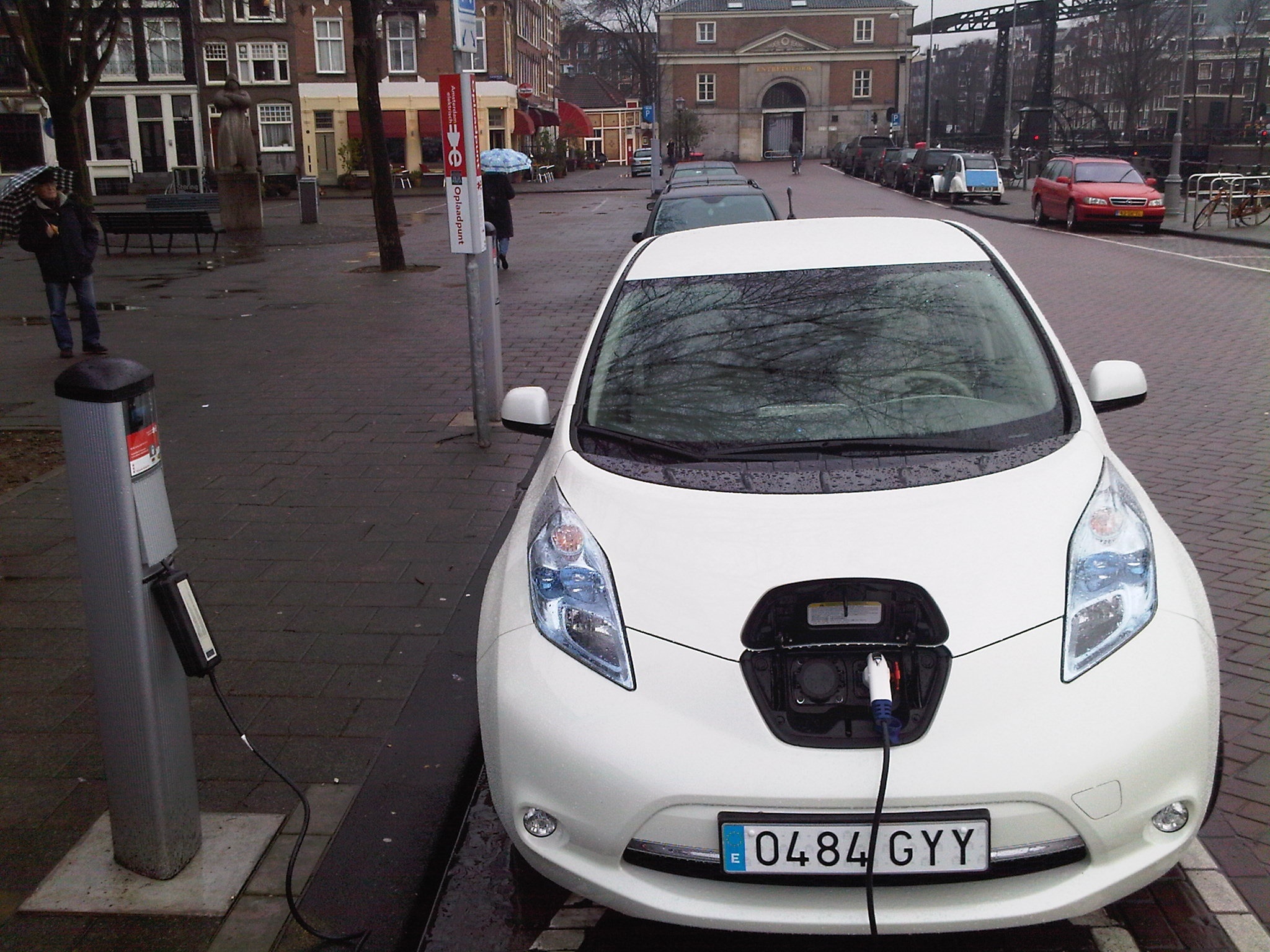
The high costs and limited driving range of electric car vehicles are two of the most cited reasons why Americans have been reluctant to ditch their gas guzzlers. But give it few more years and these “deal-breakers” may be a non-issue.

That bold prediction was made by none other than U.S. Secretary of Energy Steven Chu during an event on May 13th in Los Angeles, where he and city mayor Antonio Villaraigosa were on hand to christen the 500th electric-vehicle charging station built by Coulomb Technologies, a major milestone as the company continues to expand their ChargePoint America network.

Here’s what he said, according to a report in the Los Angeles Times:

“Because of increased demand, we’ve got to think of all the other things we can do in transportation. The best is efficiency,” Chu said.

Batteries are the ”heart” of electric vehicles, he said, adding that the Department of Energy is funding research that will drop the cost of electric-vehicle batteries 50% in the next three or four years and double or triple their energy density within six years so “you can go from Los Angeles to Las Vegas on a single charge,” he said. “These are magical distances. To buy a car that will cost $20,000 to $25,000 without a subsidy where you can go 350 miles is our goal.”

Yes, you did just hear that. Chu is envisioning practical, long-range and affordable electric vehicles coming to the market as early as the year 2017. And in order to help make this scenario a reality, he also outlined a couple key policy moves that should lower the barrier for consumers interested in electric cars. These include:

  • Offering a $7,500 rebate for electric vehicle purchases, instead of a $7,500 federal tax credit so that consumers wouldn’t have to wait until they file their tax returns to pocket the discount.
  • Scaling up battery production. Three years ago, less than 1% of all advanced batteries were produced in the U.S. The American Recovery and Reinvestment Act has secured investments that should lead to 30 new U.S. battery manufacturing plants.

The push to hasten a transition to electric vehicles couldn’t come at more crucial time. With soaring gas prices putting the big hurt on the wallets of many Americans, Chu expects oil prices to rise even higher, since the rapid industrialization of developing countries’ will only fuel greater demand for this limited natural resource. He pointed out that last year China sold 16.7 million vehicles, a figure that is expected to increase to 20 million cars annually in just a few years. In comparison, 12 million cars were sold in the U.S. in 2010.

“The Department of Energy is happy to be a part of this [event], but more importantly we’re very happy to be really trying to push for the electrification of vehicles in the U.S.,” Chu told the Los Angeles Times. “The reason is very simple. We have to diversify our transportation energy.”

(via LA Times)

Related on SmartPlanet:

Start your week smarter with our weekly e-mail newsletter. It's your cheat sheet for good ideas. Get it.

Tuan C. Nguyen

About Tuan C. Nguyen

Tuan C. Nguyen was a contributing editor for SmartPlanet from 2011 to 2013.

Tuan C. Nguyen

Tuan C. Nguyen

Contributing Editor

Tuan C. Nguyen is a freelance science journalist based in New York City. He has written for the U.S. News and World Report, Fox News, MSNBC, ABC News, AOL, Yahoo! News and LiveScience. Formerly, he was reporter and producer for the technology section of ABCNews.com. He holds degrees from the University of California Los Angeles and the City University of New York's Graduate School of Journalism.

Follow him on Twitter.

Tuan C. Nguyen

Tuan C. Nguyen

Tuan C. Nguyen does not hold any investments in the technology companies he covers.

He writes for SmartPlanet and is not an employee of CBS.

If you liked this, don't miss...
22
Comments

Join the conversation!

Follow via:
RSS
+3 Votes
+ -
Predictions
Those are some pretty bold predictions. It would be great if battery tech advances that far that quickly, but I'm not holding my breath.
Posted by DJKuulA
27th May 2011
0 Votes
+ -
Yet more tax credits?
These vehicles need to be economically viable on their own. Kill the tax credits.
Posted by rpwillia0@...
27th May 2011
-2 Votes
+ -
Tax credit need not be evil
If the credits help things scale to the point of being self sustaining.
Remember, the alternative power vehicles mean potentially less use of oil, thus
driving that cost down for those not yet using those vehicles. This means the
big trucks and trains have lower costs to deliver the other goods, meaning they
can be sold for less and still be profitable.

But I do agree, there does need to be a set of rules that would cause them to
expire once the goal is reached, You can be sure it will happen since they need
the revenue to pay for the union workers.
Posted by richard233
27th May 2011
+1 Vote
+ -
Tax credits needed for now
We need to dramatically cut down on CO2 emissions so EV's are the way to go until we figure out how to do without cars altogether (not likely in the near future). Nissan is already cutting the cost of the Leaf to sell it in the U.S. (much more expensive in the U.K.), but most people still can't afford the price tag. We are planning to buy one, ONLY because the combination of federal tax credit, no state sales tax on EV's, and free charger/installation through Ecotality makes it somewhere within the realm of affordable. Not really, but we want to 'walk our talk'. If even one of those subsidies were missing, we would not be able to afford it. Once they have sold a certain number of cars, the subsidies go away. By then the cost per vehicle should come down.
Posted by LaurieA
14th Sep 2011
+3 Votes
+ -
Things happen.
1) As more people go electric, the price of oil drops to become more competitive.
2) How do apartment renters get to use them?
3) What is the time of recharge? Gasoline lets you pump and go in a few minutes.
4) Vacations/long trips. How long till a practical infrastructure develops?
Posted by richard233
27th May 2011
+1 Vote
+ -
Answers to questions
Let the price of oil drop as much as it wants - we can't afford to keep increasing the CO2 levels in the air. For a LEAF, you can recharge in 6 or 7 hours with the special recharger, much longer with a standard outlet, and in 30-40 minutes with the super quick chargers that are being installed on the I5 corridor and at Nissan dealers. The plan right now is to install the chargers every 50 miles or so along I5. As more people buy EV's, the demand for more charging infrastructure will increase. For renters, I think apartment owners can still get a free charging station installed, but it would certainly be a problem if all the renters got EV's. I think apartment owners would need to start installing EV chargers as standard equipment in the garage, just as they have learned to offer microwaves, dishwashers, etc. They could charge a small fee for an EV-ready charging spot to offset the cost.
Posted by LaurieA
14th Sep 2011
-1 Votes
+ -
power
do you think that a 1 cylinder weed waker motor could power a generator strong enough to charge a battery i do.......................... 3 gallons of gas 1000 miles...................... get smart we are not that silly minded.
Posted by robertbuckholz@...
27th May 2011
0 Votes
+ -
Again, they miss the point
What we really need is a safe, affordable, and reliable vehicle that will travel around 100+ miles on a single charge and we need it now ($40,000+ commuter cars are a non-starter). The hybrids are way over priced, are a poor ROI, and tend to compromise one-way or another (small vs. mileage).
Posted by ajrmd
27th May 2011
+1 Vote
+ -
100+ miles on a charge
Remember, the $37,000 car from Nissan gets a $7,500 rebate, plus other tax incentives depending on your State. In Washington State, we get 0 sales tax on the car, so our total cost is down to about $27,000. We figure we can sell our Honda Civic for about $5K, so our total cost is about $22,000 for the Nissan Leaf. Still pricey, but affordable for many, and we will save money not only on gas, but also on servicing the car. No fuel injection system, no carburetor, no engine, no exhaust pipe, no oil changes - just a quick 'checkup' once a year, and Nissan pays for the first two years. You can do the math. Depending on your commute, its a good deal.
Posted by LaurieA
14th Sep 2011
0 Votes
+ -
350 miles still won't get me to grandma's house.
Battery power is fine for around town, but if I have to own more than one vehicle to get to where I want to go, I can't see that this will be anymore environmentally friendly than burning fossil fuels.
Posted by blbrink99@...
27th May 2011
+5 Votes
+ -
This is good news
This is progress... Batteries are getting better everyday, charging times are coming down along with pricing. For instance with the Leaf - if you charge with the standard 120 volt charger, you get about 5 miles per hour added to battery life. If you have access to a DC fast charging station, you can get a full charge in 40 minutes or so.

So, is this good enough for mass adoption right now..not quite, but it is getting there rapidly. Since we are not there yet, that is why we have the hybrid electric vehicles (which the electric batter can cover most short trips and for the longer/necessary quick refills, there ICE will operate) to allow for time to improve upon technologies.

We are used to convenience of current automobile standards and it will take some time for the electric battery/vehicle to reach parity in many cases.
Posted by kholmesmcgov
27th May 2011
+5 Votes
+ -
additionally
overall the electric and hybrid-electric are still for early adopters who want the newest 'clean' technologies available..just like how cell phones, computers, televisions, automobiles all came to market. We also must make sure that the electricity used to power these cars continues to get cleaner.
Posted by kholmesmcgov
Updated - 27th May 2011
-1 Votes
+ -
magic
forget petroleum just use magic
Posted by pauc1
27th May 2011
+5 Votes
+ -
Give me a quicker charge time
Unless all of these new electric cars can go from practically dead batteries to a full charge in under 10 minutes, they'll never replace the gas vehicles. I don't really see how going longer distances with them is making them more viable. I drove from NH to FL in the summer a few years back, even with a 350 mile range I'd need to recharge the thing about 4 times just to get it there, probably more if I used the AC. If I'm sitting at a charging station for 4-8 hours per charge, that means it will take me a week to drive there. No thanks.

Do something like the Aptera was planning, adding a diesel generator to their car, to charge the battery as you drive. THEN I might see them being a possible replacement. I don't care what the generator runs on, gas/diesel/biofuel/cooking oil/cow farts or whatever, as long as I don't have to sit there charging it for half a day every 350 miles.
Posted by BrewmanNH
27th May 2011
+3 Votes
+ -
charge time
40-50 minutes with a DC 240V charger. Just enought time to have lunch.
Posted by lasparky11
27th May 2011
0 Votes
+ -
How about dumping the batteries
How about if we put some major R&D into capacitors (so called super capacitors), charge up in less time than filling a tank with gas, would weight a tenth what batteries would making the car that much more efficient. Are we a looong ways away from where we need to be for them to work, we sure are, but you have to start somewhere. This would be the holy grail that electric cars need to get past everyone's range fears. How do we get there, pretty easy set a date when you can no longer buy a gas powered vehicle, I don't care when the date is, but set a date 10, 20, 30 years from today. We did it with digital TV, incandecent bulbs starting this year and so on.
Posted by Renewable Jeff
26th Apr 2012
+2 Votes
+ -
faster charging
Sounds like the lengthy time it takes to recharge is one of the potentially major deal-breakers for many of you right?

But even on that front there's a lot of progress being made that may someday allow cars to charge up in minutes. So do stay tuned as I will start giving you the lowdown in regards to that.

- Tuan
Posted by tuancnguyen
Updated - 27th May 2011
-3 Votes
+ -
I Saw This Before
As I read this, I remembered seeing the same thing trotted out in 1978 under President Carter. There will soon be a magically marvelous change that will allow us to move over to something new.

I expect this one to work out as well as the electrics did under Carter.

Nothing new here. It's just the same claims, trotted out every few years.
Posted by YetAnotherBob
27th May 2011
+1 Vote
+ -
THE ELECTRIC CAR SCAM ROLLS ONâ?¦
rpwillia0@... 27 May 27, 2011 @ 10:48 AM (PDT)says: Remember, the alternative power vehicles mean potentially less use of oil, thus driving that cost down for those not yet using those vehicles.

Oh dear, rpwillia0 , I guess you are in serious need of some economics and physics classes.

Do you not know that in the actual world we currently live in electricity comes overwhelmingly from burning fossil fuels? And that's not going to change to renewables any time soon. For example in the UK, after 30 years of development and piles of government subsidy (they euphemistically call it "feed-in tariffs"), wind power only supplies around 1% of our electricity. And wind power is the only alternative technology even remotely competitive with fossil fuels.

In the meanwhile, unless and until the nirvana of renewable power does arrive, did you not know from school physics that converting a primary fuel to electricity, and then delivering it over transmission power lines, loses energy efficiency all along the way? So the true fuel cost of running an electric vehicle will ALWAYS be more than one running on primary fuel. That???s not an arguable statement. That???s the second law of thermodynamics.

Only the various subsidies encouraging people to buy electric vehicles makes their purchase even marginally attractive, and then only to a minority of fairly rich people. In other words, the whole exercise is a political scam designed to make politicians all over the world look good and appear to be doing something about climate change (whilst actually doing very little).

The above realities put to one side, who wouldn't want an electric car? I would. Less noise. Faster acceleration. Higher reliability. Lower maintenance. No pollution (current catalytic converters are good but certainly not perfect). It all seems to make such great sense, doesn???t it?

It's just that in the real world, the above realities can't be put to one side. So don't use them as an argument. It just won't wash.
Posted by cosserat@...
28th May 2011
+4 Votes
+ -
Physics problem
Internal combustion engines are so inefficient in motor vehicle applications that it's much worse than the inefficiency of converting fuel to electricity and distributing over power lines. ICEs are most efficient running unthrottled at a constant speed. In a car, speeds changes all the time; in order to have adequate acceleration the engine must be much larger than it needs to be for cruising at a steady speed. When it reaches cruising speed, where it gets the best mileage, it's not nearly as efficient as it could be - pumping losses are increased because displacement is much more than it needs to be to produce the power to maintain speed, and because it's severely throttled.

Series hybrids like the Chevy Volt, where the ICE just charges the battery, can avoid those inefficiencies - it can be a very small engine that runs wide open when the battery needs charging and shuts down when it doesn't. This makes it a good transition type.

The cost of alternative electricity production is coming down rapidly, while fossil fuel prices are rising. It's true that electric cars will need to be charged with renewable electricity in order to be truly zero-emission, but that will happen before long. However, electric cars are lower-emission even if the power is generated by burning fossil fuels. That is the actual fact; there's a lot more involved than the Second Law of Thermodynamics.
Posted by Greenknight_z
29th May 2011
+3 Votes
+ -
Cutting corners with the design team?
Why is it that if a car is economical, it is designed to look like a hideous robot?
Posted by thefatalepic
28th May 2011
+1 Vote
+ -
When will they design a modular EV?
With a modular design the vehicle can be tailored to peoples needs.

If I want to buy one for $15,000 that gets only 180 miles to a charge because that is more than double my daily commute than let me. Potentially I may get further on a charge because I am hauling a lighter battery load. So half the batteries might give me 55% of the range. Or it could raise my cargo capacity. Or my car could be built with lighter suspension components lowering the overall vehicle weight giving me even more range per charge.

And the next guy can order one that costs $25,000 and gets 350 miles a charge.
Posted by Hates Idiots
14th Jun 2011
Join the conversation
Formatting +
BB Codes - Note: HTML is not supported in forums
  • [b] Bold [/b]
  • [i] Italic [/i]
  • [u] Underline [/u]
  • [s] Strikethrough [/s]
  • [q] "Quote" [/q]
  • [ol][*] 1. Ordered List [/ol]
  • [ul][*] · Unordered List [/ul]
  • [pre] Preformat [/pre]
  • [quote] "Blockquote" [/quote]

Join the SmartPlanet community and join the conversation! Signing up is fast and free. Don't wait -- we want to hear your opinion!