Boeing 787 loses thrust in an engine, lands early

Now we know the Boeing 787 Dreamliner can fly on one engine and it wasn't from a test.
ZA001, the first 787 to fly, experienced an "uncommanded loss of thrust" in one of its two Rolls Royce Trent 1000 engines Friday during a test flight. So what was supposed to be eight hours of flight testing turned into a one hour and twelve minute short hop, according to Randy's Journal, a Boeing blog authored by Boeing Commercial Airplanes vice president of marketing Randy Tinseth.
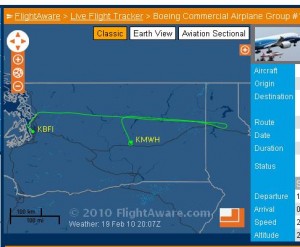
The plane took off from Boeing Field in Seattle at 11:30 PST and landed safely at Grant County International Airport five miles north of Moses Lake in central Washington state at 12:42 PST.
"Teaming with Rolls-Royce, we determined that the issue had to do with a pressure-sensing component within the engine.
"We located replacement parts and then got the parts and the right crew to Moses Lake - beginning the maintenance activity on Saturday. Later that day, we ran the engines to confirm that the replacement had been done correctly and that there were no anomalous readings," Tinseth said in a post yesterday.
The plane returned to Boeing Field Sunday morning.
According to FlightAware.com, ZA001's flight plan called for eight hours and 21 minutes in the air for flutter testing, which examines the integrity of structural components. Aviation bloggers like Flightblogger Jon Ostrower became suspicious when the flight ended prematurely as he tracked it live on FlightAware.com.
"The first thought was that FlightAware had 'squawk'd' and missed the return to Seattle, but now it appears that ZA001 never made it back to Boeing Field on Friday. On top of this, a company owned Cessna 208 Carvan (N208BA) madeno less than five runsbetween Everett, Boeing Field and Moses Lake in the last two days," Flightblogger Jon Ostrower wrote yesterday.
I assume "uncommanded loss of thrust" is tantamount to an engine loss, but Tinseth never lets on that it was a big deal.
"This is what happens during flight testing...We deal with issues and we keep going."
He added that ZA001, one of two 787s undergoing flight testing and which has spent more than 109 hours in the air, would "soon return" to flutter testing. The 787 Dreamliner is Boeing's newest wide body passenger jetliner and is undergoing flight testing in 2010 before what it hopes to be the first commercial delivery to All Nippon Airways in the fourth quarter.
Follow me on Twitter.
This post was originally published on Smartplanet.com