Follow this blog:
RSS

For green buildings, the codes beat LEED

By | November 21, 2012, 4:18 AM PST

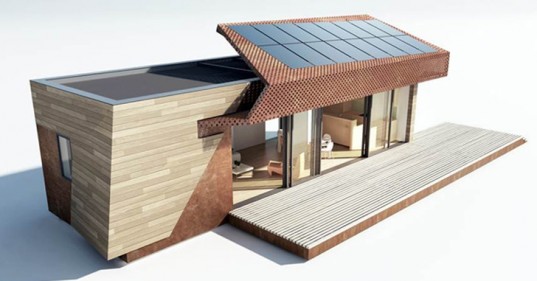
Is it green? A model home at Greenbuild. (Courtesy Method Homes)

LEED is losing, and we all know why.

The U.S. Green Building Council’s building rating system remains a common benchmark for the building industry, and it has decent brand recognition. But it’s largely by default. The certifications are losing cachet among just about every constituency it needs to endure.

Building codes, believe it or not, are more nimble and effective.

Infighting and industry attacks have delayed LEED’s 2012 version, long planned for debut at the Greenbuild expo in San Francisco last week.

Fear of a green planet

Code officials at a hearing: People seriously interested in green building. (Courtesy ICC)

Architects mainly cling to LEED out of fear. Every year, fewer building owners and construction companies indicate they’ll use LEED: 61% in 2008, 53% in 2010, and a minority 48% this year, according to a survey by Turner Construction released last week.

The big breaks for LEED have been through the 200-plus government agencies and municipalities adopting the standard. But they like LEED for odd reasons.

Example: A study announced Monday by the Harvard Business School concludes that “the possibility that government agencies might use purchasing to stimulate market demand for ‘green’ products and services is often overlooked.”

So towns should use LEED to help move the market? That’s what building codes do, and they do it much better. Why ask a private, unregulated bureaucracy like USGBC — a “shadow government,” as Michael Liu, AIA, wrote in ArchitectureBoston last year — to take on this role?

Maybe ’cause it’s super-duper easy?

Yes, says some officials. One South Dakota Bureau of Administration spokesman admits this month that LEED is “much better than a mandatory building code because you get a little wiggle room in these projects. The state recognizes that we can’t pick a standard and then pursue it at any and all cost.” (My italics.)

Really? Then why have a building code at all, South Dakota?

These are weak arguments for advancing LEED. But popularity isn’t everything.

If it’s broken…

LEED doesn’t work very well, either. Last week, Thomas Frank blasted LEED in USA Today with a valuable analysis. He noted LEED’s cheap points, including self-serving credits that earn money for the USGBC, as well as the huge tax breaks and incentives given out to fat-cat developers. He cites a 2008 study of 121 LEED-rated buildings, which on average use 24% less energy than conventional, non-LEED counterparts. Worse yet, a third of the buildings use more energy.

That’s madness. Next year’s new LEED, under development, will attempt to address that.

But it’s too late.

Frank should have noted that today’s building codes are already designed to shave 30% off of the energy bill vs. typical buildings, says GreenSource magazine. Longstanding codes like the International Energy Conservation Code (IECC), which is adopted in all places that use the newest building codes, are already doing the work that LEED intended to do.

Build to code, people, and you are already greener than LEED.

Codes beat LEED!

The future of green building: The new code IGCC. (Courtesy Green Goddess)

And some new codes are arguably far better than LEED, which doesn’t have the open, consensus process that have guided codes for decades. LEED ends up with useless, feel-good credits, some reflecting its own interests or intense lobbying by decidedly ungreen industries.

Another good example is CalGreen, the California state green code, which “covers nearly as broad a field as LEED in the form of a mandatory state code,” says Marilyn Sticklor, with the law firm Goulston & Storrs. And don’t forget the International Green Construction Code (IGCC) and ASHRAE Standard 189.1, two consensus-based codes introduced in recent years, Sticklor adds. (Arecent Urban Land article also makes the case.)

Sticklor asks the big question: “Will new green building codes supplant LEED ratings?”

I say they already have.

The codes are already better, and jurisdictions are adopting them quickly and proudly. Like fuel-efficiency standards in the auto industry, the newest codes will help keep buildings healthy and safe, helping bring energy security to the United States while protecting our waterways and air.

The latest winner is Pima County, recognized with the first annual “Excellence in Energy Code Compliance Award” for adopting the IECC in 2001 and promoting energy-efficient building techniques. They will adopt the new, stricter 2012 IECC next year.

Meet me at ICC

The Governor introduced CalGreen, a real improvement on LEED.

The Governor introduced CalGreen, a real improvement on LEED.

“Simply enforcing the energy codes which have already been adopted will lead to higher quality construction, saving homeowners and business millions of dollars in energy costs each year,” said Jayson Antonoff, U.S. director of Global Buildings Performance Network, which gave the award with theInstitute for Market Transformation.

The balance of power has shifted.

Next year, I may skip Greenbuild and go to the International Code Council’s annual meeting in Atlantic City. Show some support for storm victims, too.

This year it was held in Portland, Ore., in late October. It’s a nice, green city full of people serious about building — and building green.

Start your week smarter with our weekly e-mail newsletter. It's your cheat sheet for good ideas. Get it.

Chris Sullivan

About Chris Sullivan

C.C. Sullivan is SmartPlanet's architecture columnist.

Chris Sullivan

Chris Sullivan

Columnist, Architecture

C.C. Sullivan is principal of a marketing and advertising agency by the same name focused on the shelter, construction and architectural markets. Formerly, he was chief editor of the magazines Architecture and Building Design & Construction, and launched the Home of the Year awards with Metropolitan Home. He holds a degree from Yale University and previously worked for the architects Tai Soo Kim, Emery Roth & Sons, and Angel Fernandez Alba (Madrid).

Follow him on Twitter.

Chris Sullivan

Chris Sullivan

In addition to working as a journalist, C.C. Sullivan owns a marketing consulting business by the same name and is a partner in SullivanMumford LLC. (A list of clients can be found here and here.) In the unusual event that his writing mentions a company or organization for which he currently provides or previously provided any editorial or marketing services, he will disclose that fact. He will also do the same should he cover any companies in which he holds stocks or other investments.

He writes for SmartPlanet, but is not an employee of CBS.

If you liked this, don't miss...
7
Comments

Join the conversation!

Follow via:
RSS
-1 Votes
+ -
Part of our progres requires a bigger step
LEED and others are making wonderful progress considering normal bureaucracy, but we need to think beyond these issues too, to our primary challenge. Transportation continues to require excessive land use along with energy, time, and safety problems. New developments are opportunities to inject a new transportation paradigm that would be cost effective and environmentally effective. www.RenataProject.com provides a practical vision that will grow locally to a national and international system providing sustainability where we need it most.
Posted by Ataner
23rd Nov
+1 Vote
+ -
Building Codes - Alaska-style
I wish someone without monetary influence would inspect the thousands of HUD houses in Alaska. The remoteness seems to encourage hidden "cost-savings" - shortcuts or omissions that cost the homebuyer once the contractor is done. The heating bills are outrageous, for buildings "designed" for cold climates, and the occupant often qualifies for public assistance (paid by you and me), perhaps as a result. So the term "low-income housing" should state instead, "lower-your-income-housing?" Can we not learn something about design and efficiency from the IGLOO?
Posted by aniaksdh
23rd Nov
0 Votes
+ -
Stricter standards result in lower costs overall
Life-cycle analysis research shows considerable cost savings are still obtainable with many upgrades in excess of even the most ambitious current building code standards. Letting buyers factor energy savings during occupancy into the mortgage acquisition process would lead to more ability and willingness to pay for these upgrades. The important number to understand when planning a home is the total combined mortgage plus operating costs, and these are demonstrably reduced by building to very high energy efficiency standards. http://rcgb.rutgers.edu/uploaded_documents/NJAR.pdf
Posted by John Hartshorn
23rd Nov
+3 Votes
+ -
Confuses the Cart and the Horse
The author clearly has limited experience in the field, otherwise he would not make such superficial comments regarding the impact of LEED. The very reason the codes are the way they are is solely due to LEED. Before we launched the system in 2000, there had been 2 revisions of ASHRAE 90.1 in the previous 2 decades: 1989 & 1999 and the amendments to those standards were minimal at best. Since LEED shocked the standard out of its topor a decade ago there have been 4 revisions and a total overall efficiency improvement of almost 40 percent. LEED prepared the market for ICC and ASHRAE 189 and the USGBC and many of the people involved with the development of LEED participated actively in those proceedings, bringing their expertise. Market transformation requires both voluntary and mandatory standards, ideally complemented with beyond-code and early adopter incentives. Codes are a vital part of the equation, but you have to know what they are good at and what they are not; something the author unfortunately does not understand. The best definition of standards I've heard is "if you built it any worse, it would be illegal." Their purpose is to establish the floor of minimum acceptable practice; they will never--by definition--be a source of innovation. Voluntary standards such as LEED by contrast are the perfect place to spur innovation and market development. By all means go to ICC it is a vitally important element of the continuous progress in bringing green practice to the 75% of the market not addressed by LEED. Just don't pretend that new ground will be broken there.
Posted by kilrwat
24th Nov
+2 Votes
+ -
Too Many Generalizations and Over-Simplification
"Build to code, people, and you are already greener than LEED."

Will new green building codes supplant LEED ratings? I say they already have."

LEED is not merely focused on energy efficiency, and the 10% required improvement over ASHRAE 90.1-2007 is a pre-requisite that many jurisdictions do not mandate. Sure, some do--and they should be commended for it--but many codes use antiquated versions of ASHRAE 90.1 (2001/2004) that are less robust/efficient than the current versions, and are not "greener" than LEED.

Further, show me a jurisdiction that mandates low-VOC content products, recycled/regional content use, review of site hardscape design and refelectivity, etc. etc. etc.

Not that they should, but the minimum point requirements in LEED encourage projects to take a holistic approach at sustainability and implement it in a project--you don't see this happening when a building 'simply meets code.'
Posted by atralph
27th Nov
+1 Vote
+ -
Shameful article
Why talk about things you clearly don't understand? Are you an architect? What background do you have to put this "pseudo-information" here?

LEED is based on "building codes", but do not stop there. Just go learn what is LEED and what are the building codes. Please.

About "smartplanet", maybe some more "smart" next time.
Posted by andre_dms
27th Nov
-1 Votes
+ -
Man, this was a knee-slapper.
Mr. Sullivan is eminently qualified to discuss this topic, having worked for several architecture firms and edited a pair of related magazines. That's why he's our architecture columnist!
Posted by andrew.nusca
Updated - 30th Nov
Join the conversation
Formatting +
BB Codes - Note: HTML is not supported in forums
  • [b] Bold [/b]
  • [i] Italic [/i]
  • [u] Underline [/u]
  • [s] Strikethrough [/s]
  • [q] "Quote" [/q]
  • [ol][*] 1. Ordered List [/ol]
  • [ul][*] · Unordered List [/ul]
  • [pre] Preformat [/pre]
  • [quote] "Blockquote" [/quote]

Join the SmartPlanet community and join the conversation! Signing up is fast and free. Don't wait -- we want to hear your opinion!