IBM claims cognitive computing breakthrough

IBM on Thursday will unveil experimental semiconductors that aim to match the human brain and its ability to interpret its surroundings and learn. The development could lead to a series of "right brain" computers.
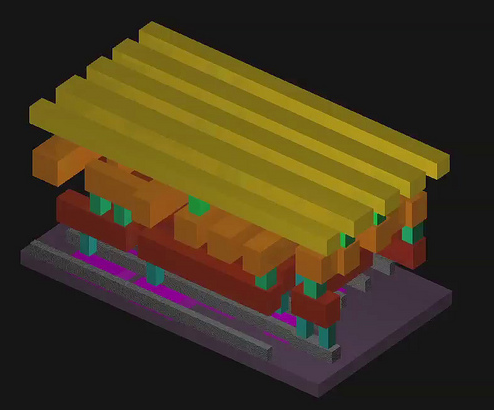
These so-called cognitive chips have two prototypes that are currently being tested. The semiconductors were created out of standard technology in IBM's fabrication plant. Both cores were fabricated in a 45 nanometer process and feature 256 neurons. One core contains 262,144 programmable synapses---basically the social network in the chip---and 65,536 learning synapses. IBM has demonstrated navigation, machine vision, pattern recognition, associative memory and classification with these chips.
What do these cognitive chips add up to? Dharmendra Modha, a project leader for IBM Research, said these new prototype chips can lead to systems that complement today's computers. Computers today revolve around structured data and various calculations, said Modha. Cognitive computers would be more about processing unstructured data and various inputs.
"These cognitive chips can create a new generation of computers to complement today's. Today's computer would be left brain---fast, analytical, rational and structured---the cognitive side would be the other side, which is slow, low power and unstructured. It's right brain to left brain," explained Modha. "Bringing this technology forward completes the computing tool chest."
In many respects, the brain---which packs a lot of low power computational heft in a tight space---is the Holy Grail of computing. Big Blue is looking to put these chips together to recreate the neurons and synapses in biological systems (right).
Add it up and computing today is basically operating with half a brain---the left side.
The upshot is that these chips could be cobbled together to correlate data, create hypotheses and remember things. The product of these chips would be a cognitive computer, according to IBM.
IBM said the research effort behind the project combines disciplines such as neuroscience, nanotechnology and supercomputing. Defense Advanced Research Projects Agency (DARPA) has awarded IBM and a team of university researchers $21 million to carry out the second phase of a project dubbed the Systems of Neuromorphic Adaptive Plastic Scalable Electronics (SyNAPSE) project.
Columbia University; Cornell University; University of California, Merced; and University of Wisconsin, Madison worked with IBM on the project. Modha said IBM had been working on cognitive computing for about six years. DARPA started investigating the topic three years ago. When the timing---and funding---lined up the effort to create cognitive systems picked up steam. "DARPA demands dream on a deadline," said Modha. "That's how fast paced (development) is."
IBM sees multiple applications for these cognitive computing systems, which would fit in the size of a shoebox. Among potential uses:
- Computers that could take in inputs such as texture, smell and feel to gauge whether food was outdated.
- Financial applications to monitor trading and recognize patterns in a way today's algorithms can't.
- Traffic monitoring.
- And system monitoring for waterways and other natural resources.
This post was originally published on Smartplanet.com