Follow this blog:
RSS

What Neandertal DNA can teach about race, autism, and more

By | September 4, 2012, 3:00 AM PDT

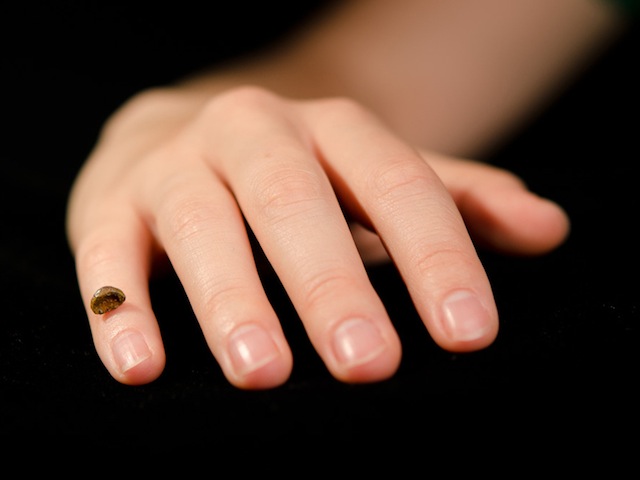
Replica of the bone fragment from the Denisovan girl's finger bone, positioned on a living hand. (Credit: Max Planck Inst. for Evol. Anthrop.)

Replica of the analyzed bone fragment from the Denisovan girl, positioned on a living hand. (Credit: Max Planck Inst. for Evol. Anthro.)

.

Paleoanthropologists used to pray that they would unearth big troves of intact Neandertal skeletons and well-preserved artifacts that they could comb for clues to the origins of the human race. But these days, they can often get as much or more information straight from the DNA in bone fragments.

Case in point: the newly published genome study in Science from Matthias Meyer and Svante Pääbo of the Max Planck Institute for Evolutionary Anthropology and their international team of colleagues. Using a novel DNA sequencing technique that works particularly well with degraded specimens, they examined the genome of a seven-year-old girl who died more than 74,000 years ago, using a surviving sliver from one of her finger bones. That girl’s bone fragment was one of the few pieces of evidence that in 2010 revealed the existence of the ancient Denisovan people — contemporaries of the Neandertals who overlapped with them in eastern Asia.

Matthias Meyer at work in the laboratory. (Credit: Max Planck Inst. for Evol. Anthro.)

Matthias Meyer at work in the laboratory. (Credit: Max Planck Inst. for Evol. Anthro.)

Yet from that extraordinarily humble source, the Max Planck scientists have drawn a wealth of insights. They learned, for instance, that the Denisovans were probably dark-skinned, unlike the pale Neandertals. Because the girl had two X chromosomes, one from each parent, the scientists were able to infer that the Denisovan population had relatively little genetic diversity. Living natives of Papua New Guinea, Australia, and some southeast Asian islands derived about 6 percent of their genes from the Denisovans, yet the Denisovans seem to have contributed nothing of lasting value to the DNA of people in other parts of the world. Comparison with the Denisovan DNA also allowed the researchers to recognize that Europeans carry somewhat fewer genes from Neandertals than do East Asians and Native Americans.

Such discoveries are endlessly fascinating to some of us. But I can also understand that many people might reasonably question why any of these details matter. After all, Neandertals and our other ancient ancestors have been extinct for 30,000 years or longer. Why should we care so much about their DNA? Is there any practical value to be had from these studies?

I’ll argue that there is, and that it might be especially useful in helping us to develop more enlightened attitudes about racial differences and autism. To explain why, it may be useful to start by reviewing some of the major current ideas about how humans evolved in the first place.

Overview of our origins

Fifteen or 20 years ago, it might have been easier to find a rough consensus among paleoanthropologists about this topic than it is today precisely because of the recent bounty of fossil and DNA discoveries. All that information has answered some important questions and filled in a level of detail that might once have seemed inconceivable, but curiously enough, some of the broad strokes in the big picture have become less clear.

Roughly speaking, in Africa 1.7-2 million years ago, the earliest primitive members of the genus Homo appeared. They were small, hairy people who might look a bit apelike by our standards of beauty, but they had bigger brains and more tools than the upright Australopithecus species before them. The Homo erectus people were successful enough to spread out of Africa and migrate across Asia, and are responsible for some of the ancient fossils given names such as “Peking man.” Nevertheless, they were probably something of a false start for the spread of humanity as we now it.

Neandertal skeleton at the American Museum of Natural History. (Credit: Claire Houck, via Flickr)

Neandertal skeleton at the American Museum of Natural History. (Credit: Claire Houck, via Flickr)

The more relevant development came between 400,000 and 800,000 years ago, with a new wave of African emigration into the Middle East and Asia by a group of people with even bigger brains and better tools. They gave rise to the brawny, brow-ridged Neandertal people, Europe’s first inhabitants. Yet they also spawned at least one other Asian group, the Denisovans. (It wouldn’t be too surprising anymore if still more sibling groups contemporary to the Neandertals and Denisovans turned up elsewhere in Asia.) Meanwhile, humans also continued to prosper and evolve in Africa, and by 80,000 years ago, ones with a fully modern appearance had appeared and started their own exodus into the rest of the Old World.

What happened next is the stuff of archaeologists’ heated arguments. The oldest theory is the multiregional hypothesis strongly advocated by Milford Wolpoff of the University of Michigan in Ann Arbor. It claims that as different in appearance as moderns, Neandertals, Denisovans, and even the early Homo erectus might seem, they were all still members of the same human species. Over time, the modern traits predominated but some of the traits in local populations that had adaptive value (such as shorter, thicker bodies in cold climates) were retained and might bear some connection to physical differences seen in populations around the world today.

In the 1980s, however, a starkly opposing theory emerged largely, though not exclusively, from studies of mitochondrial DNA in living populations. (Mitochondria, the organelles in animal cells that create chemical energy, carry their own unique sets of genes, completely separate from the DNA in the nucleus for the rest of the cell’s genes.) Those analyses suggested that the maternal bloodlines of everyone alive today converged back on Africa less than 100,000 years ago, with no trace of a genetic contribution from local groups elsewhere. That conclusion spawned the “out of Africa” model, according to which scientists such as Chris Stringer of the Natural History Museum in London argued that when the anatomically modern humans colonized Asia and Europe, they displaced the Neandertals and other ancient residents without breeding with them. Whether the moderns had directly exterminated the ancients or simply outcompeted them for resources was anybody’s guess, but interbreeding was effectively nonexistent.

The out-of-Africa model and its mitochondrial DNA evidence proved highly persuasive to many anthropologists. Disagreements remained fierce, but during the 1990s it was often presented as the default explanation for human origins, even though almost everyone acknowledged how counterintuitive it seemed that modern humans would so completely refrain from mixing with creatures that looked so much like them. Mostly, scientists chalked it up to some obscure biological or behavioral speciation barrier.

DNA twists the plot

Ironically, one type of DNA evidence helped put the out-of-Africa model on top but later DNA evidence helped knock it back down. If brief, when Svante Pääbo and other researchers began the painstaking work of recovering nuclear DNA from Neandertal bones and sequencing it, they discovered that on average about 4 percent of living people’s genes are derived from Neandertals. (The telling exception was in people of modern African descent, whose genes were generally less than 1 percent Neandertal, which is what one might expect if the mixing would have occurred primarily outside Africa.)

Four percent might not sound like much, but it is substantially more than an out-of-Africa scenario with strict replacement rather than interbreeding would seem to allow. It’s remotely possible that this mixture is an artifact of old, unequal mixing of what became Neandertal genes within the ancestral African population (although anthropologist John Hawks has explained on his blog why that situation seems unlikely). The more likely explanation, though, is that some level of interbreeding did occur. For that reason, Stringer and other defenders of the concept now refer to a modified “mostly out of Africa” model that acknowledges some interbreeding but considers it largely trivial in extent and consequences.

That same evidence has, of course, only reinvigorated the multiregional hypothesis (though one might wonder why the percentage of ancient humans’ genes in us isn’t then higher). It has also nourished a popular new “assimilationist” school of thought that pragmatically splits the difference between multiregionalism and out-of-Africanism. The assimilationist model says that when the anatomically modern humans left Africa 80,000 years ago, they retained their own identity but also mixed to a degree with the older human populations they encountered. Both the modern and ancient groups became locally varying patchworks of physical traits and technologies. In the end, the ancients’ societies were too disrupted to survive but some of their genes persist in us.

The question of when and how humans emerged over the past few hundred thousand years is therefore considerably more complicated and less settled than it might have seemed a couple of decades ago. The same can be said for the closely related question about whether Neandertals, for example, represent their own species (Homo neanderthalensis) or just a subspecies (Homo sapiens neanderthalensis) alongside our own (Homo sapiens sapiens) – or whether, as Wolpoff would have it, virtually all of Homo has been one big species that has varied overtime.

Why we should care

Even if the science of human origins is still a work in progress, the accumulating information about how we got here and indeed what constitutes a member of the human race offers some useful perspectives on matters of scientific and ethical importance.

Perspective on the age of humanity. One small point that studies of the DNA of Neandertals and other ancient people illuminate is just how old or young we humans are as a species. The paleontological record indicates that the mean survival time for a mammalian species is about a million years, though some have lasted ten times that long. If we emerged only within the past 100,000 years or less, then Homo sapiens is indeed an amazingly young and precocious lot. And a loose, handwaving argument might therefore be made that we also probably have a commensurately long future ahead of us.

On the other hand, if Wolpoff is right and we are part of a species that has been around for two million years, then we are much more senior. It might make us look at the extinction rates with a little more sense of urgency.

Credit: José-Manuel Benitos, based on "March of Progress," by Rudolph Zallinger.

Credit: José-Manuel Benitos, based on "March of Progress" by Rudolph Zallinger.

Perspective on our nonprogressive evolution. The molecular study of our evolution also helps to drive home how unexceptional our biological history has been. Many icons of human evolution unintentionally reinforce a misleading sense of progress — witness the classic March of Progress illustration by Rudolph Zallinger that shows a modern human leading a Neanderthal and other “less evolved” ancestors.

But that sense really changes if we and Neandertals are seen as sibling groups, diverging but also sometimes re-merging throughout history. Our evolutionary history looks much less progressive and more like that of other species.

Perspective on race. For centuries (at least), arguments over race have invoked inappropriate biological concepts to make or defend distinctions among peoples — and distinctions in how they should be treated. They have likened races to subspecies to justify their inherent biological reality, along with some allegedly biological superiority, inferiority, or “otherness.”

A simple refutation of that idea has been the proof that the diversity of genetic characteristics within racial groups is greater than the diversity separating them: human races are not well enough defined and different enough to be meaningful biological groups. For that reason, many scientists now argue that race is not a biological concept but rather a social concept that sometimes carries biomedical consequences.

(Here’s what that means, if it isn’t immediately clear: In a society that mistreats the dark-skinned in general, for instance, black people may be at higher risk for diseases of poverty without having an intrinsic susceptibility to them. But an example that is perhaps less obvious is that of sickle-cell anemia, which is more common in those of black African descent than in those of white European descent. That’s because many people whose ancestors lived in regions where malaria was prevalent carry mutations for sickle-cell anemia that offer some protection from the parasite. But not all of those people are racially black and not all blacks carry the mutation. Sickle-cell information campaigns target predominantly black populations because society doesn’t accurately group people in terms of “ones whose ancestors had a lot of malaria.” In this case, race is a flawed but useful proxy for that nonexistent classification — but not because of the biological characteristics of the race as such.)

The foregoing is all true only in terms of race as we understand the concept today, however. If the multiregionalists and the assimilationists are right, then the Neandertals, Denisovans, and other ancient people we displaced may not have been separate species of person at all. They may instead have been races so different from modern humanity that they really were akin to other subspecies. Differences in their anatomical, genetic, behavioral, and intellectual traits would surely dwarf any seen in the world today among Homo sapiens. Color me naïve, but I would like to think that these insights might help to strengthen the spirit of color-blind brotherhood we ought to feel for one another.

(And in anticipation of a query I can feel coming: no, hypothetically, I would not be in favor of summarily treating Neandertals as second-class citizens if ever we could use technology to clone one. Neandertals were people and therefore, in my opinion, would deserve to be fully enfranchised. However, the question shows how ethically fraught such high-tech resurrections could be.)

Perspective on neurodiversity. In the course of their recent analysis of the Denisovan DNA, Meyer and Pääbo identified 23 highly conserved areas of the human genome that seem to be unique to our kind. Eight of those contain genes that previous studies have tied to nerve growth and other aspects of brain function. And three of the conserved genes — ADSL, CBTNAP2, and CNTNAP2 — have been implicated in some forms of autism.

Those correlations are not entirely surprising. Looking at the artwork and artifacts left by Neandertals, some archaeologists have argued that they seemed to lack a capacity for symbolic thought. Others such as John J. Shea disagree and suggest that the differences between modern and ancient thinking may have been exaggerated. Nevertheless, whatever evolutionary changes marked the emergence of modern humans, it’s likely they involved at least some important changes to our cognitive, linguistic, and social abilities. One might expect to find genes for those traits to be altered or absent in older types of humans.

I want to be perfectly clear on this point: this discovery absolutely does not mean that the Denisovans, Neandertals, and other ancients were autistic. Nor does it mean that autistic people exhibit prehistoric thinking. Rather, what it underscores is that normal modes of human thought occupy a broad continuum.

The “neurotypical” way in which most people see the world today is only one way of doing it. As enlightened studies of autism repeatedly drive home, we need to appreciate those variations as part of our human spectrum rather than just labeling them defective or abnormal.

With or without all our cognitive abilities, the Neandertals and Denisovans survived under amazingly hostile conditions for hundreds of thousands of years. Their different ways of thinking may have been dominant throughout long stretches of the past, and might even have had advantages over our own under their circumstances. The lesson that these ancients offer is that we should broaden our minds about how broad minds can be.

Start your week smarter with our weekly e-mail newsletter. It's your cheat sheet for good ideas. Get it.

John Rennie

About John Rennie

John Rennie was a columnist for SmartPlanet from 2011 to 2012.

John Rennie

John Rennie

Columnist, Science

John Rennie is the former editor-in-chief of Scientific American. He has written for IEEE Spectrum, New York Times and The Economist and has appeared on the History Channel, Discovery Channel, NPR and Minnesota Public Radio. He has spoken at the World Business Forum, Massachusetts Institute of Technology, Wharton School of Business, University of Tennessee and Middlebury College and is an adjunct instructor at New York University, editor at large for Txchnologist.com and contributing editor to ecomagination.com. He is based in New York.

Follow him on Twitter.

John Rennie

John Rennie

John Rennie works as a freelance reporter, writer, editor, and lecturer for a variety of publications and organizations, including the websites Txchnologist.com and ecomagination.com, both of which are sponsored by GE. He is also an adjunct instructor in journalism for New York University. (Lists of his affiliations and clients can be found here.) In the unusual event that his writing mentions a company or organization for which he currently provides or previously provided any editorial or marketing services, he will disclose that fact. He will also do the same should he cover any companies in which he holds stocks or other investments.

He writes for SmartPlanet, but is not an employee of CBS.

If you liked this, don't miss...
15
Comments

Join the conversation!

Follow via:
RSS
0 Votes
+ -
A Compelling Study
And by extension we should also consider the relationship of the entire Great Ape family tree in the sphere of human occupation. If we can lump in the Neandertal group as a subspecies of the homo group with a lineage that dates back hundreds of thousands of year and still call them possible ancestors, then why do we not honor the same relationship with our ancestral lines from the other Great Apes. This provides a strong argument for the recognition of rights that should be conveyed to our Great Ape brethren. If we now, as modern humans, can recognize the silliness of separation because of race within the species, we can also do the same when considering the relationship of DNA within others in our family tree. Species matter little, just as much as race.

As we continue to examine the DNA of all living forms, a pattern emerges that suggests an interconnected web of life that argues for a continuum of relatedness among all living organisms. One of the distinguishing characteristics between humans and other animals is the choice of conscience that is involved with our decision to be compassionate to all other living creatures. By sanctifying life we honor our ancestors as well as our fellow life forms. An argument can be made that war and killing, including both inter and intra-species, are antithetical to the continuing existence of our species. A spirit of peaceful coexistence within the entire animal kingdom is possibly the key to a future that will allow our own continuation as a species. Otherwise, Neandertal might not be the only extinct subspecies within the homo group.
Posted by dcr100@...
Updated - 4th Sep
+1 Vote
+ -
the devil is in the details
WHAT rights "should be conveyed to our Great Ape brethren", in your opinion? Personally, I find the term "brethren" applied to great apes to be insulting and ridiculous, but am not opposed to animal cruelty laws tailored to different species/genera/families/classes/etc., based upon the animals' cognitive abilities. Laws governing animal-based medical research should additionally, IMHO, take into account the human need. To give two examples: I'm opposed to the routine blinding of rabbits to test new formulations of mascara. (But then, I think mascara is ridiculous, so I guess I'm biased.) However, I would not be opposed to final testing of an artificial pancreas using chimps, especially if they were 1) bred for the purpose (rather than captured from the wild); 2) otherwise treated humanely; and 3) allowed to live out their lives if the operation worked.
These are judgment calls. Granting human rights to animals (as some activists demand) would be wrong, for many reasons.
Posted by dmm99
7th Sep
0 Votes
+ -
more than that
I'd go most of the way with you, except where you say "However, I would not be opposed to final testing of an artificial pancreas using chimps,". It would not be a final test is it used chimps. I can see no justification for using animals in any tests that cannot benefit (even if it may be unlikely) the animals tested themselves. A 'final' test of an artificial human pancreas would require a human participant. There's no shortage of people already needing their pancreas replaced, and given the chance, I'm sure you'd have no shortage of volunteers. So why involve chimps at all?
Posted by RHambeau
6th Feb
+1 Vote
+ -
Fascinating study
Great article, John. It's amazing to think of human related species living so relatively recently in the past.

A just as fascinating side note - Simcha Jacobovici (The Naked Archaeologist) posits that stories in the Old Testament handed down through ancient oral traditions relate to a race of people called Nephilim. In an episode on the subject, Simcha visits a cave that purports to show evidence that moderns and Neanderthals lived together.
Posted by omb00900@...
4th Sep
+2 Votes
+ -
Autism: The Eusocial Hominid Hypothesis
ASDs (autism spectrum disorders) are hypothesized as one of many adaptive human cognitive variations that have been maintained in modern populations via multiple genetic and epigenetic mechanisms. Introgression from "archaic" hominids (adapted for less demanding social environments) is conjectured as the source of initial intraspecific heterogeneity because strict inclusive fitness does not adequately model the evolution of distinct, copy-number sensitive phenotypes within a freely reproducing population.

Evidence is given of divergent encephalization and brain organization in the Neanderthal (including a ~1520 cc cranial capacity, larger than that of modern humans) to explain the origin of the autism subgroup characterized by abnormal brain growth.

Autism and immune dysfunction are frequently comorbid. This supports an admixture model in light of the recent discovery that MHC alleles (genes linked to immune function, mate selection, neuronal "pruning," etc.) found in most modern human populations come from "archaic" hominids.

Mitochondrial dysfunction, differential fetal androgen exposure, lung abnormalities, and hypomethylation/CNV due to hybridization are also presented as evidence.


https://docs.google.com/open?id=0B3dPqM3qgNSiY3p5TmFRMjhSekdyaV8wWUw0MTZiUQ

A short video introduction: http://www.youtube.com/watch?v=Jk_85vNaSMA

The full 2-hour video presentation: http://www.youtube.com/watch?v=r6-6Naz-C0M

Note:

Evidence of transgenerational epigenetic effects due to recent environmental exposures to novel complex molecules also supports this hypothesis. Atavism may be advantageous when it's restricted to a small number of individuals, but deleterious when the mechanisms maintaining this subpopulation are altered in a way that isn't immediately apparent in the genome.

The puzzlingly heterogeneous (yet statistically undeniable) components of autism might thus be united through a better understanding of epigenetics.
Posted by RupertVanVanstershermermermer
4th Sep
0 Votes
+ -
adapted for less demanding social environments?
I find it difficult to believe that ancient populations, whether nomadic or settled should be assumed as less demanding of skills for social interaction. They lacked today's essential distractions like Wii, Angry Birds, etc. and had to work together simply to survive. Granted, the skittishness of some people with ADHD might allow them to more readily detect and kill prey, thus preserving that competitive advantage in our genome, I can't think of any competitive advantage in the case of autistic children. It's not as if ancient populations enjoyed the readily available/dependable resources that we enjoy today, which would (in theory) allow them to ignore shortcomings, real or imagined for an autistic child. Don't blame it on Neanderthals.
Posted by PSFTGURU@...
Updated - 28th Sep
0 Votes
+ -
is it really?
Autistic spectrum disorders are seemingly assumed to be genetic in the comments and to a lesser extent in the article. But that can't explain the inexorable rise in conditions identified as within that spectrum, in the recent past. We seem to have something of an epidemic of 'autistic' disorders. I'd be far more inclined to an epigenetic explanation, driven by recent enormous changes in our chemical environment, beginning mainly only 200-300 years ago.
Posted by RHambeau
6th Feb
0 Votes
+ -
Here you go
"We show that Neanderthals had significantly larger visual systems than contemporary AMHs (indexed by orbital volume) and that when this, along with their greater body mass, is taken into account, Neanderthals have significantly smaller adjusted endocranial capacities than contemporary AMHs. We discuss possible implications of differing brain organization in terms of social cognition, and consider these in the context of differing abilities to cope with fluctuating resources and cultural maintenance."

http://rspb.royalsocietypublishing.org/content/280/1758/20130168.full
Posted by RupertVanVanstershermermermer
13th Mar
0 Votes
+ -
*Why* autism might correlate with Neanderthal DNA
Thank you for your thoughtful and clear article on an important subject.

http://autismtheory.org traces why Neanderthal and Denisovan DNA probably correlates with autism to basic physical facts. The thesis, now over ten years old, is posted at the site in a paper titled The Sparseness Adaptation Syndrome: Adaptation to low population density yields a set of traits correlated with autism and male gender.
Neanderthals and Denisovans lived in regions and habits of relatively low population density.

The paper is here: http://autismtheory.org/sparse1.pdf
Posted by gregory8s
5th Sep
+1 Vote
+ -
4% = a bit more than 1/32nd
From a pure statistical viewpoint, 3.125% of your DNA is inherited from your great, great, great, grandparents from 5 generations ago.
So for 4% of our DNA to be from Neanderthal origins, that would have to be in very stable locations on the genome.
Posted by Dr_Zinj
7th Sep
0 Votes
+ -
DNA is inherited from your great, great, great, grandparents
If most of us have 4% of any particular genetic component all our descendents will also have them?
Posted by shenviab
17th Oct
0 Votes
+ -
Neanderthal DNA would have to be in very stable locations on the genome
If most of us have 4% of any particular genetic component, all our descendents will also have them.
Posted by shenviab
18th Oct
+1 Vote
+ -
Different species?
Can someone please explain to me why if modern humans were a different species than the Neanderthals or Denivosans, we were able to breed with them and inherit their genes? Isn't the definition of species a group that can't successfully breed with another group, they might have a hybrid child, but the hybrid isn't supposed to able to reproduce? Sounds like if we bred with them and descended from them at all, then they count as part of our species, despite genetic variety.
Posted by Milica11
11th Sep
0 Votes
+ -
Is there really more within group variation?
***A simple refutation of that idea has been the proof that the diversity of genetic characteristics within racial groups is greater than the diversity separating them: human races are not well enough defined and different enough to be meaningful biological groups. For that reason, many scientists now argue that race is not a biological concept but rather a social concept that sometimes carries biomedical consequences.***

In that case sub-species in other animals are also just a "social concept"? Note that population genetics studies show that human races are easily defined into major clusters. As Jerry Coyne notes:

"Ive received an email from a researcher who points out that two of my statements are either misleading or incorrect in view of more recent work. Heres the email and links:

In your interesting blog article Are there human races?, you write:As has been known for a while, DNA and other genetic analyses have shown that most of the variation in the human species occurs within a given human ethnic group, and only a small fraction between different races. That means that on average, there is more genetic difference between individuals within a race than there is between races themselves. But this is patently false. I Tal (2012b) I show that pariwise genetic distances, from within- and between-populations, are substantially divergent (in fact, for Fst=0.15, reflecting average intercontinental differentiation from SNPs, the averages differ by almost 50%).

Also, you ask:Im not aware that anybody has tested the accuracy of diagnosing a single indviduals geographic origin from her multilocus genotype; if such studies exist, please let me know. Yes. In Tal (2012a) I develop models that show that classification accuracy approaches 100% even for very close populations, given enough loci. I then analyze recent empirical studies of human populations under this framework.

Tal O, 2012a. The Cumulative Effect of Genetic Markers on Classification Performance: Insights from Simple Models. Journal of Theoretical Biology. Volume 293, 21 January, Pages 206-218.

Tal O, 2012b. Two Complementary Perspectives on Inter-Individual Genetic Distance. In Press, BioSystems.

http://whyevolutionistrue.wordpress.com/2012/02/28/are-there-human-races/
Posted by M Schwartz
21st Feb
0 Votes
+ -
New Neanderthal Information
I believe it was Nova program that said Neanderthal DNA has been proved to gave us a part of our brain, but I cannot remember what part it was. Can anyone tell me? I've searched the internet and this was a new finding based on DNA, but have not been able to find what was said on the program. I believe it was the ability to feel feelings, but it was worded differently of course. Anyone?

I have O negative blood type, and there are many among us, (negative blood types), that believe Neanderthal is the origin of negative blood types, since negative blood is not connected to anything on Earth. I have a friend who has charted the people negative blood types originated from, and where they lived, and compared it to Neanderthal and it's almost exact. Makes you think.....

However, I am still trying to find the answer to our DNA that Neanderthal man gave us part of, so if anyone knows, please respond.

Cheers!
Posted by rhobbs2013
28th Feb
Join the conversation
Formatting +
BB Codes - Note: HTML is not supported in forums
  • [b] Bold [/b]
  • [i] Italic [/i]
  • [u] Underline [/u]
  • [s] Strikethrough [/s]
  • [q] "Quote" [/q]
  • [ol][*] 1. Ordered List [/ol]
  • [ul][*] · Unordered List [/ul]
  • [pre] Preformat [/pre]
  • [quote] "Blockquote" [/quote]

Join the SmartPlanet community and join the conversation! Signing up is fast and free. Don't wait -- we want to hear your opinion!