Scientists find anti-aging enzyme in astronauts

Spaceflight is tough on the human immune system. Astronauts often suffer from a decrease number of lymphocytes, which are immunity-promoting white blood cells. Scientists have theorized that this happens because of apoptosis, programmed cell death.
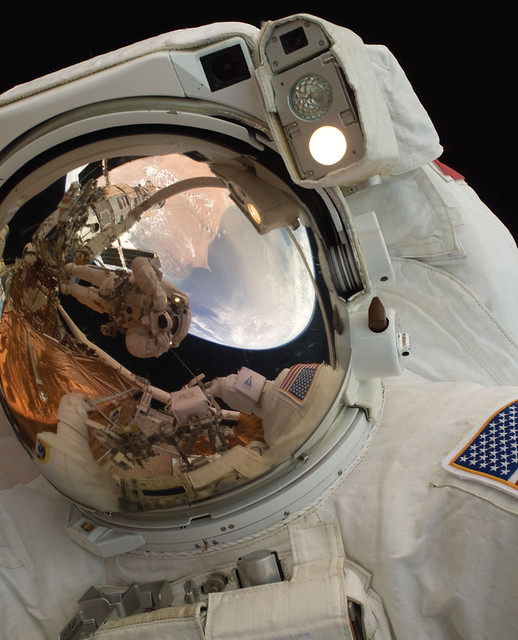
Italian scientists report in the FASEB Journal that they have found the enzyme responsible for this outerspace apoptosis, and that inhibiting this enzyme could reduce astronaut immunity problems.
The scientists took lymphocytes from healthy human donors, then sent the lymphocytes to space onboard the International Space Station, the ISS (those lucky blood cells!). Half the lymphocytes were exposed to the regular microgravity of the ISS, while the others were put into an onboard centrifuge to simulate Earth's force of gravity.
When the researchers measured apoptosis in both groups of cells after 48 hours, those that had been exposed to microgravity showed a more than "normal" amount of programmed cell death. Those that had been in the Earth-gravity centrifuge showed typical apoptosis levels.
They found the increased cell death in the microgravity-exposed cells correlated to increased levels of the enzyme 5-lipoxygenase.
A press release relates:
"It's no surprise that bodies need Earth's gravity to function properly," said Gerald Weissmann, M.D., Editor-in-Chief of the FASEB Journal, "because we evolved to survive on this planet. As humanity moves into space and potentially to other planets or asteroids, it's clear that we need know how not only to secure habitable conditions, but also how to secure our health. Fortunately, as we learn how to cope with low gravity environments, we also unlock secrets to longevity back home on Earth."
The scientists believe that by specifically inhibiting 5-lipoxygenase, they can suppress immune problems in astronauts.
And these findings may have an application to normal human aging. Since microgravity space conditions provoke health problems that mimic the aging process on Earth, the Italian scientists' discovery may also carry over to therapies that could bolster immunity in the elderly.
If inhibiting 5-lipoxygenase proves effective in keeping astronauts healthy, it may also be one day be a treatment option for fighting aging in people on Earth.
Photo: NASA Goddard Space Flight Center/Flickr
This post was originally published on Smartplanet.com