Tales from TEDx, how data expose us all

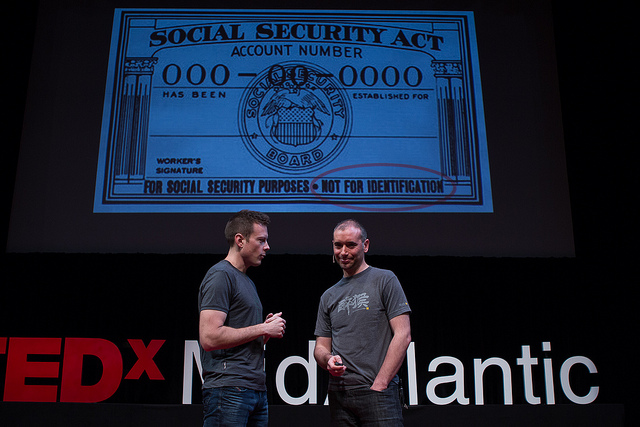
The gospel of TED has spread. The global conference series dedicated to "ideas worth sharing" has spawned a number of independently organized TEDx events, including the TEDxMidAtlantic conference, most recently hosted in Washington D.C. This was the fourth year for TEDxMidAtlantic, and its theme of "be fearless" in 2012 made for a wide range of speakers, from chief executive officers and a university president to General Colin Powell. Although the presentation topics varied significantly, a few ideas emerged repeatedly. Among the recurring themes was the idea that we are all being exposed.
From individuals to governments, we are seeing data strip away long-held privacies, an effect of networked communications that impacts not only the virtual world, but the physical one as well.
At least three presenters spoke directly to data's impact on privacy during day one of TEDxMidAtlantic. Two addressed concerns for individuals, while a third, Alec Ross, senior adviser for information at the State Department, cited governments' decreasing ability to control information thanks to online communications.
While there is a lot of good to be found in transparency, there are also serious negative consequences. Ross referenced the security backlashes that can take place when a government finds its power undermined by social media. Jules Polonetsky, director of the Future of Privacy Forum, talked about corporate responsibility, and the need to safeguard personal information even as companies are collecting vast amounts of data for marketing and sales purposes.
By far the most detailed presenter on the topic, however, was Alessandro Acquisti. Acquisti explained how new analytics capabilities make it possible to acquire intimate information about a person. Sometimes the trick is simply to snap a photograph and then follow the digital bread crumbs.
In 2011, Acquisti worked with a team of researchers to determine what personal information could be gleaned from a single digital photo. As presented in his TEDx talk, Acquisti and his team surveyed students at a North American college. The researchers shot a photograph of each participant, and then handed over a questionnaire to be completed on site. As students filled out their paperwork, each photo was processed with facial recognition software against a database of images from Facebook profiles. By the time the participants finished their anonymous questionnaires, the researchers were able to positively identify nearly one third of the individuals by name.
By itself, the ability to identify a person by his or her photograph isn't earth-shattering. However, Acquisti also presented findings that showed how his team was able to use a known identity in some cases to uncover critical personal details, Including social security information. This ability stemmed in part from an earlier experiment by Acquisti and co-researcher Ralph Gross to deduce social security numbers using publicly available information. In that 2009 study, Acquisti and Gross were able to predict the social security numbers of many living persons by comparing them to dead individuals who were assigned numbers at similar times, and in similar geographic locations.
Put two and two together. A photograph reveals identity; identity reveals sensitive, personal information.
While not everyone could replicate Acquisti's research techniques, certain technology trends make his type of experiments more accessible than ever before. Advancements in algorithmic software, the increasing availability of computer processing power, and a growing wealth of public data all make privacy a lot harder to maintain. And it's apt to get worse. As we add sensor data to the mix, including information from networked transportation, connected appliances and even health-monitoring devices, the opportunities to delve into details of personal identity and individual behavior will only continue to increase.
In light of the privacy issues addressed at TEDxMidAtlantic, the "be fearless" theme might be viewed through a different lens. The TEDx speakers suggest there is no anonymity left in the digital age. Be fearless, perhaps, but know that someone may be watching your every move.
Image courtesy of TEDxMidAtlantic
This post was originally published on Smartplanet.com