Follow this blog:
RSS

Can Yerdle redefine consumerism?

By | November 23, 2012, 5:28 AM PST


Some day, the word Yerdle may morph into a verb. You might mention to a friend that you need to buy a saw or some other hand tool for a house project. “Well,” she would reply, “You should just Yerdle it.”

Yerdle launched today, Black Friday, in an effort to kill retailing. Sort of. Yerdle would like to change the very nature of retailing and the ways individuals think about how, where and why they acquire things. It provides a web-based platform for friends to loan or give away things they’ve been holding onto but no longer use. The Yerdle website and mobile applications are formally launching today –- timed symbolically to thumb its nose at the  Black Friday buying spree.

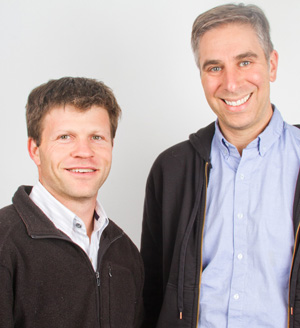
Yerdle is the brainchild of Adam Werbach, chairman of consulting and communications firm Saatchi & Saatchi S. (as well as a former 23-year-old president of the Sierra Club), and Andy Ruben, formerly the chief sustainability officer at Walmart.

The idea struck pay dirt with co-founder Andy Ruben last fall, at his kid’s soccer game. “My [then] 5-year-old daughter was starting soccer.  We bought shin guards online.  As I sat at her first game and watched the field full of 5-year-olds and the adjacent field full of older girls who had likely outgrown their shin guards, it occurred to me how insane the whole model is. I am fairly certain the shin guards we bought new were sitting in my neighbor’s garage, from a year earlier — and my neighbors would have loved to have seen them used again.”

Bill McDonough, the architect and designer who, with Michael Braungart, launched the Cradle to Cradle product design and lifecycle system, says Yerdle recasts the notion of what a consumer is and is not. “How do you consume a baby carriage, or a crock pot, a polyester fleece? You can’t. You’re a customer of these things and you want the service they provide.”

Ruben (left) and Werbach

Until, that is, you no longer require their services. At that point, the thing most of us do is cast them off…often to a landfill. Indeed, that is the concept behind the planned obsolescence of consumer products that environmentalists have long railed against. That said, what other choice do we have when we literally grow out of our needs for things, like a baby carriage? Craigslist is one option. Yerdle, now, is another. Instead of giving them to strangers, maybe giving things we no longer need to our friends, or friends of friends, will feel safer and more gratifying.

By how, you are likely wondering, how will Yerdle make money? Down the road — three to six months, says Werbach — Yerdle will add a commerce tool, so that individuals who can’t find a give-away or sharable version of the thing they want will instead be able to purchase it from someone outside his or her immediate circle of friends. Yerdle will take a small transaction fee, which is how it will keep its lights on. Another revenue stream will be in the form of a delivery service, helping get goods from the seller/giver to the buyer/taker.

How pricing will be set, and whether goods will be offered through auctions or set prices are all to be determined, says Ruben, noting that the company is initially focusing on growing friend networks and the free component of the market place.  ”I would say as a retail concept that simplicity is a rule for us,” he says. That is, the process of posting goods for sale should be as easy as posting them for free.

Yerdle will likely benefit from Ruben’s background in the Big Box retail world. “I see the commerce part as how it’ll sustain itself,” he says. “It’s about scaling the idea. Adam and I have been in business and non-business [non-profit] environments. There is so much more scale in business.”

There are currently 1,500 beta users on Yerdle.com, all based in the San Francisco Bay Area. The average Yerdle member has his or her pick of 500 items — surfboards, casseroles, blenders, croquet sets, etc., etc. — that are available either for a loan or straight-up acquisition, for zero dollars.  “They have a rate of interaction of 40 percent, meaning that many have posted something or gotten something from the site,” says Werbach. In the social web world, that’s a “stellar” rate, he adds.

Helping to ensure that Yerdle finds fertile ground through integration with social media is the company’s VP of engineering Carl Tashian, who developed the system architecture behind the carsharing service Zipcar.

Half of Yerdle’s recruitment is coming through exposure on Facebook –- in the form of links that friends post there, regarding something they’re seeking or offering on Yerdle. The other half is coming to and joining the site directly, often through a friend’s recommendation.

New Yerdle communities will be cropping up around the country, says Werbach, but the company is taking a measured approach to growing the network. For a community to form in a new city or town, those early adopters have to have, collectively, at least 50 items that they’re interesting in offering. “If people join and don’t have 50 items available to them, we ask them to wait until enough of their friends have joined. No one wants an empty store and we want to maintain a high quality experience,” he says.

Specifically, the company’s mission is to reduce 20 percent of the things people buy, by making used versions easy to access. Yerdle sounds like the love-child of Facebook and Craigslist. Ruben acknowledges that, indeed, Craig Newmark blazed an important trail: “We love Craigslist. It has done an incredible amount to change the way think about each other.”

Start your week smarter with our weekly e-mail newsletter. It's your cheat sheet for good ideas. Get it.

Mary Catherine O'Connor

About Mary Catherine O'Connor

Mary Catherine O'Connor is a contributing editor for SmartPlanet.

Mary Catherine O'Connor

Mary Catherine O'Connor

Contributing Editor

Mary Catherine O'Connor has written for Fast Company, Wired, Outside, Entrepreneur, Earth2Tech, Earth Island Journal and The Bold Italic. She is based in San Francisco.

Follow her on Twitter.

Mary Catherine O'Connor

Mary Catherine O'Connor

Mary Catherine has written white papers and marketing material for technology companies and will not write about companies with which is actively engaged. She will disclose any instances in which her work mentions companies for which she has worked. Mary Catherine does not hold any investments in the companies that she covers.

She writes for SmartPlanet and is not an employee of CBS.

If you liked this, don't miss...
8
Comments

Join the conversation!

Follow via:
RSS
+4 Votes
+ -
Duh? Freecycle?
Sounds like more CA trying to reinvent the world in their image.
The Freecycle Network is made up of 5,079 groups with 9,207,628 members around the world. It's a grassroots and entirely nonprofit movement of people who are giving (and getting) stuff for free in their own towns. It's all about reuse and keeping good stuff out of landfills. Each local group is moderated by local volunteers (them's good people). Membership is free.
Posted by latinw@...
23rd Nov
+2 Votes
+ -
yerdle?
This is done in The Netherlands since the 1920's regarding medical tools like walking stick, crutches etc. No one buys theme there. Rent is in quarters per day.
Posted by jackvandijk
23rd Nov
0 Votes
+ -
This won't fly.......... good try youngins'
Ah, there's "play it again sports" for the person who wants to sell their old sports equipment -- why give it away as they say in this article? Back in the 1800s this was a good idea, neighbor helping neighbor, but now? Hey, if you want to give your neighbor or sports acquaintance something, sure, go ahead; but on a broad scale this won't work. It would take a municipality to do so, such as a city adopting a bike-exchange for the free usage of bikes for commute.

Nice try, it's a complete wast of time. Remember, people like "new" and they like to shop. I'm not talkin' grunge here, i.e., the 19 year old going to good will for a used pair of jeans, nope, I'm talkin' about being a real human who wants "new" , and who doesn't? The automobile is the only area I can think of where buying new is not a good idea, maybe here I would go three years out, after depreciation has taken its' course. And if you do go this route you'll be always known by your kids as "Mr. or Mrs. Cheap Skate", especially if mommy or daddy work for the government, with all the freebies they're already getting, of course bottom-feeding is a complete and other topic.

God save America.
Posted by Cyclingmasterseller
Updated - 23rd Nov
+2 Votes
+ -
I really don't understand...
...how this fills any gap that eBay or Craigslist doesn't already accommodate.
Posted by JohnMcGrew@...
23rd Nov
0 Votes
+ -
life's a funny old thing
consumerism and, dare i say it waste, drives the greatest consumer engine the world has known. waste may very well be the thing i hate most. right up there with ignorance which, of course, is a waste of brain and sensitivity.
so, without waste, will the consumer engine stop? no, but it will slow considerably and unemployment will follow. life's a funny old think, ain't it.
i'm not advocating waste nor mindless consumerism but rather, passing along an observation. idealists crave a perfect world; nature slaps down that idea.
Posted by Sunon@...
23rd Nov
+2 Votes
+ -
You have two cows...
The problem with those advocating "sharing", is that they usually aren't the folks who worked to obtain the objects in the first place, and when they "borrow" from their "friends", they fail to take proper care of said object.

Private property rights are a good thing - they encourage someone to take stewardship, rather than shrugging and expecting someone else to do the care, feeding and maintenance.

I'm all for renting in lieu of buying, for intermittent needs, and we buy used where practical. But communal ownership always disappoints.
Posted by FoodStampPlanet
Updated - 23rd Nov
+1 Vote
+ -
the difference
I think the big difference between Yerdle and the other sharing/selling sites mentioned is that Yerdle seeks to share and sell through your social network. It feels good to give things away but it feels even better when you know and like the people to whom you're giving. Plus, buying or receiving free stuff from your friends feels safer because you assume they wouldn't give you junk or bedbugs, AND they won't assault you when you meet. As a woman, I know I always worry a little when I drive to a strangers' house to pick up something I found on CL.

I use my Facebook account to ask for or offer things a few times a month but I don't want to do it too much lest my friends tire of it. I look forward to trying Yerdle if it ever makes it eastward so I can get down to sharing a lot more.
Posted by alywindsor
Updated - 25th Nov
Join the conversation
Formatting +
BB Codes - Note: HTML is not supported in forums
  • [b] Bold [/b]
  • [i] Italic [/i]
  • [u] Underline [/u]
  • [s] Strikethrough [/s]
  • [q] "Quote" [/q]
  • [ol][*] 1. Ordered List [/ol]
  • [ul][*] · Unordered List [/ul]
  • [pre] Preformat [/pre]
  • [quote] "Blockquote" [/quote]

Join the SmartPlanet community and join the conversation! Signing up is fast and free. Don't wait -- we want to hear your opinion!