Follow this blog:
RSS

Are bicycle lanes really green? Some city residents see red
By | February 16, 2012, 4:35 AM PST

Los Angeles Mayor Antonio Villaraigosa pedaled his bicycle in a bike-only lane in Venice Beach when a taxicab swerved suddenly and stopped in front of him. The mayor clutched his brakes but it was too late. He fell and broke his elbow.

When the mayor’s accident made headlines in July 2010, the incident energized the city’s cyclists and bike commuters around Los Angeles’ ambitious plans to make 1,600 miles of bike lanes in this auto-centric metropolis. Yet little progress has been made in the year and a half since the mayor’s fall because of an unlikely hurdle: California’s environmental laws.

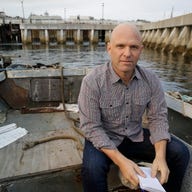
Much of the blame — or kudos, depending on where your politics lie — for the delays can be placed on Rob Anderson, a 69-year-old with a salt-and-pepper beard who lives 400 miles north in San Francisco. To the fixed-geared hipsters and bicycle utopians he’s a pariah. The city’s cycling boosters have called him a “magnificent jerk” for standing in the way of safer streets for cyclists, a “scumbag” and a “cynical dickhead” in comments on his blog.

Anderson has heard it all since 2006, when he successfully sued San Francisco over its bike plans, arguing the city had not done a proper environmental study as required by state law. While the city had spent years preparing to line its streets with bike lanes, a judge agreed with Anderson and forced San Francisco to stop implementing its bike plan for more than three years in order to finish the costly review.

“The city insists on screwing up our streets on behalf of the Bicycle Coalition and a small, obnoxious minority of bike people. It’s political correctness run amok,” said Anderson, sitting in a café in the Western Addition neighborhood, where he lives and writes his muckraking blog “District 5 Diary.”

Bike advocates called the ruling a “perversion” of state environmental laws and blamed Anderson for blocking an “obviously pro-environment action.”

While Anderson’s fight over bike lanes began as a neighborhood issue, the impact of his lawsuit is having a ripple effect in other places. The most dramatic example is in Villaraigosa’s Los Angeles where, fearing similar lawsuits, the city put the brakes on its biggest bike lane projects to conduct the costly environmental review Anderson’s suit forced San Francisco to do.

The irony is not lost on city leaders or bicyclists, whose collaborations to improve bike lanes in one of the world’s largest, most polluted metropolitan areas are being stymied because of California’s Environmental Quality Act, or CEQA. In essence, the law requires a thorough study of any project that will effect traffic on any street. And while the jury’s out about whether bike lanes have any long-lasting negative impacts on auto traffic, or air pollution for that matter, most experts think increasing cycling cleans the air and reduces traffic. But the law is clear.

“The city knew there was a problem with environmental clearance,” said Claire Bowen, city planner of Los Angeles. “Then we looked at what was happening in San Francisco.

“It’s an obstacle, and you have to work with that process to look at ways to make it work. To me, it’s all part of the mountain you’re climbing,” Bowen said. “But that’s the challenge. We recognize the irony and we are being cognizant of that.”

DO BIKE LANES INCREASE POLLUTION?

Second Street in San Francisco’s South of Market neighborhood is often congested during rush hour. It leads drivers through narrow urban canyons to the Bay Bridge, which heads east to Oakland.

Some residents and small business owners in the neighborhood have expressed worries in public comments at meetings and in local press accounts about the plan, saying that removing lanes and parking spaces will worsen traffic and their air quality. But there is scant scientific evidence to support the theory that bike lanes worsen traffic and therefore air pollution.

The key to determining a bike lane’s effect on the traffic of any given street lies in monitoring the use of a roadway. Officials study a road’s so-called “level of service,” which calculates how many cars use the road during certain hours and gives that road a grade, A through F, with an F being gridlocked rush hour traffic.

But this level of service equation does not take into account the road’s other uses: pedestrians, bicycles or other alternative forms of transport. City planners and bike advocates say this oversight has caused too many simple bike lane projects to be forced into long environmental reviews — that if you look at all the uses of the roadway, the grades would be higher and need for environmental review lower.

“Really what the issue is, is that [environmental] guidelines designed by cities hit this trigger that requires an environmental review, and we want to get them away from that antiquated model,” said Alexis Lantz, a city planner who is planning and program director for the Los Angeles County Bicycle Coalition.

“If you want to improve the air quality of our communities, you should make it more possible for people to get as quickly as possible from point A to point B.”

The little science that has been done on this topic points to what most people have figured out from common sense: that increasing bicycle infrastructure in cities can reduce traffic and bolster public health. Many of the studies that have been done have been undertaken by the very cities seeking to implement the lanes, so can be skewed toward getting the project approved.

A recent independent study in the journal Preventive Medicine looked at 14 cities – including Portland, Ore., Paris and Muenster, Germany — with bike plans.

“The combined evidence presented in these studies indicates that the health benefits of bicycling far exceed the health risks from traffic injuries, contradicting the widespread misperception that bicycling is a dangerous activity,” the study found. “Moreover, as bicycling levels increase, injury rates fall, making bicycling safer and providing even larger net health benefits.”

The university town of Davis in northern California has one of the highest rate of bicycling in the nation, with 17 percent of its 64,000 residents using a bike to commute to work and 41 percent calling bikes their primary mode of transportation, according to a study by the Bicycle Federation of America.

Susan Handy, who teaches environmental policy and planning in the University of California, Davis’ Transportation Technology and Policy Program, said bike lanes could potentially cause more air pollution if they resulted in stop-and-go traffic.

But, Handy added, “I do not know of a general study that tests this possibility, but many cities have modeled the effect of bicycle lanes before installing them and found little effect on traffic.”

MIXED MESSAGES

While environmental regulations can require in-depth studies, state governments are often also huge supporters of increasing cycling in cities.

California’s Air Resource Board Web site supports increasing biking and estimates that about 7 tons of smog-forming gases and almost a ton of inhalable particles are spared from the air each day due to use of bicycles rather than motor vehicles.

And even when a city does a complete environmental review as required under state law (and federal law if the project receives any federal money), it is unclear if the money and time spent were worth it.

“My opinion is that the bicycle lane projects that have been challenged as needing full CEQA review have been carefully considered by planners and the public as a part of developing the city’s bicycle plan and are likely to have no net negative impact on the environment,” Handy said, “and so the time and money spent on an (environmental review) for these projects is not well spent.”

Even Anderson acknowledges that after his successful lawsuit forced San Francisco’s environmental review, the city’s final bike plan did little to assuage his concerns.

“The environmental impact review on the bicycle plan admits that it will make traffic worse, but the city figures that’s an acceptable trade-off for encouraging more people to ride bikes. But the city has no evidence that screwing up traffic for everyone but cyclists will lead to a significant increase in cycling,” Anderson said. “It’s a faith-based exercise in transportation policy.”

In Los Angeles, the delays in the wake of Anderson’s suit in San Francisco have led to a call for statewide reform of its environmental laws under CEQA to exempt bicycle projects. Officials in both cities underwent years of planning and were on the cusp of painting in their new lanes when they stopped for more environmental review. Yet some do see a benefit in slowing down the process and taking a longer look at these projects in major cities, as well as giving the public more time to comment.

“The benefit of CEQA review is it does slow things down and allows the public to more fully engage in the process,” L.A.’s Bowen said. “When you just go and put something out there and the public’s not prepared for it, there’s a backlash.”

As for Anderson, there is some satisfaction in knowing that his lawsuit has had ripple effects elsewhere.

“That’s very wise,” he said of Los Angeles’ decision to halt plans and undergo CEQA review. “It shows that it only takes one neighborhood group.”

Photo: based on original by Sharon Mollerus.

More from SmartPlanet’s Mobility Issue:

Start your week smarter with our weekly e-mail newsletter. It's your cheat sheet for good ideas. Get it.

Jason Dearen

About Jason Dearen

Jason Dearen is a contributing writer for SmartPlanet.

Jason Dearen

Jason Dearen

Contributing Writer

Jason Dearen covers the environmental beat for the Associated Press. He is based in San Francisco.

Follow him on Twitter.

Jason Dearen

Jason Dearen

In the unlikely event that Jason has a professional or financial relationship with a company he writes about, it will be prominently disclosed.

He writes for SmartPlanet and is not an employee of CBS.

If you liked this, don't miss...
28
Comments

Join the conversation!

Follow via:
RSS
+3 Votes
+ -
In some cases, yes, they do increase local pollution.
I recently had to drive through Brighton MA for several days and a change from past trips was a bike lane at a major intersection. Traffic that at one time flowed was now bumper to bumper for 2 blocks because a lane had been lost for bikes. In 9 days of driving on sunny 50 degrees days I saw NO BIKES, but lots of buses spewing smoke sitting in traffic.
Posted by Hates Idiots
16th Feb 2012
+5 Votes
+ -
Ant-carism
That's what a lot of bike people want to do: make it more difficult to drive. Motorists must be punished for driving cars and not riding bikes.
http://district5diary.blogspot.com/
Posted by Rob Anderson
16th Feb 2012
+3 Votes
+ -
Equal access
Most of the cyclists I know also drive cars, so I doubt they would have any interest in simply making driving less convenient for its own sake. However, most of them do subscribe to the "right tool for the job" philosophy, which is why they bike for most trips and only drive when their car is a necessity and not overkill.

That being said, our cities are not getting any smaller and we can't simply pave our way out of congestion, so to deny equal and safe access to bicycles is to basically ignore the problem. Increasing the number of people making trips in our cities by bicycle reduces the amount of wear to our roadways, decreases our reliance on non-renewable energy sources, increases the health and productivity of individual residents, reduces congestion and parking shortages, puts more money into the local economy, creates local jobs via infrastructure projects, manufacturing and retail shops, and some say (apparently to some controversy) that it even has a positive impact on air quality.

If you are aware of another, secret solution to our transportation problems which does all this and more please let us know about it. We will build a park and statue in your honor and hail you as a city planning genius.
Posted by Prinzrob
17th Feb 2012
+2 Votes
+ -
Stop the bigoted attitude and name calling
As if "bike people" are another species! Where is the civility? Remember, the Bike People are just ordinary people pedaling to work, to the grocery story, to the playground, to the hospital, to the friend's house, to the park.

Also, might you explain what Ant-carism is? Is that like "tiny cars", or bikes?

A note to other readers: if you abhor bikes and the barbaric Bike People who ride them, then living in San Francisco, as Mr. Anderson does, is probably not the greatest idea! happy
Posted by gplatt2
17th Feb 2012
+4 Votes
+ -
You should met some in MA before defending them.
Many here are an arrogant bunch. I live in a rural area where hordes of wannabe Lance Armstrongs run in packs of up to 40 bicycles on summer weekends.

They block both lanes on narrow country roads. I have to stop if a group is coming because they are in my lane and refuse to stay in their lane.

In Boston it is illegal for bicycles to go down one way streets the wrong way. Yet 2 cyclists were killed last year when they flew around a corner onto a one way road and hit a car head on.

Bicycle riders might not be concerned about being killed by a car, but who are they to decide that their stupidity is going to turn an innocent person into a killer?
Posted by Hates Idiots
20th Feb 2012
+4 Votes
+ -
RE: You should meet some
You've just described the People's Republic of Boulder, CO. It's amazing, "I don't want to stop at the light and have to unclip, so I'm going to blow it". "I don't want to ride on the right side, I want to split lanes or take up a whole lane on a road with a 50 mph speed limit." Guess whose fault it becomes when they get run over. Outside Boulder on the weekends it is impossible to get anywhere on the secondary roads - exactly the same scenario - packs taking up the whole road with a "screw you" attitude.
Posted by GregGold
20th Feb 2012
+4 Votes
+ -
Exactly!
One lawyer who fought for the legal right for a bicycle to occupy a traffic lane as a car was pulled over on his bike less than a month after the law passed because he ran a red light on his bicycle.

He laughed at the cops warning and ran the next red light light while riding in front of the cop.

He got pulled over again and was given a $100 ticket because of the law he helped write and he still had the nerve to challenge it. He must have got the one conservative judge in the state. He called him a fool to his face and impounded his bike until the fine was paid. In accordance with the law he helped write.
Posted by Hates Idiots
Updated - 20th Feb 2012
+1 Vote
+ -
Allusion?
Am I the only one who read "mr. Anderson" like the guy from the matrix?
Posted by 45yoyos
25th Feb 2012
0 Votes
+ -
another species?
They ignore traffic laws, and they block both lanes on narrow country roads. They get freebies without paying any road or use taxes. They get benefits paid for by users of motor vehicles.

They're not another species, they're just rude, selfish, and arrogant.
Posted by bb_apptix
27th Feb 2012
+5 Votes
+ -
bike lanes causing more pollution?
It all depends on where & how they are implemented. If a bike lane is added to an already congested urban street, then yes, its a no-brainer, but if the bike lanes are restricted to secondary roads, or wider thoroughfares with extra-wide right-of-ways, then probably not. Here in Miami, FL (not a paradise for bicyclists) removing a lane of US-1 for a bike lane would be idiotic, but putting one under the (elevated) MetroRail paralleling US-1is not, and has actually been done.
Posted by Starman35
17th Feb 2012
0 Votes
+ -
Breathing and paving
I think it is wonderful that all those cyclists are breathing in that polluted air so we don't have to.
But seriously, the way to measure success in transportation is to see the volume of people moved over a certain time. A car requires more pavement than a bike. The higher the speed the car is moving, the more pavement it requires for safety (stopping distances). The more pavement, the more thermal inertia (heat build up) and water runoff problems. Shorter commutes at lower speeds are best. Looking at the number of people moved per square foot of pavement is the best way to balance all the environmental issues, not just looking at air pollution.
Posted by Arch Alchemist
17th Feb 2012
+2 Votes
+ -
Don't forget parking!
I would also add to this that cars don't just require more roadway while they are being driven -- they also require parking! Parking = more pavement. Bikes don't require large paved parking spaces along the road or parking garages. Bikes don't require vast parking lots at the mall or "bike dealership". Are car parking spaces really green? Because I see red! happy
Posted by gplatt2
17th Feb 2012
+1 Vote
+ -
Space needed by 60 people...
Here's an image that shows what you're talking about... http://bubikes.bostonbiker.org/files/2010/01/bikebuscarmuenster.jpg

Seems like the bikes could be even closer. Interestingly, the bus seems the most space economical, and would only need parking at its maintenance/storage yard (in addition to pullouts for stops). Probably the best combination is bus and bike (or light-rail/bike even better...) for overall reduced emissions but travel distance possibilities.

Also, this argument about bikes causing more pollution is really a near-term/long-term issue. Near-term, yes perhaps, reducing lanes and parking spots might increase congestion and thereby pollution. But, long-term, with bike lanes becoming more common, and therefore people feeling it safer and easier to ride instead of drive, the pendulum will swing back and the ultimate results are less pollution, and less congestion for those that still need to drive (delivery vehicles, emergency vehicles, buses, etc.)
Posted by ecosopher
26th Feb 2012
+1 Vote
+ -
Well, but environmental laws shouldn't apply to what *we* want!
I love it. I work for a state DOT. Our projects are constantly held up for environmental reviews, reviews that sometimes cost millions of dollars, while the project costs go up due to inflation as the years pass. We're subject to all kinds of environmental regulation that's just plain silly, very expensive, but makes folks like these bicycle types happy, that is, until the same laws block something *they* want. Then they want the laws changed, but only for them. The rest of society can keep paying for their environmental absurdities. I love the irony.
Posted by flopwich
17th Feb 2012
0 Votes
+ -
Their complaint says it all.
Bike advocates called the ruling a ???perversion??? of state environmental laws and blamed Anderson for blocking an ???obviously pro-environment action.

Obviously not.
Posted by JohnMcGrew@...
17th Feb 2012
-1 Votes
+ -
More naming calling
These "bicycle types" surely can't be worse than those inefficient "government types" who work for places like the DOT, can they?
Posted by gplatt2
17th Feb 2012
-1 Votes
+ -
You're kidding, aren't you?
All the bicycle lane really is, for the most part, just a sorry try from the politicians to make people think that they're trying to get people to exercise and to help the all environment, all rolled into one simple cost. If they were really trying to save the environment, they would put this into a public transportation system that's something more than the city bus.
Posted by Crash2100
17th Feb 2012
0 Votes
+ -
the big picture
close 2nd street in SF entirely for automobils. when traffic splits up throug 3 or 4 different alternate (and a bit longer) routs, traffic as a whole will flow quicker than through a single "fast" route. it's been trien and proved SF should try it as well as every other city.
Posted by ishai abrams
18th Feb 2012
-3 Votes
+ -
A Waste of Time and Tax Dollars
It is disturbing that a small population can use a legal loophole to manipulate a community--or an entire state--in this manner. Cyclists are often environmentally conscious, so the perversion of this law is very upsetting to most of them, rightfully so. One of the benefits of cycling as opposed to driving or public transportation is the health benefit. Many people stay in shape by cycling; the notion that it is more hazardous to the public's health than helpful is preposterous.

http://www.californiabicyclesafety.com
Posted by DudekLawFirm
21st Feb 2012
+2 Votes
+ -
Waste of tax dollars?
It wasn't a loophole. In California we have the California Environmental Quality Act (CEQA), which requires environmental review of all projects that even might have an impact on the environment. The City of San Francisco knew it was breaking this law by not conducting environmental review of the Bicycle Plan. They just thought they could get away with not doing it.

Clearly, if you take away more than 50 traffic lanes and 2,000 parking spaces on busy streets, you're going to impact the environment, including air quality by making traffic congestion worse.
http://district5diary.blogspot.com/2006/11/judge-buschs-decision.html

They wasted a lot of taxpayers' money by defending their unprincipled conduct in court, and, since they lost the case, they then had to pay my lawyer for all of her time.
Posted by Rob Anderson
24th Feb 2012
-1 Votes
+ -
Dear Rob
How much do you have invested in auto and gas industries? I have to ask because your point of view is so opinionated and hard-line that I wonder how much real research you put into it.

I can see how bike lanes might actually increase gridlock, therefore pollution. If a car lane is removed, there is less capacity for cars. I wouldn't be surprised if the decrease in capacity is not made up for by increased use of alternatives to cars.

However, have you substantiated your generalization, "a lot of bike people want to do: make it more difficult to drive?"
Posted by ThinkMore
24th Feb 2012
+1 Vote
+ -
Too broad
From how I see it, it appears people are trying to be too broad about things. Bike lanes work in some cities and not in others. For example, in my city (Memohis, Tennessee), I nor anyone I have asked has ever seen someone using one of the nifty new bike lanes but it. We have a particularly small number of bicyclers here, so why'd we put them in? Because we have a, no pun intended, very large number of overweight / obese people and the city government wants to look like its doing something to help. All that it has done it screw up miles of traffic for a couple of empty lanes.
That is not to say, however, that bike lanes could not work in some other cities. But I feel that there needs to be a measurable percent (preferably in excess of 5-10 percent) of the population who say "yes, if given a bike lane I'd use it." before making any, and trying to find ways to add them without reducing number of lanes (widen streets, shrink lanes, etc.) and sticking to the back roads instead of larger ones.
Posted by 45yoyos
25th Feb 2012
0 Votes
+ -
Two-wheelers
People - stop all your whining and bickering, and get a motorcycle. It seems obvious to just about everybody on this forum that the key to cleaner air and smoother, faster traffic lies in the creation, as well as the maintenance, of road space. If you are able, don't need to carry much on your commute, commute alone, and live in a region without serious ice and snow most of the year, a motorcycle can really make things easier. No doubt they are internal combustion machines (Hallelujah!), but your average middle-sized bike gets great milage (i.e., less exhaust), almost never gets stuck in traffic, and is easy to park. If you don't need (or like) a big bike, there are scooters of all sizes and flavors, that can get you around town just as safely, if not more quickly, than a bicycle. Personally, I maintain that a good little 125 or 250 cc is actually safer in traffic than a bicycle, as it can keep up with the flow while being easy to handle. If cities could embrace the idea, with various incentives and privileges it would be easy to encourage more motorists to get on two wheels and stop taking up all that road space. The fact remains that most people spend almost all their driving time alone. In places like southern California, that is ridiculous and unnecessary for urban commutes.

Bicycling is great, but the truth remains that the majority of Americans just won't do it on a regular basis. So bike lanes on already highly-congested thoroughfares will never fix the situation. As an illustration, in the neighborhood accessing the Oakland-Bay Bridge, most of the rush hour traffic in that narrow one-way traffic maze is going over the bridge, and probably commuting well out of easy bicycling range. In towns like SF and LA with good bicycling populations, the cyclists should be given high priority on certain secondary roads and only larger roads that can handle the separation. In effect, this would actually keep the cars and bikes out of each others hair.
Posted by dsbb
26th Feb 2012
0 Votes
+ -
Unfortunately, whatever money we'd save...
...in energy and road construction, we'd more than make up for in the increased medical care and collateral damage. Not everybody is up to riding motorcycles, especially those much older.
Posted by JohnMcGrew@...
26th Feb 2012
0 Votes
+ -
The new 3 wheelers are nice.
They are still not for everybody, but these things open up riding to a larger group. http://www.can-am.brp.com/

I'd rather see the feds offer a credit for buying these instead of the Volt.
Posted by Hates Idiots
26th Feb 2012
0 Votes
+ -
About those Motorbikes
Yes. It is true that on a bike of any sort (motorized or not) the rider is putting his or her neck on the line to higher degree than when riding in a car. In the cases of accidents involving another vehicle, though 2/3 of the time fault technically lies with the other vehicle (passenger cars mostly), the motorcyclist is ultimately responsible for his/her own fate. Most accidents involved youth and lack of experience. You know that in most cases the rider is probably going too fast, assuming the right-of-way at intersections, or otherwise riding outside his/her envelope of control. (see: http://www.motorcycle-accidents.com/pages/stats.html) To point, a lot of US riders involved in accidents are probably on bikes that are too big them. In many cities and population centers in the world, mopeds and scooters are considered reliable and practical, and the most economically viable. If American motorists feel the margin of safety is too thin, statistics show that with rider training, accident incidence drops sharply, thus making it a likely requirement for riders seeking government incentives (tax, purchase supplements, insurance cuts, etc.). If motorbikes became more common, and considered a perfectly sensible mode of transport, drivers would be more aware of their existence, therefore making them more "visible" on public roads. The same is true for bicyclists. Strength in numbers, not in dividing up limited road space.

Certainly, there are many people who would not be suited to scooters and such, including older people and those with disabilities, families carpooling children, shoppers and the like. But, the vast majority of responsible adults of working, commuting age could easily and safely use this mode for urban commutes. Think of all those people who ride alone through their suburban communities, park in vast lots to catch the train into town each morning. There are hundreds of viable scenarios inviting change to new inexpensive, unobtrusive modes of transport. Another related option is electric bikes and scooters, though this is one that I don't think is particularly safe (too quiet, and too light, for the speeds they can attain), nor are they really anymore environmentally/economically friendly than internal combustion (those lithium power cells with their rare earth metals are causing all sorts of waste disposal problems, as well as reeking havoc in local environments where mining takes place; don't let the myth of "Hybrid" vehicles fool you!)


Dan Brownwood
Posted by dsbb
Updated - 28th Feb 2012
0 Votes
+ -
About Medical costs
...and by the way, the public will not incur extra medical expenses. At least not until the advent of national health care, which will be like ... never, and collateral damage insurance for motorcycles is next to nothing.

Dan Brownwood
Posted by dsbb
Updated - 28th Feb 2012
0 Votes
+ -
DO BIKE LANES INCREASE POLLUTION?
Yes.

A pointed out in the article, the amount of cars-per-mile that the road can carry drops. Also, I have to wait longer in my car for an open car lane, since they dropped car lanes from 2 each way to 1 each way.

Add to this that roads are funded and maintained through taxes, and bicycles pay no gasoline tax, no license fees or taxes, no road or use taxes. They provide no revenue, yet we spend millions providing bicycle lanes while we reduce the number of auto lanes and narrow auto lanes 1 foot each, contributing to more hazardous traffic, more traffic congestion, and more pollution.

Yet another example of incovenciencing society for the benefit of a select few.
Posted by bb_apptix
27th Feb 2012
Join the conversation
Formatting +
BB Codes - Note: HTML is not supported in forums
  • [b] Bold [/b]
  • [i] Italic [/i]
  • [u] Underline [/u]
  • [s] Strikethrough [/s]
  • [q] "Quote" [/q]
  • [ol][*] 1. Ordered List [/ol]
  • [ul][*] · Unordered List [/ul]
  • [pre] Preformat [/pre]
  • [quote] "Blockquote" [/quote]

Join the SmartPlanet community and join the conversation! Signing up is fast and free. Don't wait -- we want to hear your opinion!