Utility-scale solar plant for Fukushima

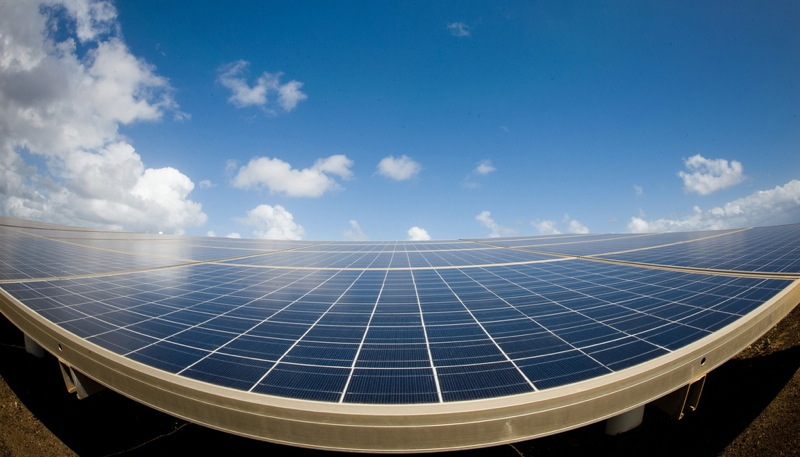
The northeast coastal town of Minami Soma plans to install 100 megawatts of solar at a cost of 30 billion yen ($378 million), Reuters reported recently.
The 100 megawatts would be about 2 percent of the 4.7 gigawatts of capacity at the now idle Fukushima Daiichi nuclear station 16 miles to the south, which suffered meltdowns when the devastating earthquake-triggered tsunami knocked out cooling systems last year. Parts of Minami Soma were in the no-go zone following the meltdowns.
After the Fukushima disaster, Japan shut down all of its 54 nuclear power stations.
The nuclear closure has deprived the country of about 30 percent of its normal electricity capacity. To compensate, Japan has embarked on energy efficiency and conservation programs. It has also turned to other power sources like liquefied natural gas, a fossil fuel that it imports. According to The Information Daily, Japan currently generates about 90 percent of its electricity from CO2-emitting fossil fuels.
To help curb fossil fuels and encourage renewables, the Japanese government has just approved measures requiring utilities to purchase renewable electricity at pre-set prices for up to two decades. The so-called feed-in tariffs are particularly generous for solar.
Japan is also expected to start turning on some of its nuclear reactors again, such as the two that Prime Minister Yoshihiko Nado approved some 10 days ago.
The 100 megawatts of solar at Minami Soma might signal a move toward more localized energy production. Minami Soma has a population of about 68,000 according to Wikipedia. My back-of-the-envelope scratching tells me that 100 megawatts would be plenty for the town, and then some.
According to a Publics.bg report citing Kyodo News, the municipal government and Toshiba "are also considering establishing a next-generation 'smart community' featuring efficient energy use" and "will call for Japanese and foreign investors to help them set up a special purpose company to build and operate their solar stations."
While several reports said the 100 megawatt facility would be the country's largest, the Japan Daily Press had a different take, noting,
"Their claim of building the largest solar plant in Japan does easily trump Kyocera’s previous announcement of a 70 megawatt solar facility in the southern prefecture of Kagoshima, but both companies have seem to forgotten that Softbank already has plans to build a 200 megawatt plant in Hokkaido."
The story also delivered an upbeat opinion on the new feed-in tariffs, noting,
"The push by many companies, large and small, to enter the solar power market in Japan comes with the government’s approval of profitable pricing incentives. Utility companies will be required to purchase electricity from providers of renewable energies. This is expected to lead to billions of dollars in investments for clean energy, and will hopefully lead to less of a reliance on nuclear power for Japan."
The pricing incentives should indeed help encourage renewables investment. It's the sort of thing that helped establish Germany as the world's leading producer of solar electricity over the last decade. But Japanese consumers can also expect to pay more - utilities have typically raised the money for funding feed-in tariffs in part by hiking the rates they charge customers who do not generate renewable electricity.
And don't count out nuclear, especially alternative and safer forms like the thorium reactor that utility Chubu Electric Power Co. is investigating.
Toshiba plans to start building the Minami Soma solar facilities this year and to start operating them in 2014, Reuters said.
Photo: Lance Cheung via Flickr.
More Japanese power on SmartPlanet:
- From Fukushima's home country: Nuclear will double
- Safe nuclear: Japanese utility elaborates on thorium plans
- Japanese utility mulls thorium
- Nuclear down, CO2 up in Japan, Germany
- Fukushima's lesson: 'Alternative' nuclear, not 'no' nuclear
- Floating wind farm on Fukushima's horizon
More big solar:
- Solar electricity world record: Germany cranks half its power with PV
- How a U.S. company is railroading solar in China
- Oil firm's African solar farm will transmit sub-Med electricity to Italy
- $5 billion solar scheme for U.S., Spain, Middle East
- Sheik ‘n Bake: Dubai’s ruler plans huge solar farm
- Construction of world’s biggest solar project starts in 2012
- Solar v Solar: Gloves come off at G20 Summit
Some solar innovations:
- Black power: Dark solar cell smashes record for absorbing photons
- Another way to make solar panels: Grow ‘em
- Dial-A-Photon: Cell phone and small solar panel buy electricity African power
- Breakthrough: World’s most efficient solar panel
- First Solar: Another record in thin-film solar efficiency
- French-California connection sees solar through a new lens
- Magnifying solar electricity’s future
This post was originally published on Smartplanet.com