Follow this blog:
RSS

UK: Hard lessons on subsidizing renewable energy

By | October 20, 2011, 6:36 PM PDT

Consumer energy bills soar in Britain, in part because ratepayers fund wind, solar and other green projects. The Energy Secretary wants to lighten the burden and shift subsidies to tidal and wave.

UK consumers pay some of the highest energy rates in the world and it’s getting worse.

In recent months, the country’s six major utilities have all announced big tariff hikes, some as high as 18 and 19 percent. Energy regulator OFGEM recently accused them of jacking up yearly profit margins by a staggering eight-fold since June, from £15 ($24) per customer to £125 ($197). The utilities disputed the claim.

One reason why rates are so high is that ratepayers are funding utilities’ efforts to develop renewable energy like wind and solar.

The U.K. government facilitates this practice through what it calls the Renewable Obligation (RO) program, which allows utilities to pass along renewable costs at varying amounts depending on the type of renewable. It’s a sort of hidden renewable energy surcharge on consumers’ bills – and one that some people suspect the utilities are taking unfair advantage of. Utilities receive so many “Renewable Obligation Certificates” (ROC) depending on how much and what kind of renewable energy they deliver. Each certificate lets them pass on more cost to the end-customer.

Not that the utilities are leveraging their ROCs alone into eight-fold profit jumps. There are other factors. Some people would say greed. The utilities refute the eight-fold increase and say their higher rates reflect the rising and volatile prices they themselves pay for fossil fuels.

But the ROC system does factor into the equation of rising rates.

To help reign in the pass-on charges for renewables, the government’s Department of Energy and Climate Change (DECC) today proposed cutting the total amount of them by between £400 million ($630 million) and £1.3 billion ($2 billion), for the period between 2013 and 2017. It also proposed re-prioritizing renewable types, so that tidal and wave would get more support and offshore wind would get more than what had been planned, albeit slightly less than its current level. Biomass co-fired with coal would also benefit. But certain technologies like hydro, “biomass conversion”, waste and landfill gas will lose out.
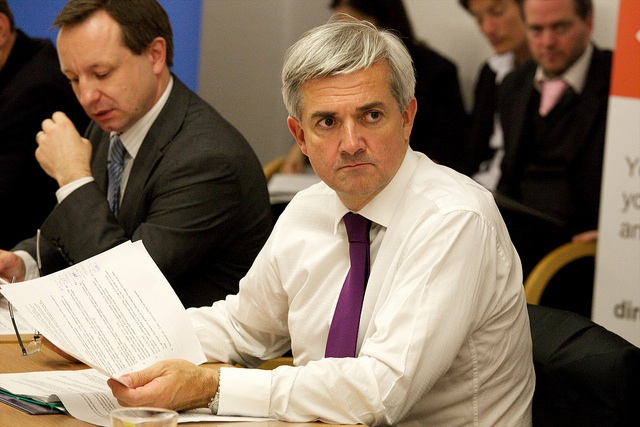
UK Energy Secretary Chris Huhne

UK Energy Secretary Chris Huhne

“We have studied how much subsidy different technologies need,” DECC Secretary Chris Huhne said. “Where new technologies desperately need help to reach the market, such as wave and tidal, we’re increasing support. But where market costs have come down or will come down, we’re reducing the subsidy.”

In his proposal, wave and tidal jump from 2 ROCs per megawatt hour to 5, by far the largest volume of increase or decrease for any of the renewables categories. Hydro falls from 1 to 0, energy from waste from 1 to 0.5, landfill gas from 0.25 to 0, and biomass conversion falls from 1.5 to 1. However, new techniques for “co-firing” biomass with coal increases from 1 to 1.5. Solar stays at 2 through 2014 and dips to 1.9 in 2015 and 1.8 in 2016. Onshore wind would drop marginally from 1 to 0.9, and offshore wind from 2 to 1.9 in 2015- a boost compared to the originally planned 1.5 in 2014. Wind plays a solid role in the approximate 7 percent share that renewables contribute to Britian’s electricity.

In total, DECC thinks the changes will lower consumer bills by £2.00 ($3.16) a year, not a lot.

But there’s more to the high cost of renewables than ROCs. The government also sanctions customer “surcharges” indirectly through another vehicle - its year-and-a-half-old Feed In Tariff (FIT) program. The FIT requires utilities to pay a consumer for electricity that he or she generates via solar panels and wind turbines.

The FIT has been a mixed blessing.

It has indeed spurred adoption of domestic solar power. Rooftop panels have been popping up like daffodils in spring. Perhaps too much so for the immediate economic common good because its success has given utilities like British Gas, EDF, E.ON, Scottish Power, Scottish and Southern, and nPower an incentive to raise their rates. They lose revenue when they pay a homeowner who generates solar power, so they’re tempted to recapture the lost sales by raising prices.

I like what the FIT has done to kick start solar power in this cloudy country. But I firmly believe that it has fed the utilities inclination to raise rates. It certainly hasn’t blunted it.

Another troubling thing about the FIT: It has created a ratepayer version of a regressive “tax”, because the people who benefit from it are the people who can afford the solar panels. The “have-nots” who don’t have access to $20,000 for rooftop installations end up subsidizing the energy bill of the “haves”.

So what’s Prime Minister David Cameron’s government to do to keep bills from continuing to soar while also fostering renewables? If it replaces ROCs and FITs with taxes, it would face a revolt. If it eliminated ROCs and FITs, renewables development could collapse.

Today’s cut back of the ROC was probably a step in the right direction, even if all the details weren’t to everybody’s satisfaction (you probably won’t like it if you’re in the biomass business).

Three months ago, the UK pared back FITs, slashing them by between 42 percent and 72 percent for any installation over 50 kilowatts in capacity, thus stamping out incentives for small utility scale solar farms.

The government is also expected to cut the FIT rate itself.

Now DECC has proposed Renewable Obligation cuts – relatively small in the grand scheme. Part of the idea is that the free market can take over. (You can see the details of all the proposed ROC “bands” for different renewables on the DECC website).

The story will continue to unfold, as DECC opened a consultation period through Jan. 12.

Anyone have any better ideas for how to fund renewables?

Photo: Top, CraveCNET. Bottom, DECC.

Related:


Start your week smarter with our weekly e-mail newsletter. It's your cheat sheet for good ideas. Get it.

Mark Halper

About Mark Halper

Mark Halper is a contributing editor for SmartPlanet.

Mark Halper

Mark Halper

Contributing Editor

Mark Halper has written for TIME, Fortune, Financial Times, the UK's Independent on Sunday, Forbes, New York Times, Wired, Variety and The Guardian. He is based in Bristol, U.K.

Follow him on Twitter.

Mark Halper

Mark Halper

Mark has no financial holdings in the companies he writes about. He occasionally travels at the expense of companies or their press relations agencies in order to report on a company or industry event related to it; Mark will prominently disclose this information when appropriate. This relationship will have no influence on his coverage. Companies he covers do not get to review columns in advance, or select or reject topics.

He writes for SmartPlanet and is not an employee of CBS.

If you liked this, don't miss...
8
Comments

Join the conversation!

Follow via:
RSS
+3 Votes
+ -
Why fund social engineering?
At last, an honest article about the added costs of renewables, and how government imposes what are essentially extra taxes on an unsuspecting public.

In this country, both California and Colorado have renewable energy mandates of 33% and 30% by around 2020 respectively. This has forced utilities to buy solar cell and wind technology which still isn't cost effective as a primary power source because no cheap way to store power is available. As a result, to reach these kinds of renewable energy percentages, utilities will still have to have available conventional power sources such as coal and natural gas for when the sun doesn't shine or the wind doesn't blow. Keeping a conventional power plant as backup for renewables still has the fixed costs of building, financing, and maintaining these plants even as they remain largely idle. It's a no-win situation for consumers that can only result in much higher electric rates than are justified.

Most consumers are unaware that they are the target of such a large social experiment in mandating power consumption. It can only lead to the same kind of high costs that England now sees.
Posted by zackers
21st Oct 2011
+2 Votes
+ -
It's worse than that.
I've been warning people about this since the idea of cheap-to-free energy flourished during the Carter era when "alternative energy" became part of the political lexicon. The majority of your utility bill is not to cover the cost of the energy, but to build and maintain the infrastructure that brings it to you. If utilities will be required to build and maintain 50% more infrastructure to produce and deliver the same amount of power, then expect that over time that your utility bills will raise by 50% or more to cover those costs. The only people who will not suffer these increases will be those who can totally escape the grid, and for most people that is not a possibility.

It will all contribute to the ongoing economic squeeze on the middle class. As utility bills continue to escalate, calls for subsidies to the "poor" will increase. Meanwhile, as rates on everyone else rises, it will make economic sense for the wealthy to invest in escaping grid. The middle class will be left to pay the bulk of the bill.

Oh, and I see they can't resist throwing the "greed" pejorative about quite a bit. What about the "greed" of people who want this wonderful green agenda, but always insist that someone else be made to pay for it?
Posted by JohnMcGrew@...
Updated - 21st Oct 2011
+1 Vote
+ -
Well, heck, there's that "too cheap to meter" source of energy, right?
Nuclear power has been subsidized so much that it's not even funny. Even now, nobody will touch a new nuke without gigantic government loan guarantees, the Price Anderson act, and on and on.

Then there's the depletion allowances and myriad hidden subsidies that oil has received, along with coal fired plant free passes on not treating the ash as a toxic waste, or dealing with a myriad of externalized costs.

Energy is a subsidized industry because it is a defacto monopoly due to the scales needed to produce and distribute it. As such, the public has a right to choose the parameters for its production and distribution, just as the government was completely justified dictating CAFE standards to the automobile industry, creating energy efficiency standards for appliances, insisting that electric and electronic products meet UL standards, and on and on. We all pay for this as part of being part of what we call the USA. Green standards are yet one other criteria that we as a people have voted for our elected officials to set and enforce, and this is a perfectly legitimate role of government.
Posted by klassman6
22nd Oct 2011
+1 Vote
+ -
Every Country needs a "Truth in Costs" Law
Funny how the people who complain and campaign for "things" always object to it when THEY have to pay for it.

In the energy field when people say they all want re-newable energy (*except for Hydro-Electric dams*) until they find out the true cost and they have to pay for it.

If every government mandated that all the costs of research and development that they MANDATE onto the utilities and initial deployment is charged directly to the consumer of it as well as the ongoing perpetual maintenance and replacement of these items, people would then wake up and actually see how much things REALLY cost.

Most of this stuff is now hidden - BY DESIGN of the "Government" - in the utilities. Putting it there shields the actual costs of these policies from the people and of course then people blame the UTILITIES for higher rates - when in fact the Government - through inaction of the people and by policy decisions that the general population have NO input into or can decide if wanted at all - do this on purpose.

A LOT of taxes / fees / costs are assigned to businesses in order to shield the people - purposely hide from them - the actual costs that the policies that people in power decided upon (whether elected / appointed / staff people who then make the policies).

The UK Government should just step up and tell the people they wanted renewable power and thus they have to pay for it and not try and shift the costs INTO the utilities again to shield the bad policy decision they have made.
Posted by TAPhilo
21st Oct 2011
+1 Vote
+ -
Truth in cost
If there were truth in cost laws then the cost of coal power would double or triple when they internalized all of the external costs.
Posted by riverat1
21st Oct 2011
+2 Votes
+ -
Probably...
...and it would still be cheaper than most of the phony alternatives we've been subsidizing.
Posted by JohnMcGrew@...
22nd Oct 2011
+2 Votes
+ -
Just to clarify things.
Does the electric bill for power from hydro dams include the hatchery costs for stocking rivers where the salmon have been cut off from getting to breeding streams?

Does the bill for power from a coastal wind farm cover the breeding program for endangered piping plovers that are killed by the blades?
Posted by Hates Idiots
24th Oct 2011
+2 Votes
+ -
Or the solar farms in the desert southwest...
...account for displaced turtles and lizards? Are the supposed harmful human health effects from subsonic resonance from wind farms accounted for? We are aware of the billions of dollars of ruined views that would supposedly occur off of Nantucket that fortunately Ted Kennedy will not have to endure...
Posted by JohnMcGrew@...
24th Oct 2011
Join the conversation
Formatting +
BB Codes - Note: HTML is not supported in forums
  • [b] Bold [/b]
  • [i] Italic [/i]
  • [u] Underline [/u]
  • [s] Strikethrough [/s]
  • [q] "Quote" [/q]
  • [ol][*] 1. Ordered List [/ol]
  • [ul][*] · Unordered List [/ul]
  • [pre] Preformat [/pre]
  • [quote] "Blockquote" [/quote]

Join the SmartPlanet community and join the conversation! Signing up is fast and free. Don't wait -- we want to hear your opinion!