Follow this blog:
RSS

The two-timing white knight of U.S. rare earth metals

By | March 22, 2012, 3:34 AM PDT

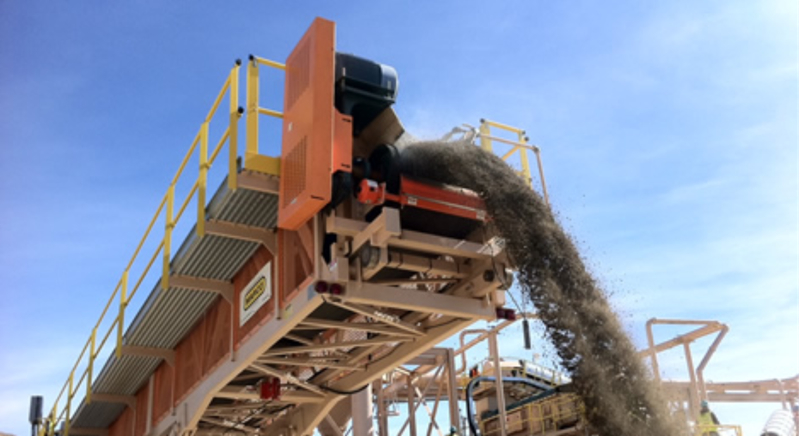
Crushing: Above, Molycorp crushes rare earth ore in California. Some people feel crushed by Molycorp's sales of rare earths to China.

Americans cheered when Colorado-based Molycorp Inc. opened the country’s only rare earth minerals mine last month, in California’s Mojave Desert. The move marked a first big step away from China’s dominating control of the metals that are vital to so many modern industrial and consumer products.

Molycorp could still well be the white knight of the U.S. industry. But the shine has now came off its armor, as the company has struck a deal through which it will sell heaps of its rare earths to, get ready for it, China.

Yes, China, the same country that controls over 95 percent of the world’s production of rare earths that are used in a raft of products too big to fully enumerate here: wind turbines, solar panels, batteries, magnets, radar, magnetic imaging, hybrid vehicles, flat screen TVs, catalytic converters, LCDs and missiles, just to name a few. Thorium, a substance that could provide safer nuclear fuel than uranium, occurs in monazite, a mineral that also contains 15 rare earths.

China imposes tight restrictions on rare earth exports, something that two weeks ago prompted the U.S, European Union and Japan to formally complain to the World Trade Organization. The Mountain Pass, Calif. mine that Molycorp reopened last month once provided most of the world’s rare earths. It shut down years ago in part because of costly environmental requirements. China has over the years been more environmentally lax, leveraging that into world market domination. (China opposes the WTO action. It says that its export restrictions tie into its own efforts to now curb the environmental impact of rare earth mining and processing).

The U.S., EU and Japan have filed a WTO complaint saying China unfairly restricts rare earth exports.When Molycorp officially restarted Mountain Pass in February, it looked like the U.S. would start to get some of its own enterprising relief, rather than relying on WTO maneuvers.

So when Molycorp officially restarted Mountain Pass in February, Americans could look forward to enterprising relief from China’s grip, rather than simply rely on WTO maneuvers.

But Molycorp itself turned toward the Chinese market full tilt on March 8 when it acquired Neo Material Technologies, a Toronto company that processes already mined rare earths and sells them in large measure to customers in China and Japan.

“This transaction brings to Molycorp Neo’s direct operating and sales channel in China, the world’s largest and fastest growing rare earth consuming nation,” Molycorp said in announcing its $1.3 billion (Canadian, also $1.3 billion U.S.) acquisition of Neo. “In 2010 and 2011, Neo Materials’ sales to China and Japan, collectively, accounted for approximately 68 percent and 64 percent of sales, respectively.”

That stinks according to some people in the industry, such as Jim Kennedy, CEO of St. Louis mining, rare earth and thorium company ThREEM3, which has rights to the rare earth byproducts from the Pea Ridge iron ore mine that is reopening near Sullivan, Mo.

In an email exchange with SmartPlanet, Kennedy notes, “As you know by now, Molycorp will be sending its rare earths to China. Shareholders, the public and Congress were played for fools… Neo is a purchasing agent for the Chinese refineries (an agent of China).”

Kennedy says that China “controls” Molycorp because the country is such a strong, important customer that it will set the market and prices. ”And most of the capital was provided by U.S. investors,” Kennedy adds. He cautions that China could eventually comply with the West by flooding foreign markets with less valuable rare earths - there are a total of 17 - and retaining the precious ones.

In fairness to Molycorp, companies in most industries routinely sell to China these days. Molycorp CEO Mark Smith noted in the press release that the Neo acquisition, “Enhances our mine-to-magnets vision and places Molycorp in all steps of the vertical rare earth supply chain, reaching many new customer segments across the globe.”

The acquisition also made sense from a shareholder perspective. In a Bloomberg article, analysts noted that Molycorp got Neo for a good price, and that the strategic acquisition should help boost Molycorp’s share price. For all the controversy surrounding Chinese control, the price of rare earths has been falling amid reduced demand in the slow global economy. That has suppressed Molycorp’s stock, the article notes.

And Molycorp hasn’t said it won’t sell to the U.S.

Why should Molycorp be any different from, say, Apple, Hewlett-Packard, General Motors or ExxonMobil in pursuing markets all over the world? One difference, of course, is that China has not dominated the global markets that any of those other companies serve. Your thoughts welcomed below.

Crusher photo from Molycorp website. Rare earth flag photo from CBS Moneywatch.

More rare earthlings on SmartPlanet:

Start your week smarter with our weekly e-mail newsletter. It's your cheat sheet for good ideas. Get it.

Mark Halper

About Mark Halper

Mark Halper is a contributing editor for SmartPlanet.

Mark Halper

Mark Halper

Contributing Editor

Mark Halper has written for TIME, Fortune, Financial Times, the UK's Independent on Sunday, Forbes, New York Times, Wired, Variety and The Guardian. He is based in Bristol, U.K.

Follow him on Twitter.

Mark Halper

Mark Halper

Mark has no financial holdings in the companies he writes about. He occasionally travels at the expense of companies or their press relations agencies in order to report on a company or industry event related to it; Mark will prominently disclose this information when appropriate. This relationship will have no influence on his coverage. Companies he covers do not get to review columns in advance, or select or reject topics.

He writes for SmartPlanet and is not an employee of CBS.

If you liked this, don't miss...
27
Comments

Join the conversation!

Follow via:
RSS
0 Votes
+ -
Tariff
The US could slap a huge export tariff on these minerals if they don't want them exported.
Posted by k8 br
22nd Mar 2012
0 Votes
+ -
True but...
The question is, just how many politicians are in Molycorp's pocket?
There are a LOT of things that could be 'fixed' or at least minimized if the US set tarriffs like that. Hasn't happened because the corp-bought politicians won't vote for the things that that could hurt their paymasters. And sadly, their 'paymasters' aren't the people, with all the taxes we pay.
Posted by jonrosen
22nd Mar 2012
+1 Vote
+ -
NAFTA
If I understand the arrangement correctly, Molycorp (a US company) is selling their product through a subsidiary corporation, Neo Material Technologies (a Canadian company) that ultimately sells the products to Chinese manufacturers.

To my knowledge the North American Free Trade Agreement (NAFTA) would prevent tariff to be imposed on the product that is sent from the US to Canada. Additionally, the US has no ability to impose Tariffs upon goods that are exported from Canada, regardless of their destination.

So it looks like Molycorp will sell their minerals to buyers outside of the US because NAFTA and other such forward looking policies have already exported most of the manufacturing facilities and jobs. And the US will not be able to control the exportation of our natural resources or even receive compensation through tariffs because of these same trade policies.

Good thinking.
Posted by james.graham@...
22nd Mar 2012
+1 Vote
+ -
instead of MCP look at GW
instead of looking at Molycorp, you should be looking at Great Western Minerals. They will be the first vertically integrated mine to market REE producer outside of China. MCP tried to buy them before MCP became public. GW has the heavy rare earths that will be the critical ones and honest management. The expect to be fully producing by early 2013. They also own GWTI in Detroit which will play a key role in re establishing a permanent magnet and REE Industry in the US.
Posted by bbcc11
22nd Mar 2012
+2 Votes
+ -
"Look at GW"
Excellent point, bbcc11. Not only is Great Western on my radar, but I wrote about them - although not by name - last December in SmartPlanet's "Why safe nuclear will rely on rare earths" (http://www.smartplanet.com/blog/intelligent-energy/why-safe-nuclear-will-rely-on-rare-earth-minerals/11328). GW owns RARECO, the South African mining company I featured. The story focuses on the thorium aspect of rare earths. I get into more detail of RARECO and GW in my Kachan & Co. report, "Emerging Nuclear Innovations - Picking global winners in a race to reinvent nuclear energy" (http://www.kachan.com/research/emerging-nuclear-innovations-report). I will be keeping an eye on GW's rare earth progress. Feel free to keep us all posted!
Posted by markhalper
22nd Mar 2012
+1 Vote
+ -
Peak commodities - ignore and do without.
While we may disagree on the peak and depletion timelines of oil, phosphate/NPK fertilizers, gold, and rare earth elements, etc., but the finite nature of their existence on this planet is an absolutely indisputable fact. Nations are going to have to look at peak commodities not just as a trade strategy, but as a survival strategy. The sooner we acknowledge the inevitable nature and reality of peak commodities, the sooner we will have some kind of national security that we won't be manipulated and stranded by the lack of them in the near future - as we have by peak oil in the middle east.

Did I mention that 85% of the worlds supply of rock phosphates (the most critical ingredient in NPK fertilizer that feeds 95% of the world) are in Morocco and Western Sahara? This is a serious problem that by-enlarge our scientifically illiterate population and their reflected leadership are clueless about.
Posted by dduggerbiocepts
22nd Mar 2012
+2 Votes
+ -
They played us for the fool!
They would sell their soul to the devil to make a buck over precious metals that China already has.
Posted by geofer50
22nd Mar 2012
+5 Votes
+ -
Long Term Thinking
The Chinese leaders have a different mind set than most western leaders; they are actively planning for their future by securing strategic resources now while the west is stuck in a short term view of the future. China is buying up as much uranium and thorium as they can so that the 100 or so new nuclear reactors will have enough fuel to use during their expected lifetime.

Mean while, in the west we are more worried about gas prices today and not looking at a future where valuable resources will not be availble. We need long term goals and focus on making those goals happen like the Chinese are doing now.
Posted by sboverie
22nd Mar 2012
+1 Vote
+ -
Treason For Profit?
You take a difficult to find commodity that is much needed by the country you live in, but sell it to another nation who already has a virtual monopoly, how is that NOT "Treason For Profit"?
Posted by DrRexDexter
22nd Mar 2012
+1 Vote
+ -
National Security
It amazes me that the federal government would allow the export of ANY rare earths to known enemy countries.
Posted by ardavidson
22nd Mar 2012
-3 Votes
+ -
Enemy Country?
Since when is China an enemy country?
Did China become an enemy country after it got rid of its colonisers?
Is the USA an enemy country from the Chinese perspective?
If they are enemy countries why trade with them?
Are they both committing treason?
Oh yes, there was Vietnam as an enemy country.
Did Vietnam become an enemy country after it got rid of its colonisers?
Did the Vietnamese attack the USA or did they just happen to have lots of resources to be attacked for and therefore became an enemy country?
Did all countries who dispensed with the colonial powers become enemy countries?
Seems like you are a typical american as perceived by the rest of the world.
Posted by kwickset@...
22nd Mar 2012
+1 Vote
+ -
China
Perhaps you should do some homework yourself and get off your high and mighty horse. China's policy towards the U.S. is, to eventually destroy us. It's part of their communist manifesto. Pretty much ANY country that is communist can be considered an enemy country to the U.S.. Communist nations DO NOT LIKE countries that are free, if that's what you can call the U.S. nowdays.
Either way, China owns quite a bit of the U.S. now, especially with all the trillions that we owe them....
Posted by Tinman57
22nd Mar 2012
-1 Votes
+ -
Communist Enemies
Yea, just go and kill a commie for Christ.
Try to read their alleged Communist Manifesto.
It's quite boring, but no mention of the USA.
How come that so much of the USA is owned by these commies.
They seem to be better at capitalism than communism.
Posted by kwickset@...
22nd Mar 2012
+1 Vote
+ -
do not be amazed or confused
another reason to dislike the man who was called the "first black president".."bill clinton"
Posted by vonrock
22nd Mar 2012
-1 Votes
+ -
Do Not Be Amazed OR Confused
It is called Capitalism in a Free Market economy. Exactly what the Republican slimebags running for President want for us all, Right?
Posted by zclayton3
22nd Mar 2012
0 Votes
+ -
The mine is on public land
So far as I can tell from US Government maps, the mine is on public land managed by the Bureau of Land Management. That means the ore is public property. Polycorp may have paid for a lease and may be paying royalties on the ore extracted (though it is likely not nearly what it is worth), but that doesn't change the ownership of the minerals themselves. If I am right and they belong to US, then the minerals should be mined and sold for the benefit of the American people, not just for the owners and shareholders of Polycorp. (Of course, if the mine is actually on private land, then they have only a moral obligation not to sell to China.)
Posted by vakeris@...
22nd Mar 2012
+1 Vote
+ -
You are wrong
Once the lease is signed, which presumably gives the lessee the mineral rights, the lessee can sell the minerals just about any where it wants. Legal possession of the minerals (or oil and gas in the case of drilling rights) goes to the lessee once the lease is signed. If you want to change that, it will require major changes in US law and reverse legal precedent since the day the US was founded.

However, there are some general restrictions having to do with countries such as North Korea, Iran, and even China when it comes to militarily sensitive products, but currently Canada (the intermediary) is not covered. Selling what could be construed as militarily sensitive materials to China this way is a very tricky issue, and it has been coming up a lot recently. But interpreting ownership of the ore in the way you want would just open up a can of worms far outside this issue and is not the way to deal with it.
Posted by zackers
22nd Mar 2012
0 Votes
+ -
Strategic Material designation
Congress has the authority to declare rare earths a 'strategic material.' With this designation comes the authority to forbid exportation. They should use it!
Posted by decryobliviots
22nd Mar 2012
0 Votes
+ -
Chinese price support for re-opening US rare earth mine
Hmm. That doesn't sound so bad, considering the falling prices of rare earth minerals. When they *remove* that support, it may be necessary for western governments to step in and do their bit:)
Posted by ervassar
22nd Mar 2012
0 Votes
+ -
Molycorp is under(mining) our economy
When shareholder profits take precedence over industrial policy or lack of, this is the end result. I would support a charter revocation of Molycorp.
Posted by Ted23
22nd Mar 2012
-1 Votes
+ -
free markets
Some illogical bloviating going on here. The whole point of new rare earth mines opening (also in Australia) is so that no one country controls access or availability. Since a huge amount of what the US (and the rest of the western world) imports is made in China, there is no reason not to export to them. But Japan is the next biggest user--again mostly for products that are exported--and this was the problem when China restricted exports (for whatever reasons). As noted in the article Japan will be taking a very large fraction of the US output.
......
It is of course ridiculous to imagine that China wants conflict with the US. It is in fact the exact opposite: there are plenty of far-right American war-mongers who see that promoting this notion is the way to keep the MIC rolling along, consuming trillions of dollars of your deficit budget.
Posted by rhodez
22nd Mar 2012
+2 Votes
+ -
It is of course ridiculous to imagine that China wants conflict with the US
We've been in conflict with China for 35 years, it's called a trade war. What we have today under the name "free trade" isn't free trade at all. It's free coming into the U.S. because our market is about 98% open to the world, but in the other direction, it's not. It's mostly merchantilism: gaming the system. Foreign governments understand, as ours does not, that international trade is an arena of national rivalry, and they play the game in their own national interests. Our government is hostage to an outdated 19th-century economic theory of global harmony, and on this basis conducts our trade relations with blissful naivet??.
Posted by Ted23
23rd Mar 2012
0 Votes
+ -
Chinese intentions
Whew! Thanks, rhodez. Now maybe I can learn to stop worrying and and love the Chinese.

By the way, China shut off Japan's rare earth supply because Japan seized a Chinese 'fishing boat' that was nosing around some disputed islands claimed by both nations, a matter of import not because of fishing rights but, rather, because of implications for territorial waters and undersea reaources.

Still, I can't help but wonder, given your summary of the geopolitical situation vis-a'-vis the PRC and how ridiculous it is to even imagine that those fine folks would want conflict with the US, why would this beneficent trading partner publicly announce -- in the state-run 'The Global Times', no less -- that it is aggressively seeking to develop anti-carrier weaponry, including anti-ship ballistic missiles with the stated rationale that "Since US aircraft carrier battle groups in the Pacific constitute deterrence against China's strategic interests, China has to possess the capacity to counterbalance."

http://www.zdnet.com/blog/government/is-china-gearing-up-to-start-world-war-iii/9368

I mean, the whole Pacific Ocean? That's kind of ominous, right? Not the Taiwan Strait: the whole freakin' Pacific Ocean! You know, where Hawaii is?

You have to wonder, what "strategic interests" are we deterring?

And, since aircraft carriers are our (the US) premier force-projection weapons platform, and we have more than twice as many as the rest of the world combined, it seems a bit silly for them to rattling this sabre at us, But this is the same folks who believe they could survive a massive nuclear exchange.
Posted by cdmsr
13th Oct
0 Votes
+ -
How do we turn all this information...
... into actionable items? What can and should we do to protect the US from foreign interests owning more than is an acceptable level? What exactly is that acceptable level and why? What branch of the government should be pursuing any of these actionable items and who (public figure) from that branch specifically should be paying attention to these concerns and why aren't they? Has anyone asked?
Posted by Slamshifter
23rd Mar 2012
0 Votes
+ -
simple solutions to molycorp monopoly
a strong president only has to make one phone call to the CEO of molycorp and discuss two scenarios...1) mine the rare metals and the vast majority is sold to our domestic market, or 2) threaten to implement existing environmental laws or pass new environmental laws in Colorado that in essence will make it unprofitable to mine anything more from that mine. We could also threaten to impose export taxes on minerals that are needed in the national interest. congress has the authority to tax businesses too. There is always the possibility to find ways in other mining states to make it easier for Molycorp competitors to get established if its in the national interest. the long term solution is to open up more mines in other states, fund them with in exchange to sell a certain amount to american industry. There are lots of ways to work around this if our politicians want to.
Posted by monacoet
7th Jul
0 Votes
+ -
Restarting the Rare Earth global supply
China's cheap & environmentally dirty rare earth industry made Molycorp unprofitable, so they sold their mining equipment to China. China became sensitive to the very serious pollution & supply exhaustion if they carry on being a 97% global supplier. So they started cleaning up their mining & processing, & made explicit moves to keep prices up. This should give Molycorp & other rare earth miners the breathing space required to restart rare earth mining & processing. In effect, China is a guardian of rare earths to ensure they don't get wasted on pointless uses. This is a very good thing. We just need to re-establish rare earth industries around the globe. If private enterprise fails to do this, governments have got to step in to ensure they start up and stay up.
Posted by Edwina Lee
18th Jan
0 Votes
+ -
You can't have it both ways....
If you don't like the Chinese producing the stuff cheap then be prepared to deal with the radioactive tailings yourself and pay higher commodity prices for your own domestically produced rare earth supplies. In the broader context of global natural resources, who the hell is going around the globe invading countries and murdering the people to seize control their OIL?
Posted by anthonymaw
Updated - 24th Mar
Join the conversation
Formatting +
BB Codes - Note: HTML is not supported in forums
  • [b] Bold [/b]
  • [i] Italic [/i]
  • [u] Underline [/u]
  • [s] Strikethrough [/s]
  • [q] "Quote" [/q]
  • [ol][*] 1. Ordered List [/ol]
  • [ul][*] · Unordered List [/ul]
  • [pre] Preformat [/pre]
  • [quote] "Blockquote" [/quote]

Join the SmartPlanet community and join the conversation! Signing up is fast and free. Don't wait -- we want to hear your opinion!