Follow this blog:
RSS

The great electric car experiment: Texas town is a research project

By | July 25, 2012, 8:21 PM PDT

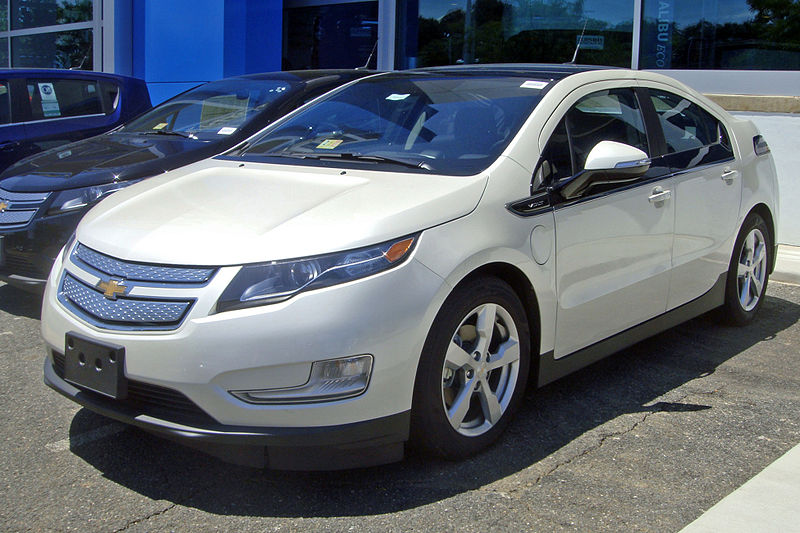
Residents of a planned Texas community that runs off of a clean energy power smart grid are receiving incentives to purchase electric and hybrid plug-in cars from General Motors. Most resident will receive a Chevy Volt.

Residents of a planned Texas community that runs off of a clean energy power smart grid are receiving incentives to purchase electric and hybrid plug-in cars from General Motors. Most resident will receive a Chevy Volt.

A small Texas town located on the site of an abandoned airport made headlines in the New York Times today. Mueller is a master-planned community located just outside of Austin, Texas. It is also very likely the only town in the U.S. that runs on a clean energy smart grid.

General Motors, in partnership with the Federal government, university researchers, and some NGOs is equipping 60 out of 600 homes with electric or plug-in hybrid vehicles. The project is funded by a US$10.4 million Department of Energy grant, and is meant to measure the impact of an influx of electric cars on grid.

Utilities throughout the country are preparing for greater numbers of electric vehicles, and are guaranteed to be very keenly interested in the project’s findings. Federal funds have already been distributed to New York’s ConEdison to study how to support them; although, residents are contributing to the cost too.

There are likely to be critics who will criticize the pilot simply because it is associated with the Obama administration; others might see Mueller as a modern day Potemkin village. The Potemkin village is an historical myth about towns that were allegedly created to impress Russian monarch Empress Catherine II, which supposedly were no more real than a Hollywood movie set.

To them I note the small scale of this project in comparison to China’s intention to build entirely eco-friendly cities. China has the political will and social willingness to make the effort amid globally significant events such as all of Greenland’s surface ice melting away.

I think that the Mueller concept is a cool idea and look forward to learning how electric cars impact a home’s energy profile. There was a time when bleeding edge science was cool and celebrated as a vision for a better tomorrow. Now, cynicism often rules the day. Let’s try not to be cynical, and learn something.

(Image credit: Wikipedia Commons)

Related on SmartPlanet:

Start your week smarter with our weekly e-mail newsletter. It's your cheat sheet for good ideas. Get it.

David Worthington

About David Worthington

David Worthington is a contributing editor for SmartPlanet.

David Worthington

David Worthington

Contributing Editor

David Worthington has written for BetaNews, eWeek, PC World, Technologizer and ZDNet. Formerly, he was a senior editor at SD Times. He holds a degree from Temple University. He is based in New York.

Follow him on Twitter.

David Worthington

David Worthington

David does not have financial holdings that would influence how or what he covers. Occasionally he consults for other companies; should David cover a topic in which a client is involved, he will disclose this fact in his writing. His views do not represent those of ScaleOut Software.

He writes for SmartPlanet and is not an employee of CBS.

If you liked this, don't miss...
2
Comments

Join the conversation!

Follow via:
RSS
0 Votes
+ -
If a real world test it will be productive.
If these are real people living average life styles, verses a more structured or staged test, this will be a valuable experiment to see what the peak hours of power usage become when large numbers of people start recharging EVs on commuter schedules.

One major grid concern is that residential areas already see a spike in power consumption that corresponds to people getting home from work. The unanswered question is how bad will EVs impact that spike in power usage?

Other related questions are: Will local grids need to be beefed up to handle the added power draw of recharging large numbers of EVs at a peak usage time?

What impact will EVs have on grid maintenance or power plant maintenace when people are being asked to charge their EVs at a time of night when local grids or power stations can go off line for seconds, minutes or even hours for routine and not so routine maintenance.

There are already recognised problems with aging power grids in much of the country. This experiment should tell us what impact EVs could have on the plans to replace/upgrade those grids.

This is one project I have no problem with as long as they are honest about it.
Posted by Hates Idiots
Updated - 2nd Aug
0 Votes
+ -
Electric car.
I am wondering why some car company has not come out with a car that is powered by a diesel generator similar to the type of generator used to power a portable parking lot light tower. It would be similar to the same system that diesel electric Locomotives have. I know that kind of generator will run for three days on fifteen gallons of fuel and they put out about fifteen thousand watts of power. I think if I could get a grant from the government I could build one myself. I think the car would run all the time on generator power and have a battery back up system for times when you might run out of fuel.
Posted by Leon Johnston
4th Dec
Join the conversation
Formatting +
BB Codes - Note: HTML is not supported in forums
  • [b] Bold [/b]
  • [i] Italic [/i]
  • [u] Underline [/u]
  • [s] Strikethrough [/s]
  • [q] "Quote" [/q]
  • [ol][*] 1. Ordered List [/ol]
  • [ul][*] · Unordered List [/ul]
  • [pre] Preformat [/pre]
  • [quote] "Blockquote" [/quote]

Join the SmartPlanet community and join the conversation! Signing up is fast and free. Don't wait -- we want to hear your opinion!