Follow this blog:
RSS

The energy of Thanksgiving travel

By | November 29, 2011, 5:27 PM PST

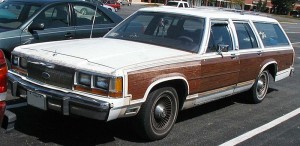
The family roadster. Image Credit: Wikipedia Commons

The family roadster. Image Credit: Wikipedia Commons

Nearly 61 million Americans traveled last week during the Thanksgiving holiday. The energy required for the annual commute might be nearly enough to power 1,575 homes for an entire year!

AAA estimated that 38.2 million Americans would be driving an average trip of 706 miles to visit their favorite in-laws. A spokesperson said that the average vehicle gets 24 MPG, so each car would be burning 29.42 gallons of gasoline.

From here on out I’ll take a few liberties in my calculations – put on your ‘fun hats,’ this wouldn’t have earned me any extra credit (or sympathy) in Temple’s college statistics courses.

The U.S. Census says that there are 2.60 persons residing per household – that works out to approximately 14,692,308 cars on the road.

That figure may sound extreme, but a 2007 Department of Transportation study estimated that there were 254.4 million registered passenger vehicles in the United States.

The nearly 14.7 million cars that made the trip would have consumed 432,247,693 gallons of gas. There is 33.41 kWh/Unit in a gallon of regular gas; 12,937,674.1 kWh of energy would have been used.

An Amtrak Silverliner. Image credit: Wikipedia Commons

An Amtrak passenger train. Note that some corridors use electric power rather than diesel. Image credit: Wikipedia Commons

704,446 passengers traveled by AMTRAK for the holiday week in 2010 – let’s assume that the passenger volume remained constant this year. Amtrak serves 78,000 people daily, with nearly 260 people occupying each train.

It would take 2,709 comparable trains to move holiday travelers to their Thanksgiving feasts. Assuming the average rail passenger is making a 706-mile journey. That’s 1,896,300 miles of rail travel at 28.8 mpg using 65,843.75 gallons of diesel fuel.

AMTRAK uses a combination of techniques to make its trains more energy efficient, and says that its diesel trains are 30 percent more efficient than auto travel on a per-passenger-mile basis. A car’s 24-MPG is adjusted upward to 28.8-MPG.

Each gallon of diesel gasoline is equivalent to 37.95 kWh. Therefore, rail passengers would account for 2,498,770.31 kWh.

The Air Transport Association estimated 23.2 million air travelers this holiday season. An Airbus A321 is a very common aircraft in the U.S. and transports about as many people as the other commercial workhorse, the Boeing 737.

An A320 cockpit. Image Credit: Wikipedia Commons

An A320 cockpit. Image Credit: Wikipedia Commons

Information cached on the defunct GB Airways Web site told me that the average cruising speed of an A321 is about 530.03 miles/hour, and its fuel consumption is 792.52 US gallons each hour. Assuming the cabin is full with 189 maximum passengers, the airbus would be consuming 1.50 gallons of kerosene jet fuel per mile. That’s 1,059 gallons of jet fuel per every 706-mile route.

23.2 million passengers divided up into groups of 189 means that there would have been nearly 122,751 flights over the Thanksgiving holiday. On average, there are 28,537 commercial flights per day, according to the National Air Traffic Controllers Association.

Having 122,751 flights take to the air for 706 miles roundtrip would require 129,993,309 gallons of jet fuel. Jet fuel contains 37.54 kWh per gallon, and suspending disbelief, a total of 3,462,794.59 kWh would have been consumed on air travel.

The grand total of energy holiday travelers used between land and air would be 18,899,239 kWh. Per capita household energy use is about 12,000 kWh in the United States, so holiday travel would power 1,575 homes for a year.

However, the necessities of modern life are more energy hungry than you may think. The U.S. Energy Information Administration says that (23 billion kWh) is used to keep food frozen every year, so comparatively, holiday travel would only keep freezers cold for about one morning.

My figures are likely way off from reality, but a mass migration of tens of millions of people is no simple task. It takes a significant amount of energy.

Start your week smarter with our weekly e-mail newsletter. It's your cheat sheet for good ideas. Get it.

David Worthington

About David Worthington

David Worthington is a contributing editor for SmartPlanet.

David Worthington

David Worthington

Contributing Editor

David Worthington has written for BetaNews, eWeek, PC World, Technologizer and ZDNet. Formerly, he was a senior editor at SD Times. He holds a degree from Temple University. He is based in New York.

Follow him on Twitter.

David Worthington

David Worthington

David does not have financial holdings that would influence how or what he covers. Occasionally he consults for other companies; should David cover a topic in which a client is involved, he will disclose this fact in his writing. His views do not represent those of ScaleOut Software.

He writes for SmartPlanet and is not an employee of CBS.

If you liked this, don't miss...
2
Comments

Join the conversation!

Follow via:
RSS
+3 Votes
+ -
Apples-To-Apples Comparison of Different Technologies
As a Manufacturing Engineer, I have to admire your fearless effort to independently undertake this daunting analysis. But in many ways, comparing modes of transporting people (car, train, plane) is no different than comparing modes of transporting parts through a factory (conveyor vs fork truck, and all the different variants) So please forgive me for making a few professional observations.

First, knowing peak operating capacity for holiday travel is important, but while it may make for timely journalism, is pretty useless for energy consumption comparison. The results are heavily biased due to assumptions of vehicle occupancy and fuel efficiency.
Although still subject to the same assumptions, you may find it more convenient and valid to use average data provided by the US Transportation Energy Data Book expressed in BTU per passenger-mile: http://en.wikipedia.org/wiki/Transportation_energy_consumption#US_Passenger_transportation
One regret that I have with this data is that it doesn't provide a distinction between short-hop and long distance airline travel, for which there is an obvious difference in energy consumption.

And although you didn't tough on captial costs, I have a few comments on this aspect of the analysis as well. First of all, the tecnology is independent of the method of financing, regardless whether it is public or private. For a true apples-to-apples comparison, ALL capital costs must be include. In other words, construction of the railbed must be compared to construction of the roadbed. But cost of the rail vehicles must also be compared to cost of the highway vehicles. Therefore, you must estimate the number of automobiles that must be purchased (considering their average lifespan) and determine how many are needed to travel the same number of passenger-miles over the economic lifespan of a passenger rail trainset. (Randall O'Toole and Wendell Cox may squawk about this, but they don't get paid to be objective. LOL!)

Anyway, thanks for a well-written article. I hope my tips might be useful. It is a dauntingly complex analysis for anybody to undertake.
Posted by WillieGreen
Updated - 30th Nov 2011
0 Votes
+ -
Thank you
I appreciate the input and was hoping to prompt this type of response!
Posted by David Worthington
30th Nov 2011
Join the conversation
Formatting +
BB Codes - Note: HTML is not supported in forums
  • [b] Bold [/b]
  • [i] Italic [/i]
  • [u] Underline [/u]
  • [s] Strikethrough [/s]
  • [q] "Quote" [/q]
  • [ol][*] 1. Ordered List [/ol]
  • [ul][*] · Unordered List [/ul]
  • [pre] Preformat [/pre]
  • [quote] "Blockquote" [/quote]

Join the SmartPlanet community and join the conversation! Signing up is fast and free. Don't wait -- we want to hear your opinion!