Solar v Solar: Gloves come off at G20 summit

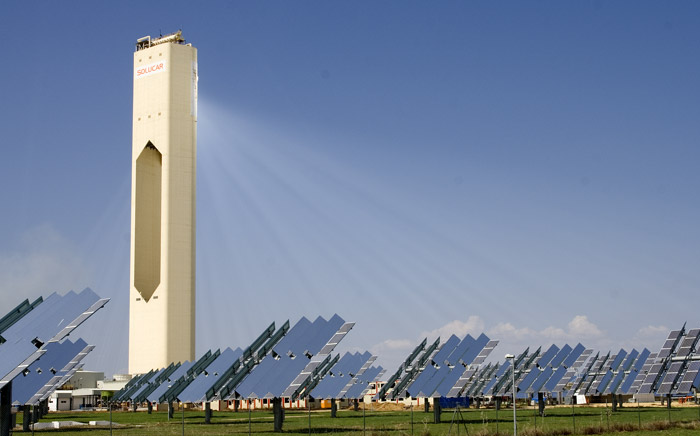
The fight between rival solar technologies spilled into a global arena yesterday, as the chairman of Spanish energy giant Iberdrola came out swinging against solar thermal electricity at the G20 summit of world leaders in Cannes.
In a one-two punch, chairman Ignacio Galan told the gathering that solar thermal power is too expensive, a week after he lashed out against the technology for high costs, inefficiency and for environmental hazards including CO2 emissions and water wastage.
Solar thermal, the photogenic form of solar electricity in which fields of mirror focus sunlight on a liquid that heats up, creates steam and drives a turbine, is too expensive compared to more mature renewable energy, including wind and photovoltaics – the better known form of solar power in which solar cells embedded in panels directly generate electricity, he said.
“In the current environment, this could be extremely dangerous for economic recovery,” Galan told the "B-20" business track at the conclave of presidents and prime ministers.
That echoed comments he made last week, when he told analysts in Madrid that,“The massive deployment of solar thermal plants has no justification, neither from the energy, economic or environmental point of view.”
Galan warned on both occasions that European and Spanish regulatory requirements that force investments in immature renewables leads to high end user prices.
He told analysts that Spanish consumers have already suffered financially from the premature installation of utility scale photovoltaics, a technology which has now come down in price but which cost too much during the heady installation days several years ago. They have cost Spanish consumers about€250 ($346) a year, he said.
“The situation could become much more severe in the next few years if we allow the errors made with the PV plants to be made again with thermosolar generation,” he told analysts
Solar provides 3 percent of Spain’s power, but represents 13 percent of the country’s power costs, he said, noting, “I’m sure this figure will increase as the new solar power stations are commissioned, and we have to do something about this over the next few years.”
He also delivered several body blows to solar thermal for what he claimed are its ecological hazards.
The water required for cleaning mirrors and generating steam makes solar thermal environmentally unsound, Galan noted.
“These plants consume close to 10,000 liters (2,642 U.S. gallons) of water for each megawatt hour produced – figures which are closer to those of a coal plant and much greater than photovoltaic plants, which practically require nothing, and much more than wind power reduction, which would require zero,” Galan told analysts.
Iberdrola had 2010 revenue of €30.4 ($42.1) billion and is one of the world’s largest utilities, with holdings around the world including Europe and the U.S., and interests in wind, solar, nuclear gas and coal power. It claims to be the world’s leading producer of wind power. Its solar operations include a utility scale photovoltaic plant in Copper Crossing, Arizona, and a solar thermal plant in Kuraymat, Egypt, where it combines the technology with a gas-fired station. (Don’t’ expect more of those from the Spanish company).
Galan’s comments escalate the war of words between the PV and solar thermal - also known as concentrating solar power - camps. Solar thermal backers Desertec recently questioned whether Greece’s giant, 10-gigawatt Project Helios photovoltaic scheme could work. Europe's leaders have earmarked Helios to contribute $21.2 billion to their bail out of Greece (so perhaps Galan was lobbying for a piece of the Helios pie).
Also, German solar thermal company Solar Millennium announced last summer that it is shifting its technology from solar thermal to PV at its Blythe, Calif. plant. Other utilities are also moving away from solar thermal and towards PV.
Photos: Top, Wikimedia. Middle and bottom, Iberdrola.
More solar bish-bash:
- EU: Solar electricity will help bail out Greece
- Siemens rides international alpine solar wave
- The changing tech of utility-scale solar projects
- In Europe, solar vs. solar
- Shock technology shift at huge California solar plant
- Solar price free fall, part deux
This post was originally published on Smartplanet.com