Follow this blog:
RSS

Solar film teases energy independent smartphones

By | March 23, 2011, 7:44 PM PDT

Wysips uses

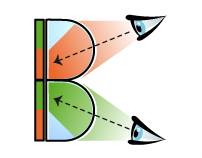
Wysips uses a principle similar to holograms to capture solar energy.

French solar energy start-up Wysips has been turning heads at the CTIA Wireless show in Orlando with its transparent photovoltaic film. It says that the film has the potential to make smartphones, tablets and other gadgets energy self-sufficient.

The company is actively pitching its technology to cellular carriers, display makers and equipment manufacturers, according to reports. Its goal is for the film to be integrated into wireless devices within a year (assuming it isn’t acquired).

The film is designed to be thin enough so that it doesn’t darken LCD screens, and could provide a charge of 250mW. Although, reviewers observed that screens appeared darker than usual.

I also wonder whether it could accommodate the oil-resistant coating that is found on many touchscreen phones, and built into glass from suppliers.

The potential applications of Wysips’ technology extend well beyond electronics: The flexible film layers on top of glass, fabrics, plastic, and even sails, according to the company’s Web site.

Indeed, Wysips promises to be revolutionary: its Web site invokes the 1960s off-Broadway counter-culture hit Hair with the saying, “let the sun shine in.” You’ll just need to have a big enough window.

It takes six hours of direct sunlight to charge an average cell phone battery, the company told LAPTOP magazine. I’d imagine it would take a far longer interval if your phone is sequestered in your pocket throughout the day as mine often is.

Wysips president Ludovic Deblois demoed the technology to attendees at CTIA on a retrofitted iPhone 4. Deblois proved his concept, showing how indoor lighting can even provide a charge.

In practice, Wysips’ technology may allow device makers to further shrink form factors, but doing so would make battery life less predictable in an era when customers expect superior battery life. Delaying the amount of time a customer can spend between charges could be a winner.

Integrating solar technology into laptop or tablet where PC hardware uses power more greedily makes even greater sense. They don’t go in your pocket either.

If you are expecting a smartphone that charges itself while you eat your cornflakes, you’ll be waiting for a technological Godot. If you are looking for a modest improvement in battery life, this may a feature that you want to have with your next phone.

Investors will decide what’s best

Layering photovoltaic film on top of an LCD screen sounds like a good idea at face value, but I’m wondering whether we are witnessing a phenomenon that sales people refer to as “trade show glow.” You may even be experiencing it now - virtually.

Ideas seem novel or disruptive on the conference floor, but the buzz fades after everybody goes home. Conference calls are scheduled, executives and engineers powwow, and then – silence.

I won’t discount its potential, but the film may end up being a better fit for niche products such as military tents or survival gear. I recall when the introduction of OLED technology was going to usher in TVs that are unbelievably thin.

That was back in 2001, and I’m still waiting for it to happen. Its more likely that Wysips’ investors will decide the direction of its revolution before it ever really changes how consumer electronics are powered.

Start your week smarter with our weekly e-mail newsletter. It's your cheat sheet for good ideas. Get it.

David Worthington

About David Worthington

David Worthington is a contributing editor for SmartPlanet.

David Worthington

David Worthington

Contributing Editor

David Worthington has written for BetaNews, eWeek, PC World, Technologizer and ZDNet. Formerly, he was a senior editor at SD Times. He holds a degree from Temple University. He is based in New York.

Follow him on Twitter.

David Worthington

David Worthington

David does not have financial holdings that would influence how or what he covers. Occasionally he consults for other companies; should David cover a topic in which a client is involved, he will disclose this fact in his writing. His views do not represent those of ScaleOut Software.

He writes for SmartPlanet and is not an employee of CBS.

If you liked this, don't miss...
3
Comments

Join the conversation!

Follow via:
RSS
+1 Vote
+ -
RE: Solar film teases energy independent smartphones
What about the solar film that looked like aluminum foil and can cover entire buildings if necessary (saw it in the Discovery Channel, very cheap to produce)? Not only the transparent film for the screen can provide energy to mobile devices, the whole structure of a cell phone can be covered in light reactive materials to produce energy, to install piezoelectric pieces that react with our grip and body heat, the film I just told you about, a movement mechanism that work like the one in "automatic" watches, kinetic energy generating electricity. There are multiple ways to attack the problem, many solutions, not only one. So, why don't we do it? Are smart enough to pull this off or not?
Posted by Master Skywalker
23rd Mar 2011
+1 Vote
+ -
RE: Solar film teases energy independent smartphones
Nice, while I find it odd that two articles were written about the same
subject on this site, I feel you did a bit better covering the story.
Aside from boosting the "solar film" efficiency, someone's going to
have to figure out how to keep the phone/battery from being
damaged when leaving it in direct sunlight. If I were to leave my
phone for 6 hours in direct sunlight I know at least the battery will
take some damage.
Posted by thefatalepic
24th Mar 2011
+1 Vote
+ -
One of the best writtern pieces on this
I also agree with the previous commenter that this is definitely the superior article on this subject, however I find this company's concept fundementally flawed.

"It takes six hours of direct sunlight to charge an average cell phone battery"

What happens during the summer, when it's 90 degrees outside and you have to charge your phone? Will you have to leave it in the sunlight to charge while the rest of the phone melts? Of course not. The film would work well in an emergency, let's say, you are on the side of the road and your phone is dead. If it is daytime, and the sun is shining, it'd be very convenient to be able to use the charge in real time; in other words, use the dead phone with direct battery power from the sunlight. But I don't know anyone who would opt to charge their phone in direct sunlight when on any phone instruction manual one of the precautions is to clearly avoid such an activity at all costs because of risk to damage the phone. And of course there will be the slew of people who WOULD buy this product, and then do this, then wind up with a class action suit against the maker of the film claiming they ruined their phones.
Posted by lazer921
24th Mar 2011
Join the conversation
Formatting +
BB Codes - Note: HTML is not supported in forums
  • [b] Bold [/b]
  • [i] Italic [/i]
  • [u] Underline [/u]
  • [s] Strikethrough [/s]
  • [q] "Quote" [/q]
  • [ol][*] 1. Ordered List [/ol]
  • [ul][*] · Unordered List [/ul]
  • [pre] Preformat [/pre]
  • [quote] "Blockquote" [/quote]

Join the SmartPlanet community and join the conversation! Signing up is fast and free. Don't wait -- we want to hear your opinion!