Follow this blog:
RSS

Safe nuclear: UK eyes thorium

By | May 18, 2012, 3:08 AM PDT

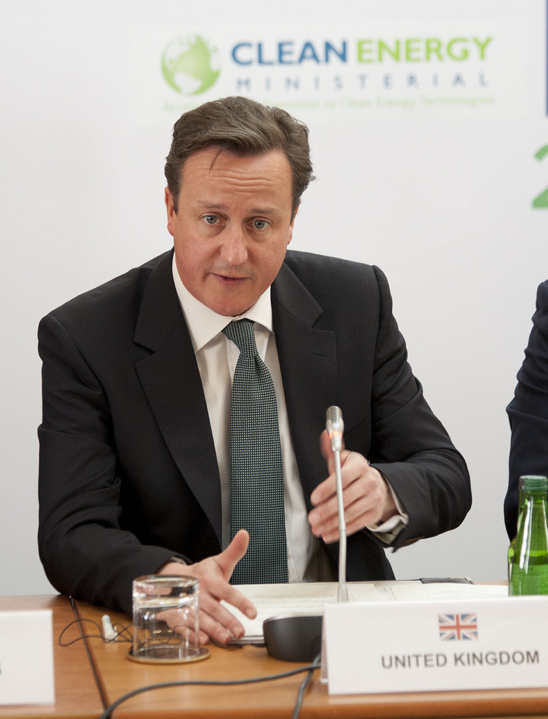
Prime Minister David Cameron wants clean energy, including nuclear. Will thorium be part of the mix in Britain?

Welcome back to the thorium trail, the long and winding road to an altogether different and safer way of generating nuclear power by using thorium instead of uranium as fuel.

Last week we stopped in the U.S., where the thorium debate took to the national airwaves. We also ventured to India, to have a look at a thorium reactor that’s rising there.

Today, we pull into the UK, where we note that the government’s Department of Energy and Climate Change (DECC, the UK equivalent of the U.S. DOE) has spotted thorium on its radar, and is looking into it.

First, my standard review for newcomers, because the parade of interested travelers on this road is growing all the time:

Thorium should replace uranium because, its supporters say, it does not yield nasty, weapons-grade waste the way uranium does. And its waste lasts for only a few hundred years, not the tens of thousands associated with uranium. It can work in conventional, water-cooled reactors. But when combined with alternative reactor designs, like a “molten salt” or “liquid fluoride” reactor, it offers even more advantages including greater efficiency, Flibe Energy and others claim. The U.S built a thorium molten salt reactor in the 1960s at Oak Ridge National Laboratory, but the Nixon administration halted thorium development in favor of more weapons-prone uranium.

Second, a note of realism: To say that the British government is contemplating thorium is indeed true. But to be clear, any decision to back or approve thorium, or any commercial deployment of it in Britain, is probably a way off.
Nevertheless, it is well worth noting that thorium has indeed entered the discussion at DECC.

I know this firsthand because three weeks ago I participated in a Parliamentary committee meeting on thorium nuclear power, where one of the speakers was from DECC.

UK energy secretary Ed Davey (front) and U.S. energy boss Steven Chu sign an agreement last month in London to cooperate on energy development. They made no public mention of thorium, but Davey's Department of Energy knows that the U.S. government developed a thorium reactor in the 1960s, and that an Alabama company, Flibe Energy, is working on one. Note the cafetiere to the right (an energy scientist would observe that it's losing heat). These guys will drink a few more cups of coffee before they settle the thorium discussion.

In a carefully crafted, equivocal, on the one hand but on the other presentation entitled Future Nuclear Power and the UK Energy Supply - Can Thorium Play a Role?, DECC senior scientific advisor Rob Arnold described, in impressive detail, the pros and cons of thorium. To paraphrase his own answer to the question he posed: “yes, but, well … maybe.”

Thorium fans, take heart: I did not hear “no.”

Thorium, Arnold, said, “can provide many attractive traits,” including, in his own words, “potentially more efficient closed-cycle fuel breeding, potentially lower long-term radiotoxicity of wastes, and potentially a more stable matrix for geological disposal of wastes.” (Fuel breeding is the creation of more fuel from fuel already burned).

The extent of these benefits depend on the type of reactor in which thorium is deployed, he said.

However, Arnold pointed out that the thorium fuel cycle can require uranium to kick start it. Thus, thorium reactors do not eliminate uranium from the picture. (Thorium supporters are quick to note, thought, that the uranium starter amount is a very small amount, and it supports a highly beneficial thorium process).

He also noted that while a potentially safe process known as ADSR (accelerator driven system reactors, which do not sustain a chain reaction, and are under development) could also support a thorium reaction, the same technology could apply to uranium reactors and make them safer.

Thus, he said, one challenge for thorium is that the nuclear industry may prefer to apply safety, efficiency and breeding improvements to the existing, proven, uranium value chain, which would be less expensive than applying it to a new fuel type, thorium. An underlying challenge for any nuclear initiative - conventional or alternative - is that someone has to provide the billions of dollars required to build any new, large reactor. While government subsidies could play a role, ultimately, industry and private investors have to pony up.

Baroness Bryony Worthington of the House of Lords promotes thorium. Watch for our upcoming interview with her.

And don’t forget that the conventional industry has already been spending to add  ”passive cooling” features to its new water cooled uranium reactors that do not rely on outside power for cooling in the event of an emergency, such as what happened at the Fukushima plant in Japan, where a tsunami knocked out a diesel generator that was driving the cooling system, leading to meltdowns. The Big 3 conventional nuclear manufacturers - Westinghouse, Areva, and GEH - are all in the passive cooling business.

But, on the other hand (I warned you about equivocal), Arnold repeated that thorium could indeed reduce the amount of plutonium and other undesirable “actinides” in nuclear waste, could  provide “fuel security” (there is a lot of thorium in the world), and could run with greater efficiency and “fuel burn-up” than uranium.

Going back and forth, though, he cautioned that these benefits are “speculative.”

Arnold was doing his job - he is part of a DECC unit that is evaluating thorium, and that evaluation is so far inconclusive.

Enough equivocation. During the committee’s question time, I asked him how truly interested DECC is in backing thorium, especially now that a German joint venture has backed out of plans to build two of eight new nuclear reactors that the British government has approved, and on which it is counting as part of the UK’s energy future.

With the conventional nuclear industry delivering such a blow to the government’s nuclear vision, doesn’t that create an opening for an alternative nuclear approach?

Arnold’s answer won’t surprise you. Thorium, he said, is part of a “keep your options open” approach.

Baroness Bryony Worthington, a member of the House of Lords who organized the meeting as head of the All Party Parliamentary Group on thorium, explained that “There’s going to be a crucial point over the summer where the government as a whole thinks about developing a nuclear strategy - they don’t have one at the moment - which will give us that long term view.”

Baroness Worthington supports thorium, and is a member of Labour,  the opposition party to the coalition of Tories and Liberal Democrats in power. She is also a patron to the Weinberg Foundation, a London-based group formed last September to promote molten salt thorium technology and to honor Dr. Alvin Weinberg, the American scientist who developed Oak Ridge’s thorium reactor in the 1960s.

I’ll be meeting the Baroness a little further down the road, as we both take the thorium trail to Chicago in a couple of weeks, where I’ll stop at the Thorium Energy Alliance Conference. Stay tuned for an account of our upcoming conversation, and for more of my reports from the thorium trail.

In fact after Chicago, I’ll be going to Pittsburgh, where I hope to talk to Westinghouse about their interest in thorium. I’ve asked for an interview with the company’s CEO, but so far nothing back. Big Nuclear has been curiously silent on the subject of thorium. Neither Westinghouse, Areva nor GEH would speak to me when I wrote my recent Kachan & Co. report on alternative nuclear technologies.

They’re still elusive. They have a uranium value chain to protect. But as countries like China and India start ramping up thorium, it seems that the industry incumbents might want to give it consideration.

Okay, time to pack up and head to the next stop on this trail. See you there.

Photos: Cameron and Davey/Chu from DECC via Flickr. Worthington from parliament.uk

More thorium and other alternative nuclear on SmartPlanet:

And a handy guide to alternative nuclear:

Start your week smarter with our weekly e-mail newsletter. It's your cheat sheet for good ideas. Get it.

Mark Halper

About Mark Halper

Mark Halper is a contributing editor for SmartPlanet.

Mark Halper

Mark Halper

Contributing Editor

Mark Halper has written for TIME, Fortune, Financial Times, the UK's Independent on Sunday, Forbes, New York Times, Wired, Variety and The Guardian. He is based in Bristol, U.K.

Follow him on Twitter.

Mark Halper

Mark Halper

Mark has no financial holdings in the companies he writes about. He occasionally travels at the expense of companies or their press relations agencies in order to report on a company or industry event related to it; Mark will prominently disclose this information when appropriate. This relationship will have no influence on his coverage. Companies he covers do not get to review columns in advance, or select or reject topics.

He writes for SmartPlanet and is not an employee of CBS.

If you liked this, don't miss...
12
Comments

Join the conversation!

Follow via:
RSS
-1 Votes
+ -
Incompetent decision makers - DECC.
"An underlying challenge for any nuclear initiative - conventional or alternative - is that someone has to provide the billions of dollars required to build any new, large reactor." - Rob Arnold, DECC senior adviser and apparently leading uranium industry pimp.

Anyone that has even a passing knowledge of thorium reactor technology knows that one of this technology's most salient features - is it's ability to be produced effectively as small reactors (first considered for aircraft), such that none of the above moronic and self serving argument applies. Clearly, Rob Arnold is in the deep, deep pockets of the global uranium industry. Big surprise the UK gov. is just as corrupt and big money compromised as the US gov. I hope when the UK has its first nuclear (uranium) accident that they remember Mr. Rob Arnold.

Thanks Mark for casting some light on this subject. Good job.
Posted by dduggerbiocepts
Updated - 18th May 2012
+1 Vote
+ -
And Uranium Too! .. Plus setting the record straight
Thanks Dduggerbiocepts. To be clear, I - not Rob Arnold - made the specific point about industry ponying up for the big reactors. And I can assure you that I'm not in uranium's pocket! Having said that, you're right that a small, aka modular, thorium reactor would cost less. BUT - initial modular thorium reactors will be expensive, given considerable development, testing, etc. Hundreds of millions of dollars, if not more. Also, uranium reactors will shrink, and benefit from modular cost reductions. See http://www.smartplanet.com/blog/intelligent-energy/how-nuclear-will-make-oil-greener/10879, which I've now added to the links after the story. My SmartPlanet colleague David Worthington also wrote about modular recently: http://www.smartplanet.com/blog/intelligent-energy/small-nuclear-reactors-americas-energy-future/11412?tag=search-river. Having said all that, Flibe Energy believes that the U.S. military could use small thorium reactors to power domestic bases and disconnect from the creaky grid, as noted in http://www.smartplanet.com/blog/intelligent-energy/the-new-face-of-safe-nuclear/7712?tag=search-river. Intriguing idea.

Thanks again. Keep 'em comin!..
Posted by markhalper
18th May 2012
+1 Vote
+ -
Um, not all Th supporters say U power waste is weapon grade
Ideally none would, since it isn't.
Posted by GRLCowan
18th May 2012
0 Votes
+ -
My point as well.
"Thorium should replace uranium because, its supporters say, it does not yield nasty, weapons-grade waste the way uranium does. And its waste lasts for only a few hundred years, not the tens of thousands associated with uranium."

First and foremost, used fuel from LWRs, although containing isotopes of Pu, is NOT anywhere near weapons-grade material. No weapon ever has, or ever will, be created from it for various reasons, but especially because the isotopic concentration is all wrong: http://depletedcranium.com/why-you-cant-build-a-bomb-from-spent-fuel

That tired old saw is more appropriate on a Greenpeace rant than in a serious discussion of nuclear energy alternative. Thorium advocates would do well to educate themselves on this.

Secondly, the benefits of burning (or not creating) long-lived transuranic waste can also be achieved in U or Pu-fueld fast-spectrum reactors like IFR, which is another Gen IV technology Th proponents should become aware of: http://prescriptionfortheplanet.com

LFTR is indeed a technology that promises many advances over the current generation of LWRs. But Th advocates should not promote their vision based on misinformation about existing technology - it's hard to be safer than zero fatalities in nearly 60 years of operation of hundreds of LWR reactors.
Posted by Atomikrabbit
Updated - 18th May 2012
+1 Vote
+ -
Signpost
I hope to go off in these directions and others as I continue walking the thorium trail! Great discussion points for the upcoming Thorium Energy Alliance Conference in Chicago at the end of this month. Apologies for the earlier broken conference link in the story, which I've now corrected. Here it is again: http://thoriumenergyalliance.com/
Posted by markhalper
Updated - 18th May 2012
+3 Votes
+ -
Rob Arnold is a good guy
I know Rob Arnold and he is a good guy and he is doing a good job at DECC considering the values and risks of future energy technologies. I have always been impressed by his professionalism in my interactions with him.
Posted by kirkfsorensen
18th May 2012
+1 Vote
+ -
Even-handed
Thanks Kirk. I thought Rob gave an even-handed account of thorium's pros and cons during his presentation. I hope that came through in my story, even if I did have some fun with equivocation.
Posted by markhalper
18th May 2012
+1 Vote
+ -
Safety
Despite the title, this article glosses over what is perhaps the biggest advantage of the molten salt based Thorium reactor, it's incredible safety profile! Liquid salts run at atmospheric pressure, and therefore simply cannot have the Chernobyl style explosions or TMI/Fukishima style releases that happen when something goes wrong with water under incredible pressure. Quite simply, no pressure difference means nothing inside wanting to get out!

This coupled with the passive (not "passive") cooling possible with the design makes it completely walkaway-safe. This, along with the reactors incredible efficiency (some 200x more than current water light water reactors) and a PROVEN design make Thorium the right choice for Britain and the world.
Posted by AlNuke
Updated - 18th May 2012
0 Votes
+ -
Stay tuned
Thanks AlNuke. Similar to my "Signpost" reply -- We'll be making frequent stops on the thorium trail, exploring various sites along the way, such as the one you mention. Today's stop in Parliament was intended first and foremost as an insight into what the UK govt is thinking. The road is long and the journey very, very interesting. Looking further down it, beyond my upcoming stops in Chicago and elsewhere over the next few weeks and the summer, I hope to wind my way to China in late October for a thorium conference in Shanghai http://www.itheo.org/articles/announcing-thec12-shanghai
Posted by markhalper
Updated - 18th May 2012
+1 Vote
+ -
"Proven" is highly subjective
"Proven" is a highly subjective term. For some it means "doesn't violate the laws of physics". For others it means "we've built a hundred of these and operated them without incident for fifty years." A "proof-of-concept" molten-salt reactor was successfully built and operated at the Oak Ridge National Lab from 1965 to 1969. It had the right fuel form and a representative core design. It processed its offgasses and experiments were done to fluorinate and distill its fuel. But it did not demonstrate the use of thorium, a continuous breeding cycle, or coupling to a power conversion system and the generation of electricity. These important steps still remain to be demonstrated. It showed great promise but to decision-makers in the UK it was not conclusive and that is entirely understandable.
Posted by kirkfsorensen
18th May 2012
0 Votes
+ -
Solar Tarrif
There are real barriers here to any potential energy source.
Posted by Altotus
18th May 2012
+1 Vote
+ -
Thorium fuel
Most cost and time effective use of thorium and the existing UK stock of reactor grade plutonium can be made by following the Indian document on DAE page
Extending the global reach of nuclear energy through Thorium
Thorium with Pu can be made use of in existing AGR, EPR planned for construction or imported Indian 500MW PHWR@ 535 M pounds each.
Posted by jcdhall@...
18th May 2012
Join the conversation
Formatting +
BB Codes - Note: HTML is not supported in forums
  • [b] Bold [/b]
  • [i] Italic [/i]
  • [u] Underline [/u]
  • [s] Strikethrough [/s]
  • [q] "Quote" [/q]
  • [ol][*] 1. Ordered List [/ol]
  • [ul][*] · Unordered List [/ul]
  • [pre] Preformat [/pre]
  • [quote] "Blockquote" [/quote]

Join the SmartPlanet community and join the conversation! Signing up is fast and free. Don't wait -- we want to hear your opinion!