Follow this blog:
RSS

Radioactive tuna found off Californian coast

By | May 28, 2012, 4:49 PM PDT

Scientists have been measuring radiation released into the Pacific Ocean by Fukushima.

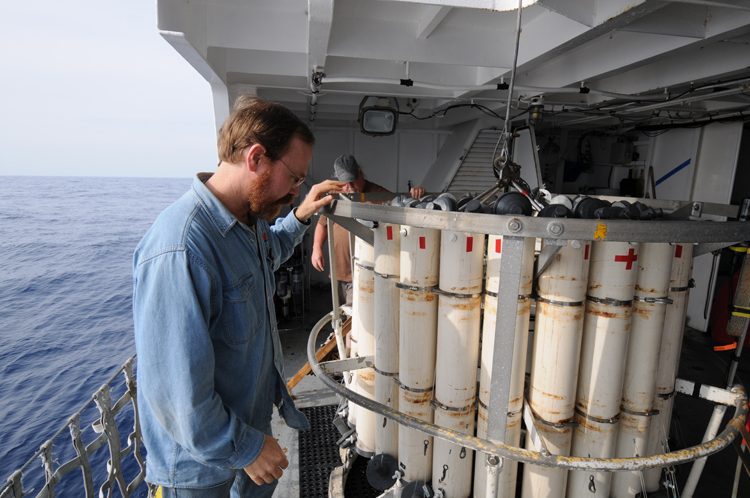
Scientists have been measuring radiation released into the Pacific Ocean by Fukushima. A bluefin tuna traveled nearly 6,000 miles from to the U.S. was found with elevated radiation levels.

Sorry, Charlie, you’re radioactive. A bluefin tuna contaminated by Japan’s Fukushima Daiichi nuclear disaster was caught off the Pacific coast of the United States.

News of the discovery was published today by the National Academy of Sciences, the Associated Press’s Alicia Chang reported today. The tuna registered 10 times the level of radioactive cesium that’s normal in fish off the California coast, but was still within safe-to-eat limits.

There’s a 6,000-mile buffer between West coast of the United States and Japan, but a bluefin tuna can travel vast distances. Tagged fish have been known to travel nearly 5,000 miles in a little over 100 days.

There was an unprecedented release of radioactivity into the Pacific Ocean from the Fukushima nuclear disaster in the days following the disaster. However, scientists say that the radiation poses no direct exposure threat to people, but have caution that the accumulated fallout lying in sediment is a potential danger for decades to come.

The findings were published in a report, “Impacts of the Fukushima Nuclear Power Plants on Marine Radioactivity,” in December 2011. Levels of cesium and iodine peaked a month after the core meltdowns when seawater used to cool the reactors and spent fuel rods was pumped out of the facility into the nearby ocean.

Levels of radioactive cesium peaked at 50 million times normal levels, becoming the largest accidental release of radiation into the ocean in history. The concentrations of cesium offshore were much higher than those measured in the ocean after the Chernobyl accident 25 years ago.

However, unlike Chernobyl, ocean mixing processes “rapidly diluted” radiation off the Northwest coast of Japan.

(Photo credit: Woods Hole Oceanographic Institution)

Related on SmartPlanet:

Start your week smarter with our weekly e-mail newsletter. It's your cheat sheet for good ideas. Get it.

David Worthington

About David Worthington

David Worthington is a contributing editor for SmartPlanet.

David Worthington

David Worthington

Contributing Editor

David Worthington has written for BetaNews, eWeek, PC World, Technologizer and ZDNet. Formerly, he was a senior editor at SD Times. He holds a degree from Temple University. He is based in New York.

Follow him on Twitter.

David Worthington

David Worthington

David does not have financial holdings that would influence how or what he covers. Occasionally he consults for other companies; should David cover a topic in which a client is involved, he will disclose this fact in his writing. His views do not represent those of ScaleOut Software.

He writes for SmartPlanet and is not an employee of CBS.

If you liked this, don't miss...
5
Comments

Join the conversation!

Follow via:
RSS
+1 Vote
+ -
Anyone doing their multiplication tables?
These tuna make this circuit each year. Some of the same fish will feed and grow and make the same second circuit next year - except they will consume and concentrate more cesium from the fish they feed on while near Japan. Since cesium's half life is 30 years then this problem is going to be around for a few human generations. The article doesn't detail other dangerous radioactive isotopes that might also be present from Fukushima's nuclear plants - and their nuclear plant designs that chose to ignore the area's earth quakes and tsunami risks. "The Fukushima accident has led to trace amounts of radiation, including iodine-131, caesium-134 and caesium-137, being observed around the world (New York State, Alaska, Hawaii, Oregon, California, Montreal, and Austria).[352][353][354] Large amounts of radioactive isotopes have also been released into the Pacific Ocean." (http://www.smartplanet.com/blog/intelligent-energy/radioactive-tuna-found-off-californian-coast/16378?tag=nl.e660)
Posted by dduggerbiocepts
29th May
+1 Vote
+ -
Before everyone starts freaking out...
from the original article:

"The levels of radioactive cesium were 10 times higher than the amount measured in tuna off the California coast in previous years. But even so, that's still far below safe-to-eat limits set by the U.S. and Japanese governments.
...
But scientists did not expect the nuclear fallout to linger in huge fish that sail the world because such fish can metabolize and shed radioactive substances."

I know what ALARA is do you? I understand that we want to minimize any exposure. But, let's be fair in the reporting and present both sides.
Posted by Cabo Wabo Addict
29th May
-1 Votes
+ -
I sent a Link to NaturalHealth.
Mike has been following the Fukushima "Fuku-up" since it began and had forecast the arrival of the radiation to our shores a few months from now. It would seem it's arrived early. If it IS escalating this rapidly in the ocean, and you add that to the animal and plant mutations already appearing as far east as Michigan, the increasing storm systems coming into the Mid-West from the West may be precipitating (no pun intended-but I'll take it...) a disaster in our fields where we are already experiencing issues with the Bio-Tech.
Posted by DrRexDexter
29th May
0 Votes
+ -
Japan? Radioactivity? Ocean?
Hello! Next we'll be seeing the Headline...

"GODZILLA attacks Tokyo!"

How quickly we forget!
Posted by TCIA001
29th May
0 Votes
+ -
People get with...
the program, nuclear energy, is clean, safe, and reliable. If you don't belive me, read about the Three mile lsland accident, in Pennsylvania in '1979. Or the Chernobyl disaster in April 1986. Or the most reacent diaster in Japan, at Fukushima Dai-ichi. BTW here's a whole list, of nuclear incidents: http://en.wikipedia.org/wiki/List_of_civilian_nuclear_accidents
Posted by blackjack861@...
29th May
Join the conversation
Formatting +
BB Codes - Note: HTML is not supported in forums
  • [b] Bold [/b]
  • [i] Italic [/i]
  • [u] Underline [/u]
  • [s] Strikethrough [/s]
  • [q] "Quote" [/q]
  • [ol][*] 1. Ordered List [/ol]
  • [ul][*] · Unordered List [/ul]
  • [pre] Preformat [/pre]
  • [quote] "Blockquote" [/quote]

Join the SmartPlanet community and join the conversation! Signing up is fast and free. Don't wait -- we want to hear your opinion!