New scrub for carbon pollution. Rinse. Repeat.

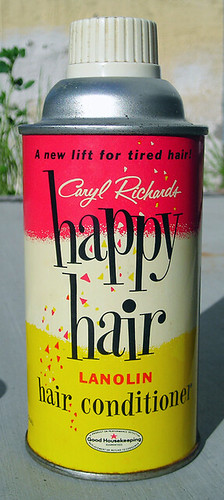 To make a smoother economic transition to possible carbon caps, power plants might be adding a new ingredient to their future emissions-cleansing routine.
Found commonly in hair conditioning rinses (as well as fabric softeners), aminosilicones are materials that may help absorb carbon dioxide (CO2) from the flue gases of coal-burning electric plants.
At an American Chemical Society meeting on Wednesday, researchers from General Electric Global Research announced the creation of a new type of aminosilicone, which could capture 90 percent of CO2 in laboratory experiments.
Funded by the Department of Energy, the research will next examine how the potential new scrubber performs at an actual power plant. The United States has around 8,000 coal-fired power plants (GE owns a bunch), which spew an estimated 2.8 billion tons of the greenhouse gas CO2 into the air every year. Worldwide, there are about 50,000 plants generating electricity via coal.
Chemist Robert Perry (below) writes on the GE Research blog:
Currently, there are no CO2 -capture technologies in full-scale operation at coal-fired power plants, although there are several technologies that are being tested in pilot and slip stream scale. However, these routes have been calculated to significantly increase the cost of electricity if incorporated in a traditional coal plant. Our objective was to find a solvent-based process that would be efficient in capturing CO2 but still have a minimal effect on the cost of electricity.

Should the pilot study succeed, the liquid aminosilicone would absorb CO2 that will then be sequestered from the solvent. The aminosilicone could then be recycled...rinse, repeat.
Images: Flickr_Roadsidepictures and GE Global Research
Via: CleanTechies
This post was originally published on Smartplanet.com