Follow this blog:
RSS

Hydrogen car: Femme fatale?

By | September 21, 2011, 5:05 AM PDT

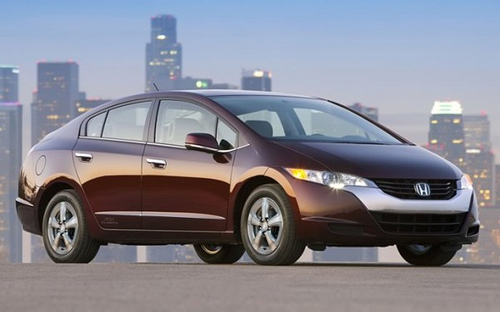
Honda's FCX Clarity hydrogen sedan, somewhere other than Swindon

Honda's FCX Clarity hydrogen sedan, somewhere other than Swindon

Honda opened the UK’s first hydrogen filling station this week, not too far from where I live. Just as I was about to say “yay,” I hesitated and wondered out loud: “Wait, is that safe?”

As someone once said to me, “remember the Hindenburg,” the hydrogen blimp that exploded 74 years ago, killing 36 people in New Jersey.

My understanding of hydrogen is that it’s extremely volatile. It wants to explode. To give you one example from the energy industry: Japan’s Fukushima nuclear reactors blew up when hydrogen pulled away from water and went boom in the heat buildup.

I’m not suggesting that we go nuclear over the prospects of hydrogen cars bursting into flames when, say, they get rear-ended. And I’m not singling out Honda. Their opening in Swindon, England, which supports the Honda FCX Clarity hydrogen sedan, simply marks an occasion to ask level headed questions.

As long the industry is taking considerable time to work out the economics and distribution of hydrogen, I’d like to hear more about whether these cars are safe. I’d hate to see fireproof jumpsuits added to the list of government-mandated driving requirements, along with seat belts. After all, the fledgling blimp resurgence is using helium, not hydrogen.

I’ve quickly trawled the Internet and noticed that some hydrogen supporters are fed up with Hindenburg comparisons. They claim that hydrogen cars are as safe as gasoline vehicles (your choice as to whether that’s reassuring). Birmingham University professor and hydrogen expert Kevin Kendall reiterates that, noting in a BBC video, “Like petrol, you’ve got to be careful.” (You probably know that “petrol” is Brit speak for gasoline, but I translate nonetheless).

In the spirit of blogging, I ask: Is that gorgeous car pictured above (good looking for a sedan, anyway) a femme fatale beckoning you into a fireball? Or is it a symbol of a fossil fuel free automobile future where, by the way, refueling will take minutes rather than the hours of electric battery charging? None of the above? Or, as is usually the case, does the truth lie somewhere in between?

Your comments, please.

Photo: Paul Moak Honda/Flickr

Related Post:

Bringing back the blimp

Start your week smarter with our weekly e-mail newsletter. It's your cheat sheet for good ideas. Get it.

Mark Halper

About Mark Halper

Mark Halper is a contributing editor for SmartPlanet.

Mark Halper

Mark Halper

Contributing Editor

Mark Halper has written for TIME, Fortune, Financial Times, the UK's Independent on Sunday, Forbes, New York Times, Wired, Variety and The Guardian. He is based in Bristol, U.K.

Follow him on Twitter.

Mark Halper

Mark Halper

Mark has no financial holdings in the companies he writes about. He occasionally travels at the expense of companies or their press relations agencies in order to report on a company or industry event related to it; Mark will prominently disclose this information when appropriate. This relationship will have no influence on his coverage. Companies he covers do not get to review columns in advance, or select or reject topics.

He writes for SmartPlanet and is not an employee of CBS.

If you liked this, don't miss...
15
Comments

Join the conversation!

Follow via:
RSS
+3 Votes
+ -
Safer than gasoline
Hydrogen is a very light gas. It's tendency, if released from it's storage container by a rupture of some kind, is to disperse very quickly in all directions. The tendency of gasoline, by comparison, is to stay near the ground, the road, the car, and you.

So I know which I'd rather have in a large tank behind me!
Posted by SierraEchoHotel
21st Sep 2011
+3 Votes
+ -
The 10s-of-gallons of gasoline sloshing about in your car...
...is highly volatile as well, and yet few people freak out about that. Fortunately, spontaneous car explosions, even after accidents are relatively rare, and are almost never as they are portrayed in television or movies. I expect hydrogen accidents to be the same.

It's the poor state of science education in primary and secondary schools today that is probably our biggest hindrance in getting the public to be both skeptical and accepting of new technologies.

As for the Hindenburg, the hydrogen part of the explosion was over in seconds. The scary-looking part of the fire was the burning of the highly volatile skin of the ship made of cotton, aluminum and cellulose nitrate.
Posted by JohnMcGrew@...
Updated - 21st Sep 2011
+1 Vote
+ -
We've come a long way since the Hindenburg
Tank structure, insulation and placement figure into the safety engineering surrounding the use of hydrogen as a fuel, not to mention the fact that it doesn't like to be contained. Hydrogen atoms are so small that they tend to leak through solid materials. That last attribute (volatility) is more of a safety plus rather than a minus. Gasoline (aka Petrol), which is used in some "Fuel Bombs" hangs around a bit too long, once aspirated during an accidental breach of a fuel tank. On the other hand, hydrogen disperses quickly into the atmosphere. There are hydrogen fueled internal combustion BMW automobiles on the road today as well as hydrogen fuel celled motor cycles. There are hydrogen fueled space stations, buses, you name it all over the place. If it was as dangerous as you think, you would have heard of any incidents by now. Absent the occasional Space Shuttle (giant flying bomb) accidents, I have heard of none. Fukishima is a very poor example. More people have been killed from steam (water) explosions than hydrogen. Should we be concerned about steam? Hydrogen as a fuel is no more hazardous than all of the other energy sources we use today. It is probably the safest alternative on many different levels. As for the Hindenburg, most of what happened there is attributable to the paint, fabric and other flammable structures used in fabricating that ship.
Posted by PSFTGURU@...
21st Sep 2011
+1 Vote
+ -
Hindenburg and hydrogen
If you noticed, the video of the Hindenburg going down in flames, it did not explode. What was actually burning was the outer shell that made up the hull of the blimp.

It was determined that the material used was the cause of the fire.

As far as hydrogen safety, any volatile gas requires a minimum of 16% oxygen to burn, our air that we breath has 21%. This means that the air has to mix with the gas in order to ignite and burn. Any time you see a fire and there is smoke rising from it, that is unburned fuel that is escaping with the heat of the fire.

If a fuel cell in a car were to rupture, as was already stated the gas would rise and dissipate rapidly into the air, the studies have already been done (20 years now) and there are video's to support this.

If there were a spark, only the outer perimeter of the hydrogen cloud would ignite and as the air mixed with the hydrogen it too would ignite and burn off.

And the cool thing is this would all happen in a matter of seconds.
Posted by kfortner51
Updated - 21st Sep 2011
+1 Vote
+ -
Why is this still a question?
If there's legitimate safety concerns, then experiment. Get a bunch of hydrogen canisters & old cars. Find out what happens when a ruptured canister catches fire under a range of hydrogen temps, hydrogen pressures, ambient temps, and altitudes. Relatively inexpensive & potentially entertaining.
Posted by hoodedswan
21st Sep 2011
+3 Votes
+ -
Re: Experiment
Sounds like a job for Mythbusters!
Posted by akashner
21st Sep 2011
+1 Vote
+ -
PBS Nova did that
Nova had a program on hydrogen as fuel. They compared 1 gallon of gasoline with a container of the equivalent amount of hydrogen. They fired incediary bullets to ignite the fuel. The most dangerous explosion of the two fuels was gasoline, it burns longer and splatters. Hydrogen burns quickly and rises at the same time. The program noted that the perimeter of the fire test was surrounded by jets of burning hydrogen for safety.

The challenge with producing hydrogen as a fuel is that it takes more power to break off the oxygen atom than it takes to add oxygen to hydrogen. The other challenge is a safe and efficient refueling for hydrogen powered vehicles; it would have been good to add Honda's solution to the article.
Posted by sboverie
21st Sep 2011
+1 Vote
+ -
Exploding cars
Look at YouTube. They have done this experiment with old cars and CNG. The same theorys apply. 100% hydrogen does not burn. It has to be a mixture, and getting the right mixture isn't easy. Mythbuster fans know this.

Producing hydrogen from water isn't the best method. Methane is CH4 and if you take the carbon atom out, you have hydrogen (steam reformation). Methane is very abundant, and already piped to your house.
Posted by RaulLasVegas
14th Nov 2011
0 Votes
+ -
H2
You obviously have not been following the new innovations in producing hydrogen fuel, some are self powered after they process is started they just have to see if it can be done large scale. Do some reading on the subject before you become the expert.
Posted by doumor_99
30th Jan
+1 Vote
+ -
Hydrogen fuel (hoodedswan)
Why do you assume that the manufacturers haven't already done a great deal of safety testing?
Posted by Prof Bob
21st Sep 2011
+1 Vote
+ -
Nitrogen powered cars.
The terrorists will love these.
Posted by IMWeira
21st Sep 2011
+1 Vote
+ -
Nitrogen is inert
Yes, I use Nitrogen all the time a shielding gas for welding. Thanks Ralph
Posted by RHFBERNSTEIN@...
22nd Sep 2011
+1 Vote
+ -
Gasoline is much more hazardous
A full tank of gasoline is equivalent to about 2.5 sticks of dynamite in explosive potential. Many people have died from gasoline fires in their vehicles, usually involving a flash and rapid fire expansion into the human compartment.

Only one accident involving a hydrogen powered truck, in Canada, has occured. What happened? The truck was crashed, the hydrogen burned slowly, and the only result was slight discoloration of the paint. No explosion, no injury, nothing happened with the hydrogen powered truck. Safety in design is paramount with both gasoline and hydrogen powered cars.

Of course, you cannot produce gasoline at home, using solar energy, as you can make hydrogen, with sunlight and water. There are many answers to energy for various uses, and hydrogen produces water and electricity in a fuel cell, and no horrible carbon and other compounds are dumped into the atmosphere.

Expect significant reduction in the cost of hydrogen, to where it will likely settle in at 1/3 the cost of gasoline. It truly represents the answer for American Jobs because its a home grown energy carrier, creating millions of jobs, and reducing our dependence on imported oil and gas.

James H. Smith
CEO
H ENERGY SYSTEMS
Posted by randomotion
22nd Sep 2011
0 Votes
+ -
Hydrogen
If the emissions on these is water vapor and heat why not bring back the rotary engine? They were dropped because of poor emissions, but were small in size and produced tons of HP for their size. I drove a an old Mazda Wagon that had this small rotary engine and a huge four barreled carburetor on it, when you floored it you could pass anything. I mean serious G-force.
Posted by doumor_99
30th Jan
0 Votes
+ -
nay sayers
All you people need to read the latest innovations on making hydrogen fuel. one was like an RO unit; waste water with bacteria on one side (we have plenty of that on earth) and sea water on the other (tons of that) they used an electric jump start and the bacteria made fuel on it's own without electricity. The innovations are there they just need to find one that can mass produce.
Posted by doumor_99
Updated - 30th Jan
Join the conversation
Formatting +
BB Codes - Note: HTML is not supported in forums
  • [b] Bold [/b]
  • [i] Italic [/i]
  • [u] Underline [/u]
  • [s] Strikethrough [/s]
  • [q] "Quote" [/q]
  • [ol][*] 1. Ordered List [/ol]
  • [ul][*] · Unordered List [/ul]
  • [pre] Preformat [/pre]
  • [quote] "Blockquote" [/quote]

Join the SmartPlanet community and join the conversation! Signing up is fast and free. Don't wait -- we want to hear your opinion!