Follow this blog:
RSS

Converting danger into energy: Rwanda to divert lake’s lethal gases to power plant

By | February 14, 2012, 6:00 AM PST

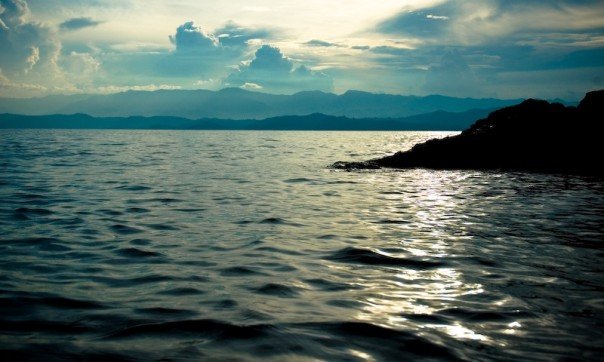
Lake Kivu near Bukavu, Democratic Republic of Congo, west of Rwanda. Photo from Themalu via Wikimedia.

Some 2 million people around Africa’s mile-high Lake Kivu could face grave consequences if trapped volcanic gases rise to the surface. To avert danger, the Rwandan government has launched a grand engineering scheme to suck up explosive methane from depths of 1,000 feet and pipe it to a nearby power plant.

Supporters say the KivuWatt project could double the country’s electricity production and reduce its dependence on imported diesel fuel which currently powers nearly all of its electricity according to a feature story on the BBC website.

Satellite image of Lake Kivu in Africa's Rift Valley, from NASA via Wikimedia.

The 1,040-square mile Lake Kivu is one of the African Great Lakes in the Rift Valley. It sits in a volcanic area between Rwanda and the Democratic Republic of Congo, where CO2 emerges from the bottom and, along with methane that forms from it, remains undisturbed and dissolved under the pressure of 1,000 feet of water, the story notes.

But an earthquake or a lava flow could loosen the trap and catastrophically release the gases, as happened in Cameroon in 1986, when a deadly cloud of CO2 from Lake Nyos asphyxiated over 1,000 people.  In addition, the methane could explode under certain conditions when it hits the air. Lava from the nearby Nyiragongo volcano flowed into Lake Kivu in 2002.

So 8 miles offshore,  Rwanda and New York City based energy engineering company ContourGlobal will drop four huge straws - risers - over 1,100 feet down to pull up the CO2 and methane. It will pipe the methane to a new power plant, and return the CO2 to the lake as storage. ContourGlobal is currently loading a barge in preparation for the project.

By removing the methane from the mix, the process relieves pressure and reduces the chances of a release, ContourGlobal’s Bill Barry told the BBC.

Australian energy consulting firm Sinclair Knight Merz has warned that if KivuWatt is not carefully operated, it could itself cause an explosion or gas release from the lake.

Rwandan government engineer Augusta Umutoni told the BBC she rejected that risk. But she worries the project could alter the lake’s chemistry, turning it more acidic and giving rise to algae, which itself could be catastrophic for fish life and for the 2 million people who rely on the fish for food and their livelihood.

In order to monitor that possibility, the project will start with a small pilot stage producing electricity from methane next year. A successful project would keep a healthy fish population and would also deliver electricity for the first time to the homes of many villagers.

More hot and bubbling earth on SmartPlanet:

Start your week smarter with our weekly e-mail newsletter. It's your cheat sheet for good ideas. Get it.

Mark Halper

About Mark Halper

Mark Halper is a contributing editor for SmartPlanet.

Mark Halper

Mark Halper

Contributing Editor

Mark Halper has written for TIME, Fortune, Financial Times, the UK's Independent on Sunday, Forbes, New York Times, Wired, Variety and The Guardian. He is based in Bristol, U.K.

Follow him on Twitter.

Mark Halper

Mark Halper

Mark has no financial holdings in the companies he writes about. He occasionally travels at the expense of companies or their press relations agencies in order to report on a company or industry event related to it; Mark will prominently disclose this information when appropriate. This relationship will have no influence on his coverage. Companies he covers do not get to review columns in advance, or select or reject topics.

He writes for SmartPlanet and is not an employee of CBS.

If you liked this, don't miss...
6
Comments

Join the conversation!

Follow via:
RSS
0 Votes
+ -
lake acidity
One of the major reasons the lake will become more acidic is the return of the CO2 to the lake. It reads like their system will incorporate a CO2/methane separation filter such that only CO2 will be returning to the lake. My question is: why return it to the lake at all? Its redundant, and the cost of the system to do so will cost the same or more to install and maintain vs setting up large near-site greenhouses for the CO2 to be pumped to. A quick google search for 'CO2 plant growth greenhouse' will yield a plethora of articles and coverages about how beneficial increased CO2 levels to plants is capable of being. It not only will actually result in a lower lake ph level than if this project was never implemented but also create jobs working in the greenhouse, increase crop and food yields, and also increase plant and fish life (and therefore yield) in the lake from a healthier ecosystem, thus more fish for the fisherman, not to mention sequestration of the CO2. It shouldn't cost much more, and possibly even less than the return system, depending on CO2 amounts (something unfortunately not stated in the article).
Posted by Vailhem@...
Updated - 14th Feb 2012
0 Votes
+ -
Delay not sequester
Growing plants with the collected CO2 won't sequester it whereas putting it back in the bottom of the lake will. Any plants grown will be consumed by people or livestock and will be released into the atmosphere after being trapped for millennia.
Posted by SustEng
15th Feb 2012
0 Votes
+ -
Methane
Taking the methane out of the lake and burning it to produce power also converts it to CO2 which is a less powerful greenhouse gas. I have to think that is a good thing.
Posted by riverat1
14th Feb 2012
+1 Vote
+ -
What?
How many times have you lectured that the problem with CO2 is its longevity in the atmosphere, whereas methane, while a much more powerful "greenhouse gas" is relatively short-lived?
Posted by JohnMcGrew@...
15th Feb 2012
0 Votes
+ -
So?
Methane is still about 20 times as powerful a greenhouse gas as CO2. If it's going to end up in the atmosphere anyway the sooner it's converted to CO2 the better. When methane (CH4) oxidizes in the atmosphere you get one CO2 molecule and two H2O molecules (mostly).
Posted by riverat1
15th Feb 2012
0 Votes
+ -
Utilization of poisonous gases to prevent dangerous release.
Sounds too good to be true but I am hoping it is a go. It is truly a brilliant idea if safety is job one. But that is the problem. When the scientists and engineers go home for the day, all too often it is the Homer Simpsons that are running the place.
Posted by IMWeira
17th Feb 2012
Join the conversation
Formatting +
BB Codes - Note: HTML is not supported in forums
  • [b] Bold [/b]
  • [i] Italic [/i]
  • [u] Underline [/u]
  • [s] Strikethrough [/s]
  • [q] "Quote" [/q]
  • [ol][*] 1. Ordered List [/ol]
  • [ul][*] · Unordered List [/ul]
  • [pre] Preformat [/pre]
  • [quote] "Blockquote" [/quote]

Join the SmartPlanet community and join the conversation! Signing up is fast and free. Don't wait -- we want to hear your opinion!