CA nuke plant's emergency cooling system failure went unnoticed

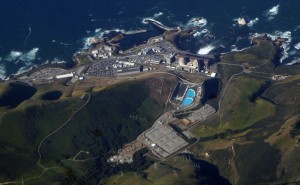
A California nuclear reactor that borders multiple fault lines - and the Pacific Ocean - did not have a functional emergency pumping system for 18 months, according to reports.
The Diablo Canyon nuclear plant has sat perched atop a cliff at Avila Beach in California's San Luis Obispo county since its completion in 1973. The plant is located within a stone's throw of the Shoreline Fault and in the vicinity of the San Andreas Fault.
Aside from its unfortunate geography, Diablo Canyon's pastoral surroundings have masked another hidden danger: human error. Engineers accidentally disabled a vital back-up cooling system that prevents the reactor from overheating.
The plant is operated by Pacific Gas & Electric, which recently requested that the California Public Utilities Commission for a 20-year extension to the plant's lifecycle. The request has been postponed in light of the Fukushima Daiichi facility’s nuclear emergency in Japan.
The Diablo Canyon facility was built with a reinforced design meant to withstand earthquakes, but significant defects were uncovered during the early 1980's. Nonetheless, the Nuclear Regulatory Commission has allowed the reactor to continue operating.
One of the Diablo reactors was taken offline in 2008 when a swarm of jellyfish clogged up a critical cooling intake.
Nuclear power plants are built with redundant systems, and Diablo Canyon is no exception. Crew members could have manually opened up valves in the event of an emergency, and a separate pumping system could have been initiated in its place, a PG&E spokesperson told the San Francisco Chronicle.
However, Japan's Fukushima reactors were also built with redundant systems. The systems failed in unanticipated ways following an earthquake and its subsequent tsunami, prompting engineers to take unconventional and unproven measures to cool exposed nuclear fuel.
The Union of Concerned Scientists (UCS) uncovered the incident at the Diablo Canyon site, which it detailed in a report published this week. The report overviews what UCS has deemed to be 14 recent "near misses" at U.S. nuclear power plants.
The group's opposition to nuclear power is longstanding, and it favors the development of renewable power sources.
Last month, UCS issued a report that questioned the economically viable of nuclear power plants, which it says cannot exist with generous government subsidies.
UCS was founded in in 1969 by a group of scientists and students at the Massachusetts Institute of Technology to promote the use of science for public interest. It is strongly opposed to any political interference in scientific research.
This post was originally published on Smartplanet.com