Firefox looks to use its geek ambassadors to sell smartphones

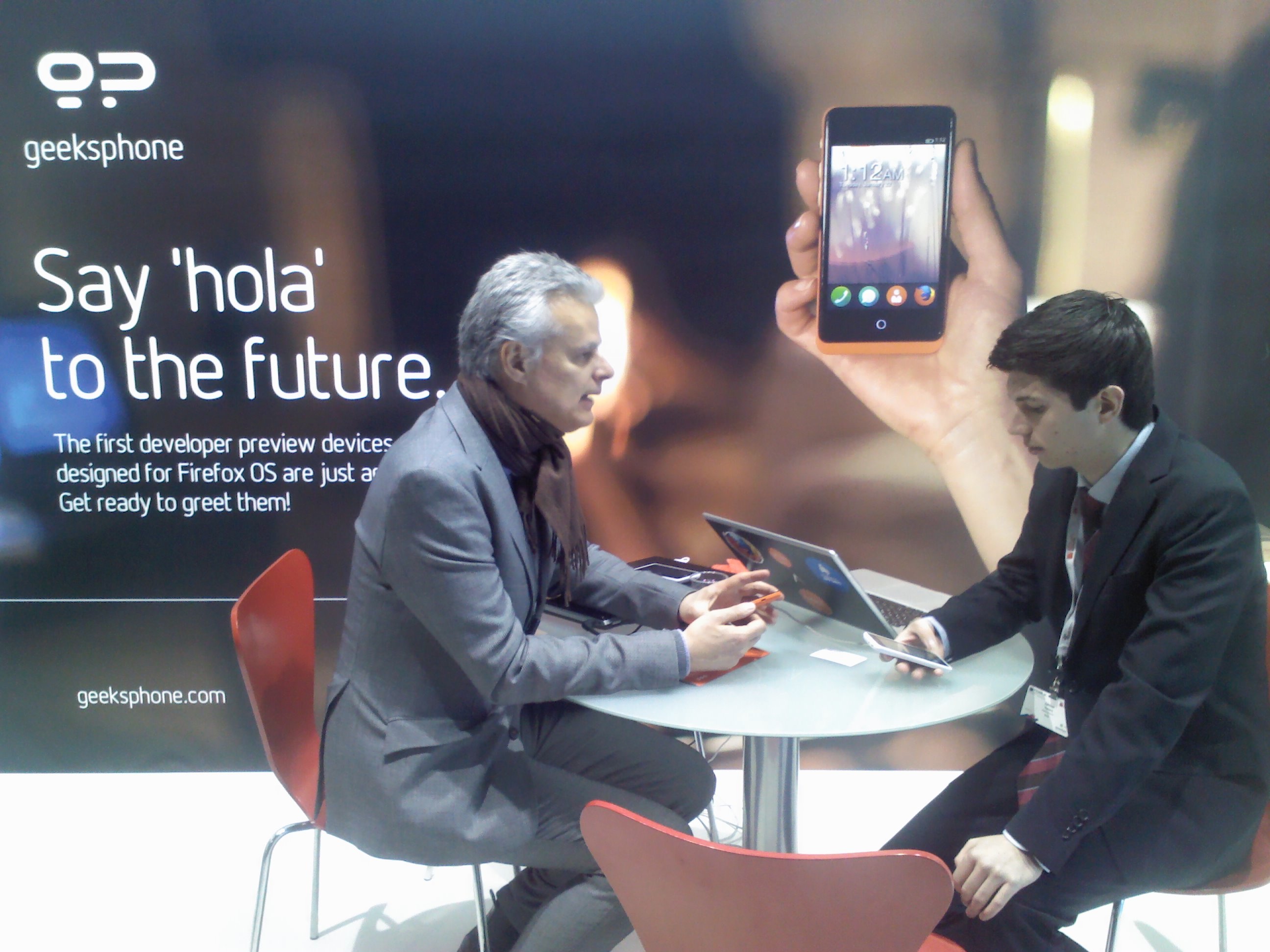
BARCELONA -- You've probably heard Mozilla Firefox is releasing their first operating system for smartphones to developers later this month. But did you know that the Spanish entrepreneur behind Geeksphone was 16 when he started the company? Or that his home address and phone number was on the back of the brochures handed out at this year's Mobile World Congress?
SmartPlanet sat down with 20-year-old Geeksphone C.E.O. Javier Aguera at last month's MWC. The Madrid-based company, with its not-for-profit partner Mozilla, is looking to make smartphones that are open-sourced and accessible to anyone and everyone, but will it get trapped in its own geek-o-sphere?
The end of March will see the release of the first two Firefox OS developer previews: the larger Peak and the less expensive and lighter Keon. The first question I asked Aguera was one that SmartPlanet colleague Channtal Fleischfresser posed this January: "In a market already crowded with the iPhone, Android, Windows Phone, Blackberry 7, and Symbian, and with expected releases from players including RIM, Ubuntu, Tizen, and Sailfish, how much room is left for additional players?"
Co-founder Rodrigo Silva-Ramos y Pidal quickly answered for him that, with Geeksphone, "You can speak with the founders," claiming that customers will be drawn to a unique service level and the fact that they can feel like they are a part of the evolution of the product they are using. "We think that in the phone industry, there isn't a strong link between brand and users," Silva-Ramos says.
Partnering with Firefox was a no-brainer for both sides because the two start-ups share the same open-sourcing values and believe that "the user must be at the forefront." Geeksphone was founded four years ago on sharing a strong community between the developers and its users and on not being tied to a specific mobile service provider. The Firefox Geeksphones will not be released with a specific carrier either, but will be open and unlocked to any and all providers.
Like with all things, Geeksphone's success may come down to price, which Silva-Ramos says will be competitive for a European brand. "It's crazy that a smartphone could cost more than a laptop," he says. Although final prices haven't been released yet, Telefonica told SP's sister site CNET that the Keon will be "ten times cheaper than the iPhone." Telefonica, Spain's largest company, has half its business in Latin America and is partnering with Mozilla on this project.
Telefonica is betting that Geeksphone will have a solid chance in South America, which is set to be the first place of release, when Peaks and Keons are finally sold to the public later this year. While smartphone sales seem to have reached their peak in Europe, the U.S., China and Japan, emerging markets still have room for smartphone growth, as these customers are beginning to upgrade their simpler cell phones to smartphones. This new customer base requires less expensive smartphone alternativesthat aren't tied to contracts, but are open to the pre-paid services much more common in these regions.
Since downloaded applications won't drain power and memory and all activity on the phone will be web-based, the life of the Peak and Keon batteries will be much longer. This is crucial to people who might not have 24-hour access to electricity to charge their smartphones.
In addition, the Android and Apple app stores are linked to users' debit and credit cards. The Mozilla Marketplace is open to payments via mobile phone providers, which is crucial in countries where many people don't have credit cards or bank accounts and their purchasing power is through their mobile carriers.
Of course, Geeksphone also thinks they'll score big with the geeks of the world -- often programmers and developers who want access to every tiny part of the phone, which is usually behind lock and key on other models -- the clear target audience since the beginning of the start-up. Aguera says geeks are "an area of the market that wasn't being paid attention to by the industry." He calls geeks "brand ambassadors." Their market research shows that, for every Geeksphone One bought by a geek, four other "non-geeks" bought it, solely based on the geek's recommendation.
To that end, Geeksphone is said to be the developer's dream, chock full of flexibility on all sides. Aguera explains that there aren't as many layers or tech specifications, like with other smartphones, allowing for a simplification of programming. He points out there are 400,000 Android and 250,000 iOS developers worldwide, while there are more than eight million people trained in HTML. These eight million people will be ready and able to program for Geeksphones and to sell their Geeksphone apps from anywhere online they want, not just through the restricted Apple Store or Google Play channels.
What inspired Aguera and Silva-Ramos to launch Geeksphone was seeing Google's Larry Page receive Spain's highest honor, the Prince of Asturias award, in 2008. Page, in exchange, gave the prince of Spain the first Google Android smartphone, which had only been released in the U.S. that week. The symbol of this trade-off struck home with Silva-Ramos, who at the time felt that Android-based phones were the future. For that reason, Geeksphone was originally set up to create a store specializing in selling Androids in Europe, but, in the end, the company decided it must create its own way. It built the Geeksphone One, which, at the start of 2010, was the first smartphone sold with the Android operating system to the European mass market.
Android now has 80 percent market share in Spain and nearly 70 percent in Europe as a whole, and Geeksphone has grown to 15 people over the last four years, having released one Geeksphone each in 2010 and 2011 and two in 2012.
Without a doubt, Aguera goes against the theory that the Spanish aren't natural entrepreneurs. He had already tried and failed at building other start-ups -- including a video game company and an online t-shirt store -- before he'd hit his sweet 16 and co-founded Geeksphone.
Aguera argues that it isn't that the Spanish are lacking motivation to go out and start their own companies, but that there's a lack of information and numerous misconceptions about entrepreneurship. In Europe and especially in Spain, he says, "The culture punishes failure very hard."Also, teachers and parents don't teach their kids about entrepreneurship simply because they haven't heard of it. "A doctor heals. An architect builds," he says, but what exactly does an entrepreneur do? Aguera says that as soon as the ICAI-ICADE business school created an Entrepreneurship Institute, students became vocal about their interests in building their own companies. "The motivation was already there."
Photo: Geeksphone co-founders Silva-Ramos and Aguera (right) at the Mobile World Congress (Jennifer K. Riggins)
This post was originally published on Smartplanet.com