Chinese more tolerant of inequality than Europeans, survey finds

 BEIJING - Beijing is home to more millionaires than any other Chinese city, and the Jinbao Palace is where they come to shop. This seven storey mall advertises itself as a “venue for extravagance,” and items on offer inside include diamond encrusted watches selling for the equivalent of $1.1 million, and men’s suits for about $160,000. Outside, a strip of luxury car dealerships are doing briskier business than ever. Rolls Royce’s China sales grew almost 70 percent last year, reflecting a wider rise in luxury purchases, up 27 percent in 2010, according to Bain research. And that’s not counting purchases China’s rich are making outside the country.
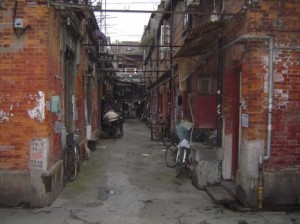
But those kind of luxury purchases are a remote prospect for the average Beijing resident, who earned little more than the equivalent of $4,800 last year, according to government statistics. Newly arrived migrants from China's countryside face the lowest incomes, living in cramped dormitories or sharing single rooms in Beijing’s alleyways, often without heating or inside toilets. China didn’t release a figure for the Gini Coefficient, a measure of inequality, this year. But experts estimate that the figure is at least .48, meaning that China is now a more unequal place than the United States. Chinese inequality is growing at a faster rate than in Brazil or India, according to the World Bank.
China’s wealth gap hasn’t escaped the attention of Chinese people, who ranked inequality as the third most pressing issue facing the country last year, according to the Chinese Academy of Social Sciences. But is China’s inequality a recipe for social instability? Not according to Martin Whyte, a Sociology Professor at Harvard University who carried out nationwide surveys of Chinese attitudes towards income inequality in 2004 and 2009.
“There’s much less anger about the gap between the rich and the poor in China than there is in Europe, for example,” Whyte said. According to his 2004 survey, about 70 percent of Chinese people agreed with the statement "national income differences are too high," a lower percentage than in any other country surveyed except the United States. Results have not changed significantly in his more recent survey, Whyte said. In some Eastern European countries, 95 percent of people agreed with the statement.
Chinese people are more tolerant of growing levels of inequality because they've been accompanied by a rise in living-standards, according to Whyte. Seventy percent of Chinese surveyed expected their quality of life to improve over the next five years, according to Whyte’s survey. “Chinese people generally feel optimistic about their chances of improving their lives,” he said.
A second factor is a widespread belief that individual effort and hard work play a bigger role in success than corruption and connections. Just 27 percent of those surveyed in China thought that “unfairness” has a large influence on who is rich, according to Whyte’s 2004 survey, and 61 percent of those Whyte surveyed in 2004 agreed with the statement that “hard work is always rewarded”. In the 2009 survey, that figure grew to 67 percent, even though Chinese inequality increased.
“There’s a lot of similarity between China and America views about inequality,” Whyte said. Both cultures have a tradition of telling rags-to-riches stories about achieving success through hard work and determination, according to Whyte. A glance at Beijing’s book stores seems to confirm his claim: a biography of Apple-founder Steve Jobs sits atop the Beijing Times' bestseller list for 2011, a collection of speeches by self-made Chinese millionaire Jack Ma follows close behind.
Though resentment towards the rich does exist, it tends to be restricted to government officials or business leaders perceived to have abused their privileges, Whyte said. Comments this week by Chinese internet forum users responding to a report on a luxury post-natal care unit in Shanghai, which charges mothers more than $60,000 USD per month, seem to reflect that attitude.
“As long as rich people love to spend this money, why not? It can conveniently stimulate domestic demand along the way,” one user posted.
Pictures: Danwei.com; GreatMirror
This post was originally published on Smartplanet.com