Why temporary architecture could be an enduring trend

So argues New York Times opinion writer Allison Arieff, the former editor-in-chief of Dwell magazine and a prominent writer and consultant on design. In her essay, "It's Time to Re-think 'Temporary,'" Arieff writes that "there is undeniable opportunity in the temporary: it is an apt response to a civilization in flux. And like many prevailing trends — collaborative consumption (a.k.a., "sharing"), community gardens, barter and trade — 'temporary' is so retro that it's become radical." She refers to the use of Airstream trailers as mobile health units in the early 1960s and the centuries-old tradition of temporary bookshops that line the Seine River in Paris as references.
Why does the idea of fleeting structures and do-it-yourself city planning symbolize the future, then? Citing thinkers such asRobert Kronenburg, an architect and professor at University of Liverpool, and Mike Lydon, founding principal of The Street Plans Collaborative, an urban planning, design, and advocacy firm, Arieff points out that
- Dropping, or at least loosening, the historical belief that architects, engineers, and developers should focus on permanent edifices will allow them to research and experiment with current building technologies faster
- Short-term, experimental projects can help find quicker, more responsive, and highly flexible solutions to the needs of diverse city populations
- Embracing impermanence can allow more designers and planners to test out new types of structures or services without having to endure long governmental approval processes normally in place for permanent buildings
Examples of these practices in action are evident in the work of the Dallas organizationBuild a Better Block, once a small grass-roots initiative that now partners on official city projects, or San Francisco’s PROXY project, which had set up shops and eateries in shipping containers and eventually helped revitalize a somewhat run-down neighborhood within the City by the Bay.
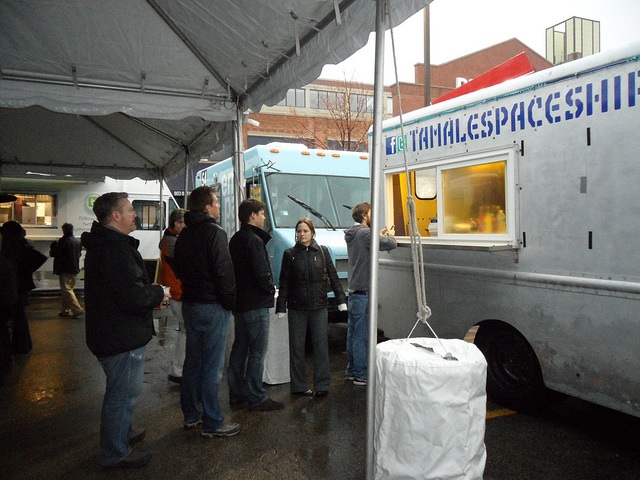
Given that since the beginning of the Great Recession the construction business has slowed dramatically and that some of the most popular cultural--and inventive retail--projects have been pop-up shops and food trucks, letting go of past conceptions of architecture's permanence might be the most enduring design phenomenon of the 2010s.
Image: Andrew Huff/Flickr
This post was originally published on Smartplanet.com