Follow this blog:
RSS

Ten buildings that changed the United States

By | April 11, 2012, 6:46 PM PDT

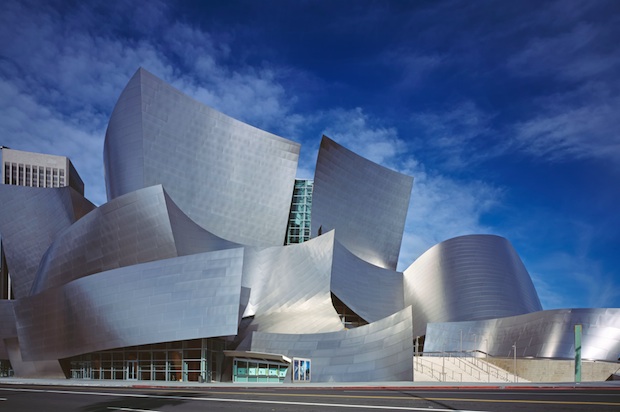
The Walt Disney Concert Hall in Los Angeles

If you had to describe the quintessential American building, what would it be? A soaring skyscraper? A hip Modernist house? A shopping mall?

An ambitious TV series and accompanying Web site, both titled 10 Buildings That Changed America, have just started production and will explore iconic U.S. architecture. They will present structures that “changed the way we work, live, and play,” according to the Web site. The buildings were chosen by a group of practicing architects as well as architectural experts, in partnership with the Society of Architectural Historians. Chicago PBS station WTTW is producing the show, hosted by Emmy Award-winning producer Geoffrey Baer, and it’s scheduled to air in 2013.

Here’s the list:

  1. Virginia State Capitol, Richmond, VA
  2. Trinity Church, Boston, MA
  3. Wainwright Building, St. Louis, MO
  4. Robie House, Chicago, IL
  5. Highland Park Ford Plant, Highland Park, MI
  6. Southdale Center Mall, Edina, MN
  7. Seagram Building, New York, NY
  8. Dulles International Airport, Chantilly, VA
  9. Vanna Venturi House, Chestnut Hill, PA
  10. Walt Disney Concert Hall, Los Angeles, CA

The list seems to cover a wide variety of styles and eras. All are widely considered highly influential buildings by numerous sources, and when each was built, they had a profound effect on shaping the community in which it was created–and far beyond. Most are historical landmarks.

The Virginia State Capitol (designed by Thomas Jefferson) might look like any old government building today, its forms echoing those of libraries and courthouses around the country. And that’s because when it was built, in 1785, it sparked the Classical Revival movement in America. Its style influenced the design of public buildings all over the U.S. The Wainwright Building also probably looks very familiar; that’s because it set the standard for American office skyscrapers when the rectangular 10-story edifice was built in the late 19th century. The rectangular Robie House (by Frank Lloyd Wright) was a daring precursor to Modernist architecture when it was built in the early 20th century. Frank Gehry’s curvaceous, shimmering Walt Disney Concert Hall, completed in the early 21st century, symbolizes the power of architecture and design to revive a community’s economy. In the case of this building, it was downtown Los Angeles.

The Robie House in Chicago

Trinity Church was designed in the 1870s with an open auditorium area, which reflected a new, democratic style of worship in America. And the Vanna Venturi House, created by architect Robert Venturi for his mother in the early 1960s, is widely considered an icon of spare, modern simplicity echoed in many buildings and homes today.

And then on the list are some possibly surprising picks, because they might not be as aesthetically pleasing as others. The rather nondescript Highland Park Ford Plant, in Highland Park, MI, for instance, was a prototype for the 20th-century American factory. It included a constant assembly line, which cut down the time it took to make a 1913 Ford Model T car from 728 to 93 minutes. And the Southdale Center Mall, in Edina, MN, might not seem as glamorous as the sleek Seagram Building (designed by architectural legends Mies van der Rohe and Philip Johnson and completed in 1958) or the elegant Dulles Airport terminal (designed in the late 1950s by another design legend, Eero Saarinen). But the Southdale Center was the first enclosed regional shopping center in the U.S. when it opened in the mid-1950s, setting the tone for mall culture in America and around the globe for decades to come.

The Highland Park Ford Plant

Brought together in this list, the buildings seem to tell the story of not only U.S. architecture, but also suggests a narrative of how American culture and business developed. Will the list be debated? Probably, especially in the era of quick and opinionated online comments. Is it full of safe bets, though? Yes. For a general audience, 10 Buildings that Changed America promises to introduce them to not only the history of architecture in the U.S., but also how design has helped shape the nation’s commercial and social landscapes, too.

Images: Walt Disney Concert Hall, Carol Highsmith/Wikimedia Commons; Robie House, Cervin Robinson/Wikipedia; Highland Park Ford Plant, Andrew Jameson/Wikipedia

Start your week smarter with our weekly e-mail newsletter. It's your cheat sheet for good ideas. Get it.

Reena Jana

About Reena Jana

Reena Jana was a contributing editor for SmartPlanet from 2011 to 2013.

Reena Jana

Reena Jana

Contributing Editor

Reena Jana has written for the New York Times, Wired, Harvard Business Review online, Fast Company, Architectural Record, Artforum, Time Out New York, Harper's Bazaar, and GQ. Previously, she was the innovation department editor at BusinessWeek. She holds degrees from Columbia University and Barnard College.

Follow her on Twitter.

Reena Jana

Reena Jana

Reena occasionally consults with companies, and when her writing discusses a corporation or other organization with which she has worked, she will disclose this fact. Reena does not hold any investments in the companies she covers.

She writes for SmartPlanet and is not an employee of CBS.

If you liked this, don't miss...
9
Comments

Join the conversation!

Follow via:
RSS
0 Votes
+ -
Ten Buildings that changed the U. S.
Interesting. Give some thought to a follow-up piece(s) listing the ten most important buildings in the U.S., or the most artistic, etc. Granted, there will be controversy, but that will just broaden the scope and interest.
Posted by hgarey2010
12th Apr 2012
-2 Votes
+ -
the quintessential American building
The quintessential American building is a single-family home.

As far as 10 buldings that changed America... they forgot... The Alamo.

No Alamo, no Texas. Texas would have remained part of Mexico. Without Texas, the largest free standing monolith in the U.S. would be the Washington Monument, the tallest domed capitol would be the one in D. C., and the state with the 2nd largest economy would be New York.

None of the below would have been part of The United States of America:

Presedents Eisenhower, Lyndon Johnson, or Bush (both).
The World's Richest Acre (Kilgore, Texas).
Red Adair, Mary Kaye, Gail Borden, Carol Burnett, Claire Chenault, Walter Cronkite, Joan Crawford, Howard Hughes, Ross Perot, T Boone Pickens, Dan Rather, Tex Ritter, Gene Roddenberry, Janis Joplin, Scott Joplin, Mary Martin, Chester Nimitz, Willie Nelson, Roy Orbison, Buddy Holly, Larry Hagman, Sissy Spacek, ZZ Top,, et al.

The 15th largest economy in the world would be part of E.U. Mexico, not the U.S.

Remember the Alamo!
Posted by bb_apptix
12th Apr 2012
+2 Votes
+ -
Off topic
This piece is obviously about buildings as architecture. The design of the Alamo was neither original nor influential.
Posted by hoodedswan
12th Apr 2012
0 Votes
+ -
Imagine It
Both Bushes were born in New England, and I could happily imagine a US without a T Boone Pickens. Possibly one of the most despicable men in American business.
Posted by NotSoTupeloHoney
12th Apr 2012
0 Votes
+ -
Hmmm...where would America be without Texas
Texas has a level of arrogance (biggest/best mentality) that never quite fit the idea of team/concensus/ect., -- Texas would sacrifice the rest of the America for its own gain -- it remains one of the most predatory state for subsidizing companies (huge tax incentives) -- ironically, Texas lives heavily from Federal Taxpayers -- it has always been one of the largest beneficiary of Fed Tax dollars (huge military and government installation -- out of proportion with muc of the country. Add the oil profits siphoning much of the spendable income from small business and citizens to a select "Texas" based energy companies -- some think that America would of been better off if Texas was part of Mexico.
Posted by DaveRL
12th Apr 2012
+1 Vote
+ -
Ten Buildings that changed the U. S.
Ohhh! This is an architectural discussion, not historical. When I saw the headline I was thinking Independence Hall, US Capitol, White House, Alamo, Old North Church (myth or not), etc.
Posted by BRedmond@...
12th Apr 2012
0 Votes
+ -
IDK....seems iffy.
OF COURSE Illinois folks would pick the Robie House, but why not Taliesin West, for predating the LEED requirement of locally-sourced materials, and carbon reduction through maximized natural lighting?

What about Gehry's house, where the deconstructivist movement more or less began, and remains in a perpetual state of change?

Why not the iconoclastic Sears Robuck Company, whose mail order catalog brought forth nearly 100,000 homes that represent the quintessential American home (prior to the McMansion era)?

And hey, Philip Johnson's Glass House...how many minimalist homes have been created since then?

Or Mies' Crown Hall which does not have interior columns, and from which you can clearly see many modern steel and glass facades taking their cues from?

For the record, it was Gehry's Bilbao Museum in Spain which demonstrated that a building could revive a local economy, not the Disney Hall. The local economy - Little Tokyo - is now being gentrified and squeezed out.
Posted by gork platter
13th Apr 2012
0 Votes
+ -
Hold On Now....
I know it's PBS but are we sure Disney, Ford, and Seagrams are not proud sponsers?
Influence? Change? One should check these:

Home Insurance Building Chicago
The Reliance Building
860-880 Lakeshore Drive
Salk Institute
Unity Temple
Winslow or Talesian were the precursor to the Bungalow ??? not too many Robie-likes around
The Gateway Arch (dump the flippant Disney Studio) (postmoderism isn't included so why bother with frank gehry)
Yes, Dulles Airport
First strip mall / big box?
Posted by iceniner
20th Apr 2012
0 Votes
+ -
root always forgotten
MONADNOCK.
Posted by hovaard
22nd Apr 2012
Join the conversation
Formatting +
BB Codes - Note: HTML is not supported in forums
  • [b] Bold [/b]
  • [i] Italic [/i]
  • [u] Underline [/u]
  • [s] Strikethrough [/s]
  • [q] "Quote" [/q]
  • [ol][*] 1. Ordered List [/ol]
  • [ul][*] · Unordered List [/ul]
  • [pre] Preformat [/pre]
  • [quote] "Blockquote" [/quote]

Join the SmartPlanet community and join the conversation! Signing up is fast and free. Don't wait -- we want to hear your opinion!