UC Davis, a study in sustainable operations

The University of California, Davis, is known for its research in environmental sciences and one of its professors, Andrew Frank, is called the "father of the plug-in hybrid."
But the campus itself is a study in sustainable operations -- as well as home to the nation's largest planned zero-net energy community, which will produce as much power as it uses.
This was just one of the programs that earned the college a place at the top of Sierra magazine's sixth annual "Coolest Schools" ranking, which rates 96 colleges and universities on infrastructure, transportation, renewable energy usage and academics that relate to environmental research and sustainable business studies.
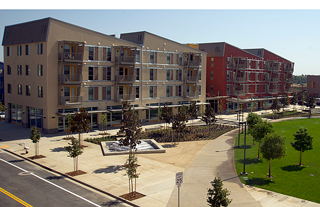
The community, UC Davis West Village, is an ambitious 130-acre development that will be home to about 3,000 people in 662 apartments and 343 single-family homes.
Energy efficiency features used in the construction include solar-reflective roofing, radiant barrier roof sheathing, and extra insulation. The buildings use occupancy sensors and daylight harvesting technologies. A 4-megawatt solar system will support the first 1,980 residents. The community will probably also use a biodigester to convert table scraps, animal and plant waste into energy.
The first phase, which cost $300 million to build, includes 315 apartments and opened in October 2011.
The community will also be home to uHub, a prototype campus innovation hub that will be home to the university's energy research centers.
There were many other factors contributing to the UC Davis ranking, including:
- An initiative to divert nearly 70 percent of campus trash from landfills (its at 64 percent right now)
- A student-run transportation that uses 49 buses powered by natural gas and serves 21,000 riders daily
- A Climate Action Plan that has reduced campus greenhouse gas emissions below year 2000 levels and expects to reach year 1990 levels by 2020
- A $39 million Smart Lighting Initiative on track to cut campus electrical use by 60 percent by 2015, saving $3 million annually on electricity
- A commitment to buying local and organic foods (20 percent of its $5.6 million food budget) for residential dining services
- Four UC Davis building complexes are certified LEED Platinum, the highest ranking awarded by the U.S. Green Building Council, including the first LEED Platinum winery, brewery and food processing facility
“I’m going into my senior year, and for the past few years, I’ve seen UC Davis grow in efforts to put sustainably grown food and energy measures on campus,“ said UC Davis student Tessa Artale, director of the Campus Center for the Environment, commenting about the ranking. “Not only at the administrative level, but at the student level, I've seen a commitment to making UC Davis a model for green universities. At UC Davis, you can take a class about sustainability, you can go on a field trip with the professor, join a club, get involved in the Student Farm. Sustainability is a really important topic, and UC Davis is a good place to learn about it. “
For more on how UC Davis earned its top ranking:
Here's the complete list of top 10 schools for 2012:
- University of California, Davis (Davis, CA)
- Georgia Institute of Technology (Atlanta, GA)
- Stanford University (Stanford, CA)
- University of Washington (Seattle, WA)
- University of Connecticut (Storrs, CT)
- University of New Hampshire (Durham, NH)
- Duke University (Durham, NC)
- Yale University (New Haven, CT)
- University of California, Irvine (Irvine, CA)
- Appalachian State University (Boone, NC)
[via Sierra]
(Thumbnail photo, courtesy of UC Davis; UC Davis West Village photo by Karin Higgins)
This post was originally published on Smartplanet.com