Follow this blog:
RSS

Tim Cook gets a Brazilian

By | February 14, 2013, 4:27 AM PST

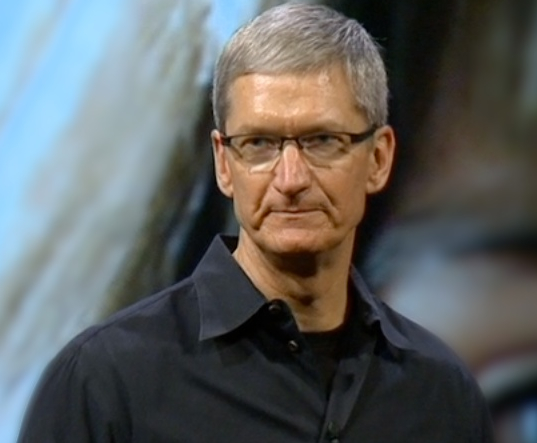
Rocked in Rio. Tim Cook's Apple does not have exclusive rights to the "iPhone" trademark in Brazil

A Brazilian regulator has shaved Apple’s ability to use the “iPhone” trademark in the country, declaring that the company does not have exclusive rights.

“The ruling is the result of a local company, Gradiente Eletronica, registering the name in 2000, six years before the U.S. firm,” the BBC reports.

Gradiente launched its own iPhone handset running the rival Android operating system in December.

Under the ruling by the Rio de Janeiro-based National Institute of Industrial Property (INPI), both companies can continue to use the iPhone name on handsets. But as the BBC notes, Gradiente now has the option to sue for exclusivity in Brazil, South America’s largest market.

Apple did retain exclusive iPhone trademark rights in other areas including advertising. Only Apple can use the name on clothing, for instance. (Clothing? Is there really iPhone clothing?)

Apple argued that it, not Gradiente, has rights to the handset name because Gradiente did not release an iPhone until 2012. That’s a dozen years after Gradiente registered the name, and six years after Apple applied for naming rights.

Gradiente sell its iPhone Neo One for 599 reals ($304).

Apple, run by CEO Tim Cook, is appealing the ruling.

Photo credit: Haotian0905 via Wikimedia.

Start your week smarter with our weekly e-mail newsletter. It's your cheat sheet for good ideas. Get it.

Mark Halper

About Mark Halper

Mark Halper is a contributing editor for SmartPlanet.

Mark Halper

Mark Halper

Contributing Editor

Mark Halper has written for TIME, Fortune, Financial Times, the UK's Independent on Sunday, Forbes, New York Times, Wired, Variety and The Guardian. He is based in Bristol, U.K.

Follow him on Twitter.

Mark Halper

Mark Halper

Mark has no financial holdings in the companies he writes about. He occasionally travels at the expense of companies or their press relations agencies in order to report on a company or industry event related to it; Mark will prominently disclose this information when appropriate. This relationship will have no influence on his coverage. Companies he covers do not get to review columns in advance, or select or reject topics.

He writes for SmartPlanet and is not an employee of CBS.

If you liked this, don't miss...
8
Comments

Join the conversation!

Follow via:
RSS
0 Votes
+ -
Good for you!
I'm so happy to hear when governments and people of the land get over on big corporate America. And I'm not just saying this because it related to Apple - this applies to all big corporate entities who have come to believe they are above all the laws of the land and can do just about anything - because they have money. And we all know Apple is one of the richest corporations in the land.
Bravo Brazil!!
Posted by matt-the-cat
14th Feb
-3 Votes
+ -
Hold back on your joy! This ruling pitted one business against another,
and the only involvement for "government" was the court ruling that granted Gradiente Electronica the right to use the iPhone name for its product. That is one corporate entity winning over another corporate entity, and neither the government nor the people, as you put it, will be greatly benefited by the ruling, if at all.

BTW, why do you have such anger against corporate America? Corporate American, and all businesses, pay all the bills that government is responsible for. Government doesn't do anything without the bills having to be paid that businesses and the tax payers. The anti-corporate sentiment will doom the U.S. and all governments, and that is already very visible in the whole continent of Europe and in Japan and the U.S., and everywhere else where governments have grown too big at the expense of businesses and the taxpayers.
Posted by adornoe
14th Feb
+1 Vote
+ -
I'd believe a bit differently
With the way so much of corp America has been going. I'd believe more corporate money goes to lobbyists, lawyers, payoffs and overseas, than directly to our government with taxes and the like.
Posted by jonrosen
14th Feb
-1 Votes
+ -
Corporate America has been forced into the positions they find themselves
in, because of the actions of the government.

Lobbyists and lawyers are required for corporations so that, they can handle the thousands of laws and regulations imposed on the corporations. Lobbyists, in a way, are the creation of the governments intrusion into the market. Lawyers are not always required, but, they allow the business management to concentrate on running the business, instead of the management having to become lawyers themselves before starting or running a business.

Payoffs may be unethical, but, it's always been a part of doing business, even without the government being involved.

The fact is that, most money ends up in the hands of government, than in the hands of the people. IN some states, like California, the total tax payments to governments, federal/state/city/country, exceed 63% in some areas, and that is one of the reasons that Tiger Woods moved to Florida, and Mickelson recently mentioned that, he might be moving out too.

Taxation is a major reason that corporations have had to move some of most of their operations overseas.

Then, when the cost of the massive number of government regulations are added to the total cost of doing business, then, it's a no-brainer as to why corporations are having to send operations and jobs overseas. But, there are other costs which have forced corporations to go overseas for production, and one of those is the higher cost of labor in the U.S. When manufacturing of a device or a piece of clothing or a pair of shoes can be done at 1/5th or 1/10th the cost in an overseas shop, then why would anybody wonder about the decisions to move manufacturing and operations and jobs overseas.

People have to start thinking, and big and expensive government is the major reason for jobs and companies moving overseas.
Posted by adornoe
14th Feb
+1 Vote
+ -
Allow me to thow my 2 cents... (disclaimer: I'm a Brazilian)
...I have to side with "Adornoe" on almost every issue. First of all, he is right about calling out the evident anger against corporate America.

Second, let's get back to the real issue: trademark and exclusive rights. Should there be regulatory agencies that grant trademark rights and why so? I believe there should, for two reasons (1) To protect a company that spent (or is in the process of spending) millions and even billion of dollars to develop a product and promote it (together with its NAME). Trademarks should provide that company a degree of protection against opportunistic players that wants to hitch a ride on their hard labor. (2) Trademarks also protect the consumers! With trademarks, consumers are not faced with ambiguity because they know that such and such product is exclusively produced by such and such company and this protects them from being duped by opportunistic companies.

Let's look at Gradiente. Gradiente in the late 90s registered the name "Playstation" and then assigned the name to an ill fated line of entertainment PCs. According to an executive from Sony, this was one of the main reasons they decided not to introduce its video game console in the Brazilian market. And by the way, at the time, Gradiente was the sole company officially selling Nintendo game consoles in Brazil. In 2000, Gradiente registered the name Iphone. Granted, there was no iPhone from Apple at the time, but Gradiente did not introduce an Iphone line of product up until last year - conveniently one year before the statute of limitations for the trademark rights (granted only in 2008), 12 years after it applied for the trademark rights, many (many) years after moving out of the mobile phone market, five years after it was bought out of bankruptcy and five years after Apple launched its iPhone. So ask yourself if this is not an opportunistic move designed to take advantage of an already established brand. Ask yourself, would a serious company - one that believes on the merits of its product - launch a new product utilizing the same name of a previously established product?

And, here is where I disagree with Adornoe, he is wrong that the Brazilians would rip little benefit. They would actually be penalized because certainly there will be some poor souls (grandpa, grandma, uneducated poor people, etc.) out there that would evidently mistake the later phone with the fad product previously launched by Apple. Apple already designed 5 iPhones and sold millions of handsets, so ask yourself this, why would a company move back into this market after many years and utilize the "iphone" name if not to dupe consumers?

On a side note, lets also analyze Apple. To their merit, they design innovative products and are always pushing the envelope. But they didn't to it all alone. Many of the technology was developed by others. So, Apple has also been opportunistic at times. And like Gradiente, they try to claim ownership to things that has little or no merit (such as patenting icons with rounded corners). Apple is even more opportunistic when they require that they get a large cut of the revenue of every music, app, book, magazine and newspaper sold for its devices. Where is the merit in that? Little or no merit, except for the fact that they control the channels through which these soft products are sold. (One can't install an app without going through the iTunes store).

Getting back on track, Apple's opportunistic attitudes elsewhere doesn't change the reality that they themselves deserve all the credit for the fact that the iPhone name is recognized throughout the globe (and in Brazil) and that they did that long before Gradient gave some serious thought on actually utilizing the name for the product it launched in 2012. The ruling certainly does not benefit the Brazilian government, there is probably a higher demand for Apple iPhones and the local government already imposes hefty taxes on consumer products. The ruling certainly does not benefit Brazilian consumers because some might mistake one product for the other. Lastly, and most importantly, the ruling does not reward MERITOCRACY.
Posted by Geo51
14th Feb
0 Votes
+ -
Actually, I fail to see where you disagree with me on whether the people
will either benefit or not from the ruling.

Here is what you said: "They would actually be penalized"...

And here is what I said: "neither the government nor the people... will be greatly benefited by the ruling, if at all"

That the people would be penalized, is of no benefit to them, which means that, you're actually elevating my statement one level higher than the "no benefit" statement I made. Both you and I agree that, the people won't see any benefit, since a penalty is not a benefit.

But, I will disagree with you on another point, that being the one in your statement where you think Apple is being opportunistic:

"Apple is even more opportunistic when they require that they get a large cut of the revenue of every music, app, book, magazine and newspaper sold for its devices."

Apple has as much right to charge a "fee" for the usage of their platform, if whatever is being sold is for the intent of earning money and profits. The iCloud and the iStore and all of the related applications and entities which comprise the sales mechanism, is the property of Apple, and anyone that wishes to enrich themselves via that platform, should have to pay something to the store provider. It's like a brick-and-mortar store, which has anything to sell, where those products occupy store shelf and people's time. That store shelf and people's time, come at a cost, and should never be free, unless the store owner is in the business of providing his resources for free. If GE or MS or HP or Dell or any maker of anything wishes to sell his stuff at a store, the store owner will need to charge for the space, which is reflected on the markup for the items. Likewise with Apple, which might charge a 30% fee for the privilege of somebody using the iStore, which then would force the seller or product maker to hike the price of his product. Opportunistic is not a word that is applicable for what Apple does with its iStore, and guess what? The seller doesn't have to use the iStore, so, the opportunity is not on Apple's side, but on the seller's side, who is taking the opportunity to sell his software or music or whatever can be sold through Apple's services. See how simple it is?
Posted by adornoe
14th Feb
+1 Vote
+ -
Since you talked about Brick-and-Mortar...
Let's analyze this from a Brick-and-Mortar Store point of view, then. Apple, as you correctly stated, has all the right to charge a fee for the usage of their platform. Nothing in life is for free. The platforms in this case being the iTunes and Apple Store. Like you correctly stated, they run a cost and they provide a service and no store owner is there to provide resources for free. Although some might opt to do it for free in order to subsidize their core businesses (i.e. selling iPhones), Apple chose to charge an fee of 30%, which is perfectly within their rights, even though no Brick-and-Mortar Store would charge such a markup price...ever!

But, I encourage you to think a little bit further. Apple is only able to charge such a high fee because it holds the monopoly of the "Market Place" for iPhone apps. I paid for my iPhone (and that includes the hardware and its operating system). It should be mine to do whatever I want with it, even to install third party applications. That is why it is legal for me to jailbreak it and install third party apps - although Apple has tried without success to make it illegal to jailbreak. If I don't jailbreak it, if GE, MS, HP or any maker wants to sell stuff to me to use on the device that is rightfully mine, they have to do it through the Apple Store and I have to pay Apple a 30% markup (after all, it is the consumer that has the financial burden in the end).

From the Brick-and-Mortar point of view, it is like buying a refrigerator from GE, paying full price for it and only being able to fill it with food purchased from the GE Supermarket while GE takes the necessary legal steps to make it illegal for you to modify their refrigerators so you can't fill it with food bought from other supermarkets.

See how simple it is, my friend? The word OPPORTUNISTIC is the correct word. Apple is not simply providing the market place for buying apps and charging a fee for it. It is also blocking the channels for us to install apps and this is impeding us from freely using the products for which we paid FULL PRICE.
Posted by Geo51
Updated - 19th Feb
0 Votes
+ -
.
.
Posted by Geo51
Updated - 19th Feb
Join the conversation
Formatting +
BB Codes - Note: HTML is not supported in forums
  • [b] Bold [/b]
  • [i] Italic [/i]
  • [u] Underline [/u]
  • [s] Strikethrough [/s]
  • [q] "Quote" [/q]
  • [ol][*] 1. Ordered List [/ol]
  • [ul][*] · Unordered List [/ul]
  • [pre] Preformat [/pre]
  • [quote] "Blockquote" [/quote]

Join the SmartPlanet community and join the conversation! Signing up is fast and free. Don't wait -- we want to hear your opinion!