Follow this blog:
RSS

The Morning Briefing: The biofuel industry

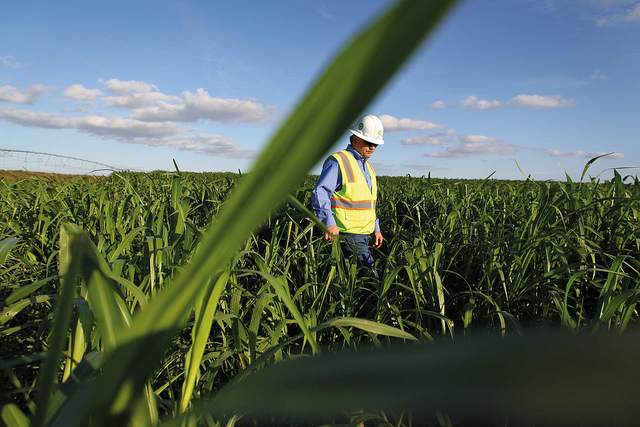
By | January 8, 2013, 12:58 AM PST

Credit: BP

“The Morning Briefing” is SmartPlanet’s daily roundup of must-reads from the web. This morning we’re reading about the biofuel industry.

1.) Biofuel production threatens air quality and crop yields, study finds. Fighting climate change by producing more biofuels could actually worsen a little-known type of air pollution and cause almost 1,400 premature deaths a year in Europe by 2020, according to a new study.

2.) A look at DuPont biofuel’s work on cellulosic ethanol and butanol. “During the recent Total Energy USA Conference in Houston, I had a chance to interview Mr. Jan Koninckx. Mr. Koninckx is the global director of biofuels for DuPont Industrial Biosciences – an arm of DuPont that has a strong focus on biofuels.”

3.) Tax credits are a valuable tool in the biofuels policy toolbox. There are a number of policy tools to help the biofuels industry compete with entrenched incumbents and foreign petroleum. The Renewable Fuels Standard (RFS) is certainly the most important policy tool but others do also provide support for advanced biofuels technology commercialization efforts.

4.) As biofuel demand grows, so do Guatemala’s hunger pangs. In the tiny tortillerias of this city, people complain ceaselessly about the high price of corn. Just three years ago, one quetzal — about 15 cents — bought eight tortillas; today it buys only four. And eggs have tripled in price because chickens eat corn feed.

5.) 5 biofuel trends for 2013. Despite a relatively down year with respect to investment and production capacity expansion, the biofuels industry grew modestly in 2012, continuing a shift from first generation facilities to next generation, advanced biorefineries.

Related:

Start your week smarter with our weekly e-mail newsletter. It's your cheat sheet for good ideas. Get it.

Charlie Osborne

About Charlie Osborne

Charlie Osborne is a contributing editor for SmartPlanet.

Charlie Osborne

Charlie Osborne

Contributing Editor

Charlie Osborne is a freelance journalist and graphic designer based in London. In addition to SmartPlanet, she also writes the iGeneration column for business technology website ZDNet. She holds degrees in medical anthropology from the University of Kent.

Follow her on Twitter.

Charlie Osborne

Charlie Osborne

Charlie Osborne does not have financial holdings that would influence how or what she covers.

She writes for SmartPlanet and is not an employee of CBS.

If you liked this, don't miss...
2
Comments

Join the conversation!

Follow via:
RSS
+1 Vote
+ -
1 and 4 hit on my personal pet peeves with biofuel.
1. The fact biofuel is dirty compared to gasoline or diesel has been known for a long time. When I did biofuel compatibility testing on military vehicles in the 1980s carbon fouling in diesel engines during extended use of biofuels was a major problem the military had been trying to figure out a solution to since WW II. In addition to the biofuel being expensive, it required expensive additives to limit engine damage. It was a war time only emergency fuel.

4. Food for fuel is simply stupid. The global rush to mandate the use of biofuels in the face of todays Voldemort, global warming, has produced growing food supply problems across the planet. Supplies of basic food stocks have declined as the food industry competes with the larger buying power of the government subsidized biofuel industry. The cost of food has almost doubled in many countries in the last 5 years.

Biofuel made from legitimate organic waste products has been a thriving niche industry for over a hundred years. Leave it that way. The forced mandate is nothing but a government program designed to make a relative handful of people rich. Nothing more.

Large scale biofuel production is not good for the environment and it is not good for society.
Posted by Hates Idiots
9th Jan
0 Votes
+ -
biofuel.
The fact biofuel is dirty compared to gasoline or diesel has been known for a long time. When I did biofuel compatibility testing on military vehicles in the 1980s carbon fouling in diesel engines during extended use of biofuels was a major problem the military had been trying to figure out a solution to since WW II. In addition to the biofuel being expensive, it required expensive additives to limit engine damage. It was a war time only emergency fuel.
Posted by babaluuu
17th Mar
Join the conversation
Formatting +
BB Codes - Note: HTML is not supported in forums
  • [b] Bold [/b]
  • [i] Italic [/i]
  • [u] Underline [/u]
  • [s] Strikethrough [/s]
  • [q] "Quote" [/q]
  • [ol][*] 1. Ordered List [/ol]
  • [ul][*] · Unordered List [/ul]
  • [pre] Preformat [/pre]
  • [quote] "Blockquote" [/quote]

Join the SmartPlanet community and join the conversation! Signing up is fast and free. Don't wait -- we want to hear your opinion!