Save a bird: Turn off a light

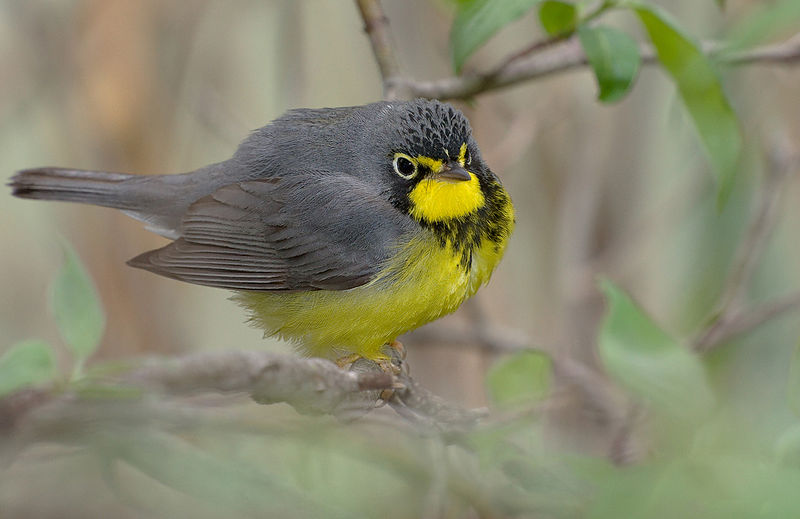
It's that time of the year when migratory birds do their thing, so today's a good day to draw attention to an alarming article I read over the summer about an alleged hazard that could put an abrupt end to a feathery flight.
According to an article on the Michigan Radio website, birds are fatally smashing into communication transmission towers because the red warning lights confuse their navigation systems.
If this sounds like a, er, lark, get this: About 7 million misguided birds die annually in tower collisions in the U.S. and Canada, according to a study by the U.S. Fish and Wildlife Service. Among the most susceptible: neotropical songbirds that migrate at night. A Cornell University photo that accompanied the Michigan Radio article shows a number of deceased warblers among the birds that hit a TV tower near Elmira, N.Y. during 1999's Hurricane Floyd.
Of course, those tower lights serve a purpose. They prevent pilots from smacking into the structures.
But at the same time, they can trip up the birds' natural guidance system, which relies on the stars and the sun. On a cloudy or foggy night when the stars don't show but the tower lights do, things can go disastrously haywire. Bye-bye blackbird.
Red and steadily burning lights - those that don't blink - are the biggest culprits, according to Joelle Gehring, a senior conservation scientist at Michigan State University. She ran a test on Michigan State Police towers that reduced collisions by between 50 and 70 percent when the police turned of the constantly lit lights.
The Federal Aviation Administration says that on some towers, operators could turn off steady lights or replace them with blinkers without jeopardizing pilot safety - as long there were ample flashing lights, the article states. Sounds like a solution that could fly.
Photo: William Majoros via Wikimedia
Human destruction of another sort, on SmartPlanet:
This post was originally published on Smartplanet.com