Just a partial nuclear restart would save Japan $20 billion

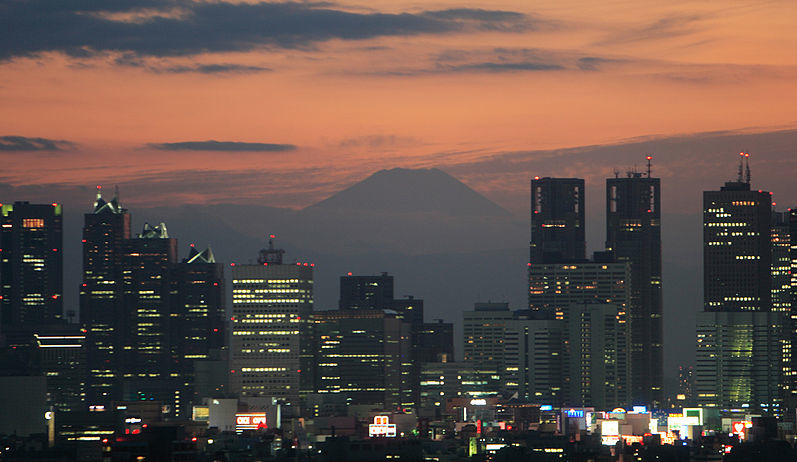
Japan's post-Fukushima energy pendulum continued its slow swing back towards nuclear this week, as a leading government advisory group declared that the country could save $20 billion by restarting only half of its shut nuclear reactors.
"It is important to steadily restart those nuclear power stations that are shown to be safe by the Nuclear Regulation Authority," the Institute of Energy Economics, Japan (IEEJ) said on its website, as reported by Bloomberg Businessweek.
Firing up half of the dormant 52 reactors would slash energy costs by 30 percent, or 8 trillion yen ($20.3 billion), by next year, claimed IEEJ, which is overseen by the Ministry of Economy, Trade and Industry.
Prior to the shut down, nuclear generated about 30 percent of Japan's electricity. All but two of the country's reactors remain closed following the tragic March, 2011 earthquake and tsunami that led to meltdowns at the Fukushima Daiichi nuclear station.
Japan has filled the gap with financially and environmentally costly fossil fuels, including imported coal and liquefied natural gas. It paid 6 trillion yen ($67.7 billion) for imported LNG in a year, twice as much as in the previous 12 months, according to an official cited in the story.
One IEEJ associate, Nobuo Tanaka, warned recently that the country faces potential economic catastrophe if it does not return to nuclear.
Japan has also embarked on efficiency programs that have curtailed energy usage for a wide swathe of business and the public, who might be tiring of the measures. Although a poll showed 80 percent of Japanese opposing nuclear as recently as last March, the pubic overwhelmingly voted in a pro-nuclear government in early December.
The new prime minister, Shinzo Abe, is now pushing to reconsider the previous government's intentions to permanently abandon nuclear by 2040. Reactors could start reopening this summer, after Japan's nuclear regulator announces tighter safety standards.
The move toward a safer nuclear future also opens the door for research and development of alternative nuclear technologies like thorium fuel as well as molten salt, pebble bed and fast reactors, which between them offer a number of advantages over conventional solid fuel uranium reactors. Those benefits include improved efficiency, safer operation, the ability to use nuclear waste as fuel, and a reduction in long-lived nuclear waste.
Photo: Mrhayata via Wikimedia.
More nuclear reacting from Japan, on SmartPlanet:
- Shares surge as Japan's new leader looks to revive nuclear
- The shortest route: Russia ships gas to Japan via Arctic
- The economic case for nuclear power in Japan
- Nuclear or not to nuclear: Japan struggles with the question
- Japan dials up wind energy
- How to avoid a nuclear meltdown: question authority
- Utility-scale solar plant for Fukushima
- From Fukushima’s home country: Nuclear will double
- Safe nuclear: Japanese utility elaborates on thorium plans
- Nuclear down, CO2 up in Japan, Germany
- Fukushima’s lesson: ‘Alternative’ nuclear, not ‘no’ nuclear
- What's keeping the lights on in Tokyo?
- How to eliminate Japan's nuclear reactors: LED light bulbs
This post was originally published on Smartplanet.com