Follow this blog:
RSS

Fly me to the moon - on a plane

By | November 28, 2012, 5:09 AM PST

"Put your tray tables up and your seats in the upright position. We will be departing for space shortly."

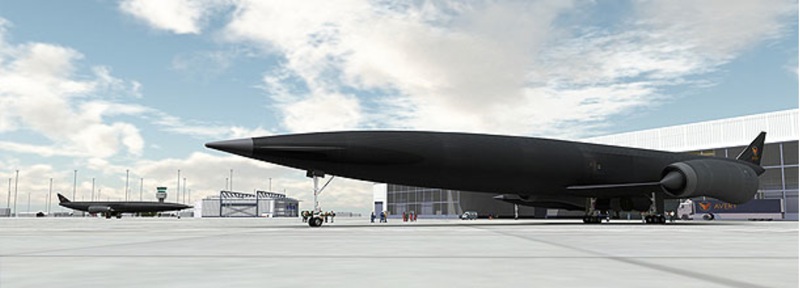
Engineers in Britain have passed a major milestone in the development of a plane that can fly into space, auguring an airline experience that would replace today’s expensive, cumbersome and dangerous rocket propulsion.

The company designing the reusable Skylon “spaceplane,” Reaction Engines Ltd (REL), has developed an innovative helium cooling system that would allow the craft to operate safely, the BBC reports.

Skylon would take off and land on a runway, unlike the recently retired Space Shuttle in the U.S., which the National Aeronautics and Space Administration (NASA) launched on the back of breakaway rockets during its 30-year run.

For early flight stages, Skylon uses a rocket engine, but one that sucks in air - oxygen - much like on a jet plane, explains developers REL, of Culham, England.

Air Affair. In early flight stages, the Sabre rocket engine sucks in air rather than relying on onboard liquid oxygen.

Other attempts to eliminate expendable boosters have used bulky and costly liquid oxygen. Skylon switches to conventional liquid oxygen fuel once it flies above the atmosphere and loses access to airborne oxygen. At this stage of flight it uses the same engine, which REL calls SABRE, or synergistic air-breathing rocket engine.

“This approach enables SABRE-powered vehicles to save carrying over 250 tons of on-board oxidant on their way to orbit, and removes the necessity for massive throw-away first stages that are jettisoned once the oxidant they contain has been used up, allowing the development of the first fully reusable space access vehicles,” REL says. (For more on how it works, see the July 2011 report by SmartPlanet’s Tuan Nguyen, and the video below).

A major problem has been that all that oxygen rushing in is too hot to handle, because the oxygen mixes with onboard liquid hydrogen. As a NASA webpage explains, a rocket engine’s liquid hydrogen has to stay away from heat, lest it evaporate or worse, explode.

REL has now remedied that, with the helium cooling system.

NASA's Saturn V rockets from 1967 thru 1973 were early examples of the type of design that REL's Sabre would replace. Saturn powered the Apollo missions, including Apollo 11 (middle of the montage), which took Neil Armstrong and Buzz Aldrin to the moon.

According to the BBC story, ”REL’s solution is a module containing arrays of extremely fine piping that can extract the heat and plunge the inrushing air to minus 140C in just 1/100th of a second.”  The system even includes a counterbalance that prevents frost from building up on pipes, which could have disastrous consequences.

“This is a big moment; it really is quite a big step forward in propulsion,” REL founder and chief engineer Alan Bond told the BBC. “We completed the (cooling) program by getting down to -150C, running for 10 minutes. We’ve demonstrated that the pre-cooler is behaving absolutely as predicted.”

REL’s next hurdle:  It hopes to raise £250 million ($400 million). CEO Tim Hayter said he wants to find the money mainly from private sources as opposed to government funding. Although REL receives money from the UK government, about 90 percent has come privately.

Hayter thinks the £250 million would enable REL to advance the project to a stage at which it could hand it over to a manufacturer.

Then one day we could fasten our seat belts, put our tray tables up and say to Space Airlines Inc., “fly me to the moon.”

Okay, that’s probably hyperbole, given that the Skylon concept still requires liquid rocket fuel once it exits the Earth’s atmosphere.

But there will be ways around that. The old dream of nuclear-powered aircraft might never happen. There could be other solutions. What about antimatter, which was good enough for Star Trek’s Starship Enterprise?

Then those of us who can afford it could go see what spring is like on Jupiter and Mars.

Will our cellphones work there?

Images and video from REL website, except for Apollo montage, from NASA via Wikimedia.

More space hopping on SmartPlanet:

Start your week smarter with our weekly e-mail newsletter. It's your cheat sheet for good ideas. Get it.

Mark Halper

About Mark Halper

Mark Halper is a contributing editor for SmartPlanet.

Mark Halper

Mark Halper

Contributing Editor

Mark Halper has written for TIME, Fortune, Financial Times, the UK's Independent on Sunday, Forbes, New York Times, Wired, Variety and The Guardian. He is based in Bristol, U.K.

Follow him on Twitter.

Mark Halper

Mark Halper

Mark has no financial holdings in the companies he writes about. He occasionally travels at the expense of companies or their press relations agencies in order to report on a company or industry event related to it; Mark will prominently disclose this information when appropriate. This relationship will have no influence on his coverage. Companies he covers do not get to review columns in advance, or select or reject topics.

He writes for SmartPlanet and is not an employee of CBS.

If you liked this, don't miss...
14
Comments

Join the conversation!

Follow via:
RSS
0 Votes
+ -
Good news, let keep his British and not sell it to our foreign rivals
Brilliant news.

I personally think they be better off going the Space X route and build everything themselves in house at a single factory, finance through licensing it technology out to other industry and bringing in private investors.

Going the consortium route is very much an old space idea that will only wast time and money in the long term, bickering between consortium members is bound to happen, especially if the consortium is made up firms whom EU governments have a major stake in them, whom also have major interests in keeping conventional launchers alive such as Ariane 6 or Ariane 5 both of which would be made extinct with the introduction of Skylon to the market.

The UK Government should finance the construction of a UK space port capable of supporting Reaction engine operations, even if they just use it for polar launches and flying Skylons out to their customers.

But at all costs, let keep this, invented in Britain, built in Britain and finance by British financiers, employing British workers, selling to anyone that wants cheap access to space.

The craft could drop you of at a in orbit space port, where you could then catch a nuclear powered VASMIR spacecraft to the moon or Mars.
Posted by Knowles2
28th Nov
0 Votes
+ -
How high does it go?
The edge of space? Low earth orbit? Polar orbit? Geosynchronous orbit? My impression from the article is that the first choice is correct. If that is the case, then this is overhyped (although still super-cool). It is more like an ICBM, suitable for traveling London to Peking in a half-hour, or something like that. It would not compete with Ariane rockets for launching satellites.
Posted by dmm99
28th Nov
0 Votes
+ -
International Space station
It capable of flying to the international space station. An it capable of putting up about 12 tonnes into that orbit, a larger version of Skylon could put 15 tonnes into orbit, . You can do that for about 10 million quid once the systems matures, Space X charges 60 million for such services. Ariane 5 you wouldn't get much change for 500 million quid. It is 100% competitive with all current launchers on the market, only Blue Origin craft and Space X grasshopper pose any risk to Reaction Engines plans for Skylons taking over the space launch industry.

Once you can start putting 15 tonnes cheaply into orbit then it entirely possible to build crafts in orbit to get you to the Moon or Mars, or maintain orbital crafts capable of satelite maintenance and refuelling and boasting orbits of satellites. Geosynchronous orbit.

Skylon can put satellites directly into a polar orbit and LEO on it own.
Posted by Knowles2
28th Nov
+3 Votes
+ -
British Spaceplane
"Thunderbirds are Go"
Posted by swish71@...
28th Nov
+1 Vote
+ -
F.A.B.
Seriously... Why it there not an International Rescue?
Posted by cybernetichero
28th Nov
-1 Votes
+ -
I hope they succeed where many have failed.
This basic design concept, taking a single plane into space, has proven to be financially impossible by many proposed designs.

The only design to successful launch from a runway and return to a runway has been the Space Ship One/White Knight configuration of a lifting plane working with a space plane. The larger follow-on set of planes has completed 22 successful test flights covering take off, launch and landing. The FAA granted the permit for rocket testing this year. The combo craft are expected to begin commercial flights in late 2013 or 2014.

These people are looking for $400 million to do what Burt Rutan did with $25 million. That is telling for the predicted costs of operation.
Posted by Hates Idiots
28th Nov
+1 Vote
+ -
White knight and Space ship One
Both of Burt Rutan design craft are sub orbital, and only go up about 100 km the edge of space. While impressive it isn't orbit or orbital velocities.

Skylon is design to achieve orbital velocities, 17,000 mph, to go up to 400km and to dock with the ISS or other space stations in that orbit. It can also place 15 tonnes into LEO or Polar orbit by itself, it also capable of using a Vulcan powered booster craft to boost satellites up to GEO. An it has a turn around time of hours, Those capabilities are way beyond any Burt Rutan craft design.
Posted by Knowles2
28th Nov
-1 Votes
+ -
They were originally designed to go to ISS.
The original concept was given to NASA as a basic transport to and "lifeboat" for ISS. It was the perfect "lifeboat" design because in an emergency they could drop from the ISS to almost any internaltional airport on the planet. No special runway was needed.

NASA laughed him out of their offices. Look who is laughing now. Right now NASA cannot even put a person into low earth orbit.

Basically additional fuel can be added to the larger Spaceship Two to reach the ISS.
Posted by Hates Idiots
28th Nov
-1 Votes
+ -
Conceptually possible, but...
...the current incarnations of the Rutan space ships are not capable of enduring the re-entry speeds required of returning orbital vehicles. To do so, these vehicles would require a heat management scheme which would add much weight and complexity to what is essentially a very simple vehicle.

It was the heat management system (mainly the complex tiles) that was one of the biggest failings of the Shuttle program.
Posted by JohnMcGrew@...
28th Nov
0 Votes
+ -
The shuttle was a camel (may they rust in peace)
You know the old saw about how camelswere designed in a comittee? Same for the shuttle; there were backhanded deals and awarding of contracts to depressed electorates and academic jealousies between institutions.
Still and all, they were great for their time but silicon tiles is a real 80's solution to the heat displacement problem. I see a possibility of using the helium system in the higher phases of the re-entry to cool the systems under the skin of the nose while the motor is still running on oxidant but in both modes, the addition of reverse thrust venturis would seriously reduce the impact of re-entry. Shuttle was just a big heavy glider coming down so aerobraking was a necessity. They didn't fly, they fell with style.
Posted by cybernetichero
28th Nov
0 Votes
+ -
Skylon will use a similar system
Skylon will use helium or nitrogen for heat management, hopefully they will be able to use the systems an engineering team in Germany have been developing over the last couple of years, hopefully further reducing the possibility of engineering delays on the craft.
Posted by Knowles2
Updated - 29th Nov
+1 Vote
+ -
Yes a design of his was presented as a life boat.
but they were design to get to the ISS in the back of a shuttle, as well as numerous other life boat designs NASA looked at before realising Soya capsule is capable of landing anywhere anyway and it already built and well tested vehicle and can actually get astronaut up to the station as well and are regularly replace by new ones. Overall Nasa just wasted more money on a unnecessary programme. If they spent 10 minutes looking at what already existed they would have relies there was no need for a new craft to perform the job of lifeboat spent the money developing something that is needed, such as VASMIR drive, reusable space craft, nuclear reactors for space.
Posted by Knowles2
Updated - 29th Nov
0 Votes
+ -
The future is now.
I can see this taking off from a stratospheric airport on the back of a log raft made of zeppelins. Either way the selling off of the US helium reserve looks like an own goal.
Posted by cybernetichero
28th Nov
-2 Votes
+ -
There's another option
We mustn't forget the Hyper-Improbability Drive.
Posted by wfreeman@...
29th Nov
Join the conversation
Formatting +
BB Codes - Note: HTML is not supported in forums
  • [b] Bold [/b]
  • [i] Italic [/i]
  • [u] Underline [/u]
  • [s] Strikethrough [/s]
  • [q] "Quote" [/q]
  • [ol][*] 1. Ordered List [/ol]
  • [ul][*] · Unordered List [/ul]
  • [pre] Preformat [/pre]
  • [quote] "Blockquote" [/quote]

Join the SmartPlanet community and join the conversation! Signing up is fast and free. Don't wait -- we want to hear your opinion!