As China takes graphene lead, Nokia, Philips, Europe get cracking

--
Graphene, as most of you know, is the wonder material that has the strength of superman and can move electrons 100 times faster than today's silicon-based semiconductors.
This magnificent material is all of one atom thin, and it augurs huge performance leaps across all sorts of fields, from electronics and information technology to energy, medicine, building and design.
If only industry could harness it - its practical application has ongoing challenges above and beyond its production in the laboratory.
Maybe China will provide the necessary kick.
Although a pair of physicists from the U.K.'s University of Manchester won the 2010 Nobel Prize in Physics for their early work in graphene, it is China that has raced ahead in graphene intellectual property. According to British IP consultancy CambridgeIP, China has published more graphene patents than any other country, at 2,204, ahead of 1,754 for the U.S., 1,160 for South Korea, and 54 for the U.K, as reported by the BBC.
With that backdrop, it seems that European companies such as Nokia, Philips, Dyson, BAE among others, are picking up their graphene game.
Nokia's website says that the Finnish mobile phone giant is part of the 74-company Graphene Flagship Consortium that is receiving the €1 billion ($1.35 billion) grant that the E.U. announced late last month. A story on CNET suggests Nokia might use graphene to make a lighter, more durable phone that can't overheat. It quotes from a Nokia statement:
"Nokia is proud to be involved with this project, and we have deep roots in the field -- we first started working with graphene already in 2006," Nokia's CTO Henry Tirri said in a statement. "Since then, we have come to identify multiple areas where this material can be applied in modern computing environments. We've done some very promising work so far, but I believe the greatest innovations have yet to be discovered."
"When we talk about graphene, we've reached a tipping point. We're now looking at the beginning of a graphene revolution," Jani Kivioja, a research leader at Nokia Research Center, said in the statement. "Before this point in time, we figured out a way to manufacture cheap iron that led to the Industrial Revolution. Then there was silicon. Now it's time for graphene."
That comes about 10 days after Cambridge University announced that Nokia, Philips, U.K. invention stalwart Dyson, weapons and aerospace company BAE Systems, and others have committed £13 million ($20.5 million) to a graphene development center at the university, to go along with £12 million ($18.9 million) from the British government.
According to the BBC story on patents, South Korea's Samsung has more graphene patents than any single company. Reporting on the global patent build-up, the BBC writes:
"U.K. science minister David Willetts, who has identified graphene as a national research priority, said the figures show that, 'We need to raise our game. It's the classic problem of Britain inventing something and other countries developing it.' "
Prior to the E.U.'s funding announcement, the BBC story quoted concerns from one of the Manchester Nobel Prize winners in graphene, Prof. Andre Geim, that Western companies lack the ability to pursue graphene research.
"Industry is more worried not about what can be done, but what competitors are doing - they're afraid of losing the race," Prof. Geim told the BBC."There is a huge gap between academia and industry and this gap has broadened during the last few decades after the end of Cold War, so I try as much as I can to reach to the industry. This is what has happened in last 30-40 years. We killed famous labs like Bell labs. Companies have slimmed down so they can no longer afford top research institutes. If something is happening in Korea it's because Samsung have an institute - there is nothing like that in this country. They can't see beyond a 10-year horizon and graphene is beyond this horizon."
Manchester will be home to a £61 million ($96 million) National Graphene Institute, the story notes.
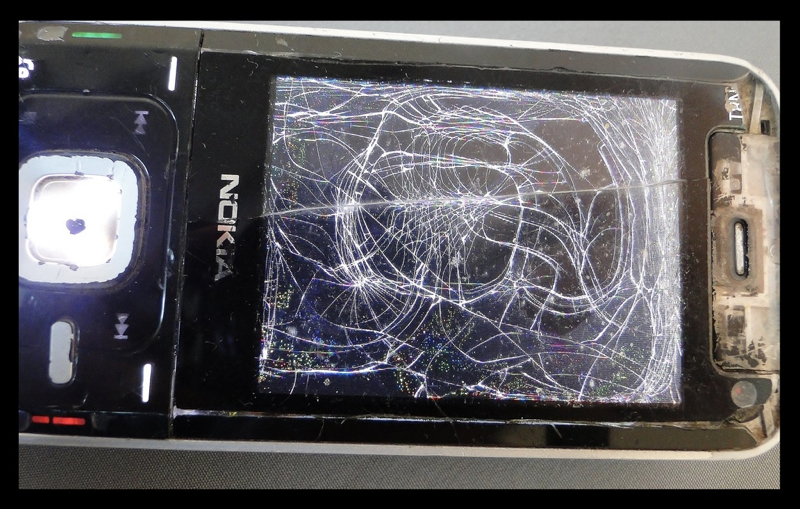
Photo from Rami via Flickr.
More sheets of graphene, on SmartPlanet:
- Meet the billion euro projects: Human brain and graphene
- High interest bonds: IBM molecular images show ties that bind, hold promise for graphene
- New graphene recipe could finally bring wonder material into electronics
- Cut PC energy use by 99%: Use a memristor
- Move over graphene: Bamboo is the next wonder material
- Extreme electronics: Goodbye silicon, hello oxides
- Graphene the Sequel: Graphyne. It’s flashier
This post was originally published on Smartplanet.com