Follow this blog:
RSS

A machine can tell if drugs are fake

By | February 25, 2013, 9:39 PM PST

A low cost machine identifies fake drugs

A low cost machine identifies fake drugs

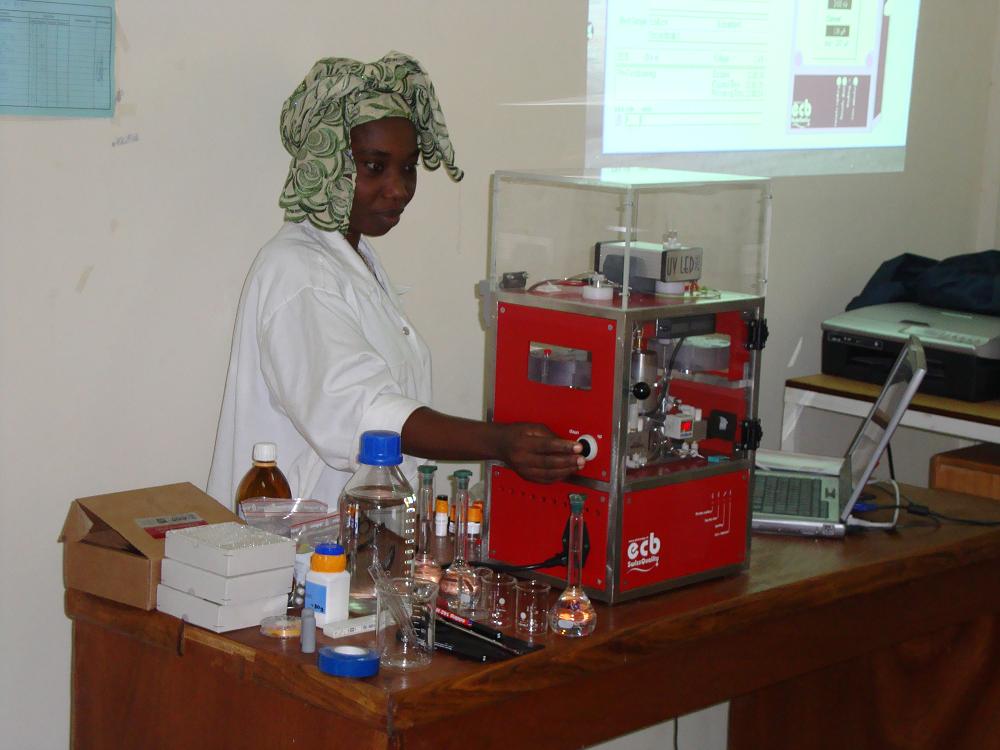
A professor at Geneva University’s School of Pharmaceutical Sciences has invented a low cost machine that can detect weakened or counterfeit drugs, potentially easing a worldwide health scourge.

The machine and its creator, Serge Rudaz, an associate professor at the school, were featured in an article written by Fast Company’s Ben Schiller yesterday. Rudaz produced the machine for a fraction of what commercial equipment costs, and is distributing them to health centers in the developing world with the help of his NGO, Pharmelp. Commercial vendors wouldn’t make any money on it, Rudaz noted in his interview.

Weakened or counterfeit pharmaceuticals risk lives and human health, and as many as 100,000 people die every year as a result, the American Enterprise Institute estimates. The threat exists primarily in the developing world, but the health consequences of the illicit drug trade could eventually impact anyone anywhere.

Weakened drugs “feed” disease, and have contributed to resistance among deadly microorganisms that cause diseases such as malaria, tuberculosis, and other world pandemic threats. Evidence of resistance is emerging.

The World Health Organization (WHO) reports that it received over 46 reports of counterfeit drugs between January 1999 and October 2000. Around 60 percent of the fakes were located in the developing world while the rest were found in developed countries. The fraud committed in those cases spanned 20 different countries.

Last year, the U.S. Food and Drug Administration identified a counterfeit batch of the cancer drug Avastin that was being distributed across the country - despite its relatively secure domestic drug supply chain. The fake Avastin was shipped to the U.S. from the U.K., underscoring how counterfeiting is truly a global problem.

Global sales of impure drugs were estimated to be around $200 billion in late 2012, according to Forbes. There’s a lot of profit to be made - it’s done across just about any category of drug, and the cost of producing fakes is low because they’re primarily made up of cheap fillers including brick dust, chalk, paint, and even pesticides.

Fighting the trade sounds like an uphill battle, and that’s because it is. Rudaz told Fast Company that “drug mafias” were involved in the smuggling, and that it would be virtually impossible to completely stamp it out. However, he hopes that his machine will help make detecting counterfeits just a “problem of analytics.”

I’m left wondering how quickly drug companies will act to fund Pharmelp.

(image credits: pharmelp; Be.Futureproof, Flickr)

Related on SmartPlanet:

Start your week smarter with our weekly e-mail newsletter. It's your cheat sheet for good ideas. Get it.

David Worthington

About David Worthington

David Worthington is a contributing editor for SmartPlanet.

David Worthington

David Worthington

Contributing Editor

David Worthington has written for BetaNews, eWeek, PC World, Technologizer and ZDNet. Formerly, he was a senior editor at SD Times. He holds a degree from Temple University. He is based in New York.

Follow him on Twitter.

David Worthington

David Worthington

David does not have financial holdings that would influence how or what he covers. Occasionally he consults for other companies; should David cover a topic in which a client is involved, he will disclose this fact in his writing. His views do not represent those of his employers.

He writes for SmartPlanet and is not an employee of CBS.

If you liked this, don't miss...
3
Comments

Join the conversation!

Follow via:
RSS
+1 Vote
+ -
Fantastic
Great to see advancements like this being developed and provided without substantial charge. While not perfect, any additional items that can help test products is a tremendous improvement, especially in developing countries.
Posted by gingivitis
Updated - 26th Feb
0 Votes
+ -
How does it work?
I envision putting a verified sample of the drug in one container and a sample of the suspect drug in another, then heating them and generating spectra with gas chromatography with the two spectra compared by software with a "pass" or "fail" output signal depending on the quality of the match. There might be other, cheaper ways to do this too; just wondering?
Posted by John Hartshorn
26th Feb
0 Votes
+ -
Is the World Health Organization That Far Behind?
You wrote "The World Health Organization (WHO) reports that it received over 46 reports of counterfeit drugs between January 1999 and October 2000". Are you kidding? Quoting statistics from more than an entire decade ago? What about 2009 through 2012, data that might have real relevance now? Some estimates suggest as much as 10% of high cost pharmaceuticals may now be counterfeit or adulterated, world-wide.
Posted by lodavesf
1st Mar
Join the conversation
Formatting +
BB Codes - Note: HTML is not supported in forums
  • [b] Bold [/b]
  • [i] Italic [/i]
  • [u] Underline [/u]
  • [s] Strikethrough [/s]
  • [q] "Quote" [/q]
  • [ol][*] 1. Ordered List [/ol]
  • [ul][*] · Unordered List [/ul]
  • [pre] Preformat [/pre]
  • [quote] "Blockquote" [/quote]

Join the SmartPlanet community and join the conversation! Signing up is fast and free. Don't wait -- we want to hear your opinion!