Follow this blog:
RSS

6 reasons manufacturing is returning to North America

By | December 5, 2012, 2:41 PM PST

Lower transportation costs, competitive wages, technology and employee productivity have made North America a manufacturing destination. In a sign of this manufacturing renaissance, GE, one of the world’s largest appliance manufacturers, gearing up its almost-dormant Louisville facilities for new product development and production.
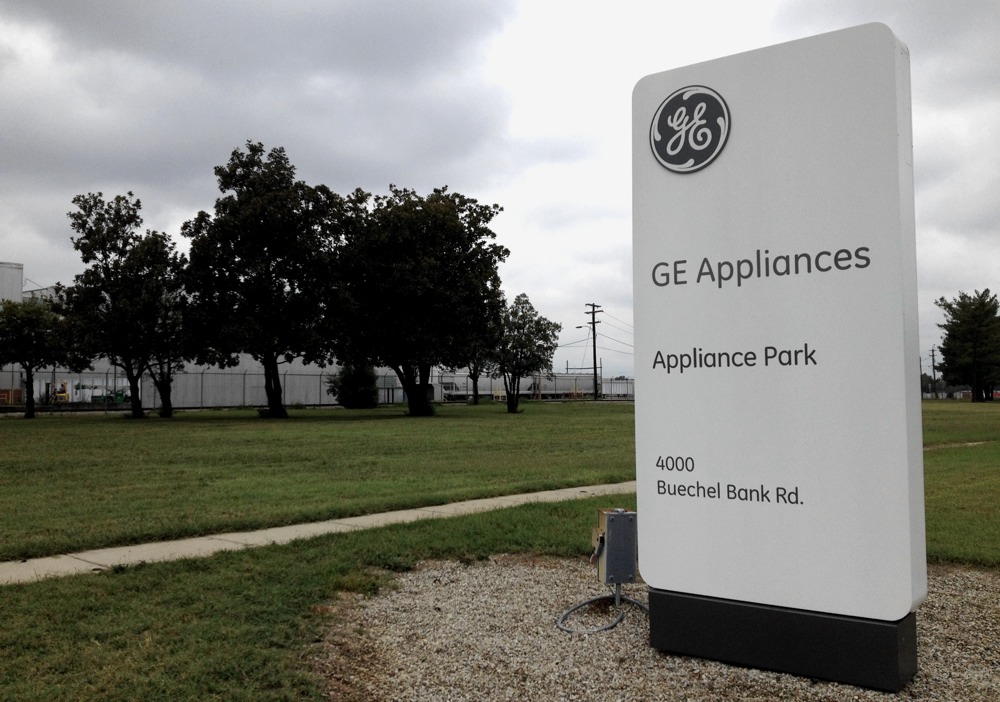
Photo: Jason Hiner, TechRepublic

Renewed sign of the times: GE's resurging mega-facility. Photo: Jason Hiner, TechRepublic

In a new report in The Atlantic, Charles Fishman describes how the “insourcing” boom is bringing back manufacturing to North American shores.

He cites a number of reasons why manufacturing is suddenly so attractive again:

  1. High transportation costs: “Oil prices are three times what they were in 2000, making cargo-ship fuel much more expensive now than it was then.”
  2. Lower domestic energy costs: “The natural-gas boom in the U.S. has dramatically lowered the cost for running something as energy-intensive as a factory here at home,” Fishman relates, adding that “natural gas now costs four times as much in Asia as it does in the U.S.”
  3. Offshore wages are rising: “In dollars, wages in China are some five times what they were in 2000—and they are expected to keep rising 18% a year.”
  4. Labor relations are more cooperative: “Appliance Park’s union was so fractious in the ’70s and ’80s that the place was known as ‘Strike City,’” says Fishman.
  5. Employee productivity is rising: “Labor costs have become a smaller and smaller proportion of the total cost of finished goods. You simply can’t save much money chasing wages anymore.”
  6. Offshore factories can’t keep up with design and technology changes: “As products change, as technologies evolve, as years pass, as you change factories to chase lower labor costs, the gap between the people imagining the products and the people making them becomes as wide as the Pacific. Factories take a while to settle into a new product, a new design. They face a learning curve. But models that have a run of only a couple years become outdated just as the assembly line starts to hum. That makes using faraway factories challenging, even if they are cheap.”

Fishman cites GE’s Appliance Park, a mega-site of buildings that was established outside of Louisville, Kentucky in the early 1950s, with employment at the site peaking at 23,000 in 1973. The move to offshore manufacturing eventually dwindled the Appliance Park workforce to 1,863 in 2011. Over the past year, however, two assembly lines have been launched at the facility — one for energy-efficient water heaters and the other for a high-tech refrigerator. Plans are to launch a third assembly line for stainless steel dishwashers in early 2013.

Jason Hiner of TechRepublic (a SmartPlanet sister site) describes the role of information technology in restarting the engines of Appliance Park.

The ability to keep production close to engineering and design is an important aspect of innovation, Fishman adds:

“Bringing jobs back to Appliance Park solves a problem. It is sparking a wave of fresh innovation in GE’s appliances—every major appliance line has been redesigned or will be in the next two years—and the experience of ‘big room’ redesign, involving a whole team, is itself inspiring further, faster advances. In fact, insourcing solves a whole bundle of problems—it simplifies transportation; it gives people confidence in the competitive security of their ideas; it lets companies manage costs with real transparency and close to home; it means a company can be as nimble as it wants to be, because the Pacific Ocean isn’t standing in the way of getting the right product to the right customer.”

The gains to made from the increased innovation possible with in-sourcing back to North American shores more than offsets any gains made by using cheap labor, Fishman points out.

Another force that may bring manufacturing back to North American shores — but not addressed by Fishman in this article — is the rise of 3D printing (or “additive manufacturing” as it’s called in industrial circles). The ability to mass-produce highly customized products with low-priced 3D printers will dramatically lower production costs, and there is no reason why it needs to happen apart from the design source.

Start your week smarter with our weekly e-mail newsletter. It's your cheat sheet for good ideas. Get it.

Joe McKendrick

About Joe McKendrick

Joe McKendrick is a contributing editor for SmartPlanet.

Joe McKendrick

Joe McKendrick

Contributing Editor

Joe McKendrick is an independent analyst who tracks the impact of information technology on management and markets. He is the author of the SOA Manifesto and has written for Forbes, ZDNet and Database Trends & Applications. He holds a degree from Temple University. He is based in Pennsylvania.

Follow him on Twitter.

Joe McKendrick

Joe McKendrick

Joe McKendrick is an independent consultant and editor. Joe has performed project work for the following companies in the IT marketspace: IBM, Systinet/HP, Teradata. He has performed project work for the following organizations in partnership with Unisphere Research (Unisphere Media): IBM, Oracle Corp., International Oracle Users Group, Oracle Applications Users Group, Professional Association for SQL Server, International DB2 Users Group, International Sybase Users Group.

He writes for SmartPlanet and is not an employee of CBS.

If you liked this, don't miss...
23
Comments

Join the conversation!

Follow via:
RSS
+1 Vote
+ -
Good News!!
This is really good news, and I hope the trend continues!!
Posted by k8 br
6th Dec
+1 Vote
+ -
Increased Activity Does NOT Equal Jobs
Note #5 above (employee productivity). I think we are going through a major transformation in manufacturing in this century just as we did in agriculture in the last century. The firms will do fine, and have more than zero jobs, presumably all such high-productivity that wages are reasonable, but the total number of jobs will be far less, perhaps an order of magnitude or more so, than at the US peak about 1978. Manufacturing jobs will be for "the FEW, the proud, the highly-trained." The rest of us will have to find some other way to contribute value and earn income.
Rollie Cole, PhD, JD
Founder, Fertile Ground for Startups & Small Firms
Posted by rolliecole
6th Dec
0 Votes
+ -
relocate, expand or startup
Do you represent any of the above?
Posted by billb814
6th Dec
0 Votes
+ -
This is something that has been happening...
...since the invention of the spade plow hundreds of years ago.
Posted by JohnMcGrew@...
6th Dec
+2 Votes
+ -
What was old is new again.
Another reason not mentioned is "quality control". When all your manufacturing is sub-contracted out to someone a continent away, it's harder to assure quality, and when you find out there is a problem, it's way too late.

One of the biggest mistakes our public schools made was eliminating shop classes for computer classes starting it the '80s. Now we have millions of citizens who can surf the web, but don't know the difference between a slot of Phillips screwdriver.

It's easy to see why this happened. A mistake, none-the-less.
Posted by JohnMcGrew@...
6th Dec
0 Votes
+ -
More Needs to be done
The American Manufacturing community needs to pull together and do more to insure a continued "comeback." There have been - for too long - far too many reports of the decline of Manufacturing in the US for this sector of the economy to return to earlier levels without the help of a strong public relations campaign geared to the young people (and their parents), who will need to be trained for careers in a variety of manufacturing settings. It ain't the same ole "dirty fingernail" occupation it once was back in the day. Today, in many of these jobs it's about good math and science skills, a path to an advanced degree and a whole host of career growth directions. These are good jobs that pay well and lead to long careers. This message must be conveyed strongly for American manufacturing to attain its goals and get back on top or close to it.
Posted by midmarketinstitute
6th Dec
0 Votes
+ -
Follow-Up: Apple to invest $100 million in US manufacturing
SmartPlanet colleague Tyler Falk reports Apple will invest $100 million to produce computers in the United States. Perhaps driven in part by controversy over issues with its overseas operations, and part in recognition of the greater efficiencies in innovation possible having production closer to home.
http://www.smartplanet.com/blog/bulletin/apple-will-begin-manufacturing-macs-in-us-next-year/7500
Posted by Joe McKendrick
Updated - 6th Dec
0 Votes
+ -
That's, comparatively, a pittance, and likely a public relations stunt,
which is meant to placate/appease the customers and tech writers who are constantly berating Apple for the fact that, Apple's gear is mostly manufactured overseas. This new "effort" isn't changing the fact that, Appe's bread and butter devices (iPhones and iPads and iPods), will still be manufactured overseas.
Posted by adornoe
6th Dec
0 Votes
+ -
Interesting, a "potemkin factory" if you will.
A relatively small price for America's biggest company to pay to look better.
Posted by JohnMcGrew@...
6th Dec
0 Votes
+ -
So, we use anecdotal evidence, such as GE, to manufacture
the perception that, manufacturing is coming back to the U.S.?

While some of the facts as to why manufacturing might be a bit more appealing in the U.S. are true, like transportation costs and fewer demands by the unions, the bigger facts as to why labor and production is shipped overseas, still remain.

The bigger costs still remain the much higher taxation that companies have to deal with in the U.S., and now, with the turn of the year, companies will be having to pay higher taxes, and on top of that, they will be burdened by having to pay for the costs of Obamacare, which is another set of taxes.

Then there is the costs of having to comply with the massive number of regulations that are imposed on manufacturers and a lot of other businesses. Many or most or all of those regulations are not present in overseas manufacturers, making the U.S. less competitive for production of most things.

And then there is the cost of labor, which, no matter how much someone wants to paint it as becoming friendlier and less expensive than prior years, is still a lot more expensive than what the foreign manufacturers can do the work for. And now, with the emboldened union workers, who saw great benefit from Obama's re-election, chances are that, their demands for higher wages and bigger benefits packages, will make the U.S even less competitive.

So, we still have the much higher corporate taxes to deal with, and they will be going up. And we still have the massive number of regulations to deal with, with more coming on a daily basis, which makes production in the U.S. a lot more expensive. And then, we still have the unions and union labor to deal with, which is becoming more intransigent with their tactics, and now with Obama as their savior, things threaten to get worse. And, even without union labor, the labor force in the U.S. is still more expensive than that of foreign workers.

Some advantages of overseas production may get minimized, but in general, the overseas production is still a lot more appealing to most companies that seek to manufacture anything.
Posted by adornoe
6th Dec
+1 Vote
+ -
A good sign
Outsourcing was the "Flavour of the Month" used mostly to satisfy the designs of Wall Street.
At the end of the day, this wonderful plan closed many domestic manufacturing facilities and did little to benefit the local economies, the workers, and the communities.
Let's not forget that the greatest era of wealth in America was when manufacturing was King.
Don't kid yourself, wealth is not created by dancing numbers on a screen. Remember 2008?
What initially was a lower cost product has resulted in the outsourced product going up in price and steadily dropping in quality.
We have another chance; let's not miss it.
Posted by da philster
6th Dec
0 Votes
+ -
Factually incorrect...
Look around you, and you'll notice hundreds of products, especially in the computer/technology area, where the prices are very affordable and a lot cheaper than they would be if they had been manufactured in the U.S.

We have on our hands, PCs and smartphones and tablets which are many times more powerful than the mainframes and some super-computers of the past, and here we are holding them in our hands and playing with them, all because they have been cheaper to produce. Chances are that, they would not be as cheap and as abundant as they are today, if they had to be manufactured in the U.S.

Manufacturing was king in the U.S. at one time, but, what is it that changed all of that? Those manufacturers were able to produce their goods at relatively low prices and make a profit with them. But, somewhere along the way, things did change, and it wasn't because the manufacturers got greedy. Greed cuts across the whole process, including the manufacturers to the workers to the consumers. The manufacturers wanted more profit, and the unions wanted higher wages and bigger benefits packages, and the consumer wanted their products at the cheapest possible price. So, what is a manufacturer to do if the consumer won't buy an expensive product and they want to remain competitive? What does a manufacturer do when its labor force makes the process of production a lot more expensive? What does a manufacturer do when the taxes on the corporation continue to go higher and higher? What does a corporation do when the cost of complying with a massive number of regulations forces them to, either go out of business or lay off people or downsize? In order to stay in business, many companies will opt to outsource or offshore.

Everything that has happened to manufacturing in the U.S., was not because of greed alone. There are many issues involved, and it's not as clear-cut as the perception that one gets from the uninformde.
Posted by adornoe
6th Dec
0 Votes
+ -
us manufacturing
Something not thought of is experience. When we put manufacturing in other nations we brought in new engineers, and had THEM gain the experience of solving the small head-banging problems that showed up. It's a simple thing but it is a part of training and KEEPING good products and workers. Now we will have to grab some of the older engineers, and workers and teaming them with the new ones, jus to get back up to speed. Grand ideas and visions are wonderful, but the little stuff can be what trips us up. Think of it, a lot of the problems have been solved once already. Start now and get up to speed sooner. As an example, an AC compressor plant I once worked at developed and built an automated assembly line in China and later the same thing back here in the US. The China plant took 3yrs to reach the desired production rate (and still had a high defect rate!). Our plant with experienced workers, engineers reached FULL production in 6months! Only defect spikes were when we were ordered to use pumps shipped from the China plant. Our plant was closed one year later in favor of the cheaper labor in the other plant. I have boycotted Fedders ever since.
Posted by garyfizer@...
6th Dec
0 Votes
+ -
The report below contradicts the rosy picture painted by the article above.
Sharp Decline in Manufacturers Optimism
With reduced sales expectations, manufacturers appear to be pulling back on their hiring and capital spending plans.

"This troubling trend does not bode well for manufacturers in the United States or the 12 million people they employ."

http://www.industryweek.com/finance/namindustryweek-q4-survey-sharp-decline-manufacturers-optimism
Posted by adornoe
6th Dec
0 Votes
+ -
Blame the 'fiscal cliff'
The lack of progress inside the Beltway is sapping confidence in the economy. Hopefully they can get their act together soon.
Posted by Joe McKendrick
6th Dec
0 Votes
+ -
The negative trend for manufacturing, has been ongoing for decades,
and it's not directly related to the fiscal cliff. The fiscal cliff won't make things any better for manufacturing, but, resolving the fiscal cliff problems will also not alleviate the loss of manufacturing.
Posted by adornoe
8th Dec
0 Votes
+ -
Contradicts
Of course you'll get opposite views, no matter what the FACTS. Just like construction companies are showing more building - but mortgage companies say that sales are still down! If YOU can't make a profit, you'll hide behind whatever views you WANT to see!!!
Posted by micker377@...
6th Dec
0 Votes
+ -
Not a good argument to make...
Both of the "facts" you mentioned, do not necessarily contradict the underlying truth of both of them independently.

However, the painting of a generally rosy picture for a whole sector, is not a "fact" which can be proved via some anecdotal evidence, like the article contains.
Posted by adornoe
12th Dec
0 Votes
+ -
Ya, right!
Seems America owes lots of money to its lenders, thus excess taxation will prevent any large decrease in unemployment, especially in manufacturing, and, unfortunately because of excess regulations imposed by GREEDY people! Get rid of ALL regs!
I believe the ONLY regulation should be in requiring that MACHINES be developed to make all the parts for solar energy, batteries (and the machines themselves).
EXPONENTIAL growth of solar IS the ultimate goal.
This way, both the environmental and economic problems would be dealt with via almost unlimited solar installation jobs.
Posted by fireofenergy
6th Dec
0 Votes
+ -
Heheheheheh.
So, after 20+ years of scr*wing foreigners for cheap labor, Big Biz has finally figured out that countries which allow their people to be thus scr*wed will also steal shamelessly: steal supplies, finished products, industrial processes, and whole industries. In the long run, it's not only safer but cheaper to produce right here in the USA.

--Leslie Fish
Posted by Leslie Fish
6th Dec
+1 Vote
+ -
Not likely, and completely untrue.
The problems plaguing manufacturing are not because of "greed". Greed is what the liberals like to blame for the problems plaguing the economy, but then, the liberals won't ever point at the real problems, because, they are the ones that caused them.
Posted by adornoe
8th Dec
0 Votes
+ -
More choice
So, it would be easier to choose while shopping. Knowing where the goods have been produced it is easier to make the right choice. Let's hope that soon goods produced in Louisville will be displayed on such sites as http://www.ProductFrom.com
Posted by stw65
8th Dec
0 Votes
+ -
The biggest reason for choosing a product, is usually, price,
and the site of production has very little bearing on the choices people make.

A product, as long as it's what people want, and is of enough quality to be desirable, will raise the interest of shoppers, but, the final decision as to which product will get the consumer's money, is the price.

It's noble to think of getting products manufactured close to the shoppers, but, price is the ruler, and people want products to be as cheap as possible, as long as it's also fairly reliable.
Posted by adornoe
8th Dec
Join the conversation
Formatting +
BB Codes - Note: HTML is not supported in forums
  • [b] Bold [/b]
  • [i] Italic [/i]
  • [u] Underline [/u]
  • [s] Strikethrough [/s]
  • [q] "Quote" [/q]
  • [ol][*] 1. Ordered List [/ol]
  • [ul][*] · Unordered List [/ul]
  • [pre] Preformat [/pre]
  • [quote] "Blockquote" [/quote]

Join the SmartPlanet community and join the conversation! Signing up is fast and free. Don't wait -- we want to hear your opinion!