Architects: make buildings, not products

In this ugly economic climate, architects want to diversify. Anyone can understand why: Creating new revenue streams is the great American way, especially when they're not at the boom-bust mercy of shaky developer schemes or unpopular bond issues.
And more than ever, architects want to design building products. And more than ever, manufacturers seem willing to gamble -- which is usually not the best idea, I'd argue.
The architect's allure is simple: As opposed to fees for building design, which are huge but erratic payoffs, product designs start with a modest advance and then -- if successful -- the product streams in a nice, steady flow of royalty payments.
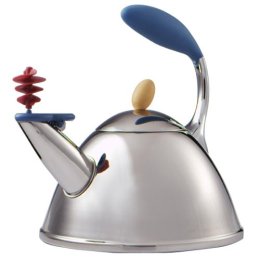
With 2,000 products and counting, Michael Graves Design Group holds the title in this arena. The maestro Graves blockbusters -- a teapot at MoMA and on shelves at Target! -- have created a rich business. One of his team's latest is a dorky suite of patient-room furniture that instantly put Stryker on the high-design map. (To be fair, all patient room furniture is dorky.)
The big A/E firms have seen the light. No one has been more aggressive at creating product design studios or subsidiaries than the likes of HOK, Gensler and Skidmore Owings & Merrill (SOM).
Architects with business savvy?
To succeed in the dog-eat-dog industrial realm takes business savvy, not just scale or clever notions for architectural solutions. That's one reason Robert A.M. Stern has done so well. His model seems unassailable: Begin with star-power design fees, then add royalties and licensing, and retain the rights to market the products on your own. Proof of his arrival is the brand-new showroom on the 16th floor of Chicago's Merchandise Mart.
All rendered in his signature "modern traditionalism" (whatever that is), the Robert A.M. Stern Collection includes a little bit of everything: outdoor seating by Landscape Forms, garden ornaments by Haddonstone, LED sconces by Lightolier, doors by Lualdi with S.A. Baxter hardware, decorative glass by Bendheim, some David Edward furniture, Crossville tiles and Bentley Prince Street carpet.
Product buzz
For industry, the benefit is buzz and allure. My favorite example is the concrete company Lafarge, which promoted a designer product line for its special Ductal concrete.
Plus the manufacturers get good ideas cheap. For an affiliate of Lutron Electronics Co., Ivalo Lighting, the entire business model seemed to me to be predicated on this fact. The company offered a modest flat advance for each architect's line of decorative lighting fixtures, and then the promise of back-end royalties. Folks with great architectural cred but little product experience signed on, like SOM's Roger Duffy and New York's Winka Dubbeldam. The products were gorgeous but met with tepid demand.
Moreover, as life experience proves, cheap ideas can be dangerous. Some companies have spent heavily on R&D for loser product concepts created by architects and decorators. Examples are everywhere, but let's not pick on anyone. Instead, learn the lesson: While they may have brilliant ideas for new products, great designers of structures and environments rarely translate into great industrial designers.
Another lesson: Few architects have the requisite star power to overcome this lack of product design experience. Does the name Frank Gehry really boost the allure of Tiffany jewelry?
Of course there are important exceptions. Last week I watched as one of them was inducted into Interior Design magazine's always-elegant Hall of Fame gala at the Waldorf-Astoria: Spanish architect and designer Patricia Urquiola. La Urquiola's Milan-based design studio focuses on product design first, and architecture and interiors second.
Another example is Karim Rashid, who entered the Hall of Fame in 2010, and last week had his "Woopy" chair up for a Best of Year award. He's a genius industrial designer, and has built a career on creating products we never knew we needed, including consumer hits like the Bobble water bottle with integral carbon filter. (His electrofab interiors, on the other hand, make the average human fidgety, confused and occasionally nauseous.)
The lesson for manufacturers
Here's a valuable idea that almost every smart manufacturer knows: Architect collaborations are more likely to succeed when a trained industrial designer is paired with the building design pro.
Sometimes they can even share billing: Stern's Tracery Collection of textiles, for example, might have never worked without collaborator Kristie Strasen, the talented textile designer. Fabrics are hard to do well. Though it looks like a graphic design project, in reality it demands deep knowledge of the technology, production techniques and the physics of everyday use. It's the same for lighting, bath fixtures, roof tiles and any other secret factory formula.
My advice to manufacturers: Go ahead, do your focus groups. Architects will lead you to valuable, unmet needs. Get them to sign ironclad NDAs.
Take their ideas and run.
Architects, your lesson is simple: you have nothing to lose. But don't expect to gain much on the royalty end unless you're a one-in-a-million talent or a household name. In any case, get as big an up-front payment as you can for your ideas.
The ideas are worth a lot -- but not necessarily in your hands.
+++
Postscript
The Graves Model: Strategic, Branded & Exclusive Breadwinners
Most architects are so hungry to get into product design that they'll practically give away their ideas to get them onto the factory floor. But the Michael Graves business model offers a better idea: Don't give up anything for free. Instead, get a "strategic branded partnership" with the manufacturer. You'll have your cake and eat it, too. Here are some lucky partners with Graves:
- Target Stores
- Alessi SpA
- Stryker
- Baldinger Architectural Lighting
- Progress Lighting
- Slice
- Gilchrist and Soames
- Delta Faucet
- Black & Decker
- Wolfgang Puck
- Tyra Banks
This post was originally published on Smartplanet.com